
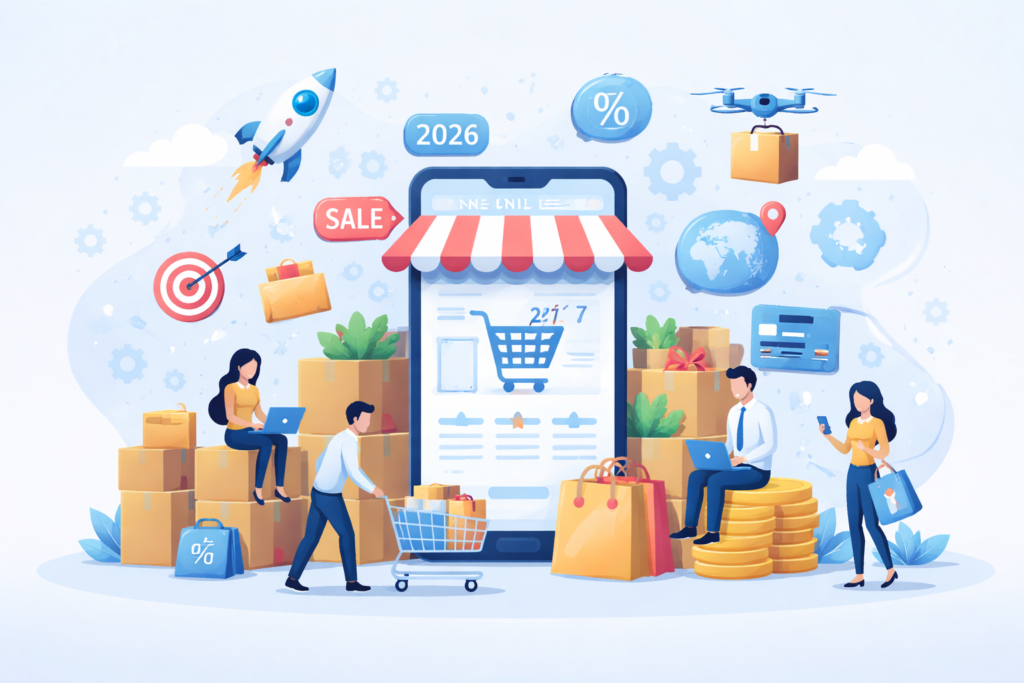
E-Commerce has revolutionized the way businesses sell products and services. In 2026, online shopping continues to grow rapidly, with billions of users globally turning to digital marketplaces for convenience and variety. From small businesses to multinational companies, understanding E-Commerce is crucial for driving sales and staying competitive.
This blog explores everything you need to know about E-Commerce, including trends, strategies, tools, and common mistakes to avoid. By following this guide, you’ll gain actionable insights to improve your online business performance and ensure your website converts visitors into loyal customers.
Introduction
Welcome to the ultimate guide on E-Commerce for 2026. Here at MyFunnelScript, we understand the importance of staying ahead in the fast-paced online retail world. E-Commerce is not just about selling products online; it’s about creating an exceptional user experience, optimizing conversions, and leveraging the latest technologies to maximize revenue.
In this blog, we will dive deep into E-Commerce strategies, trends, and best practices, backed by insights from high-authority sources like Shopify, BigCommerce, and Forbes. By the end of this guide, you’ll have the knowledge and tools to optimize your E-Commerce business for success in 2026 and beyond.
What is E-Commerce?
E-Commerce, short for electronic commerce, refers to the buying and selling of products or services over the internet. Unlike traditional retail, E-Commerce eliminates physical boundaries, enabling businesses to reach a global audience. This digital transformation allows consumers to shop conveniently from their homes, while businesses can operate without geographical limitations.
E-Commerce comes in various models. B2C (Business-to-Consumer) involves companies selling directly to individual customers, such as Amazon, which has become a household name. B2B (Business-to-Business) focuses on transactions between companies, with platforms like Alibaba facilitating bulk trade. C2C (Consumer-to-Consumer) allows individuals to sell products to one another, as seen on eBay and other peer-to-peer marketplaces. Finally, C2B (Consumer-to-Business) flips the model, enabling consumers to sell services or products to businesses, a model common on freelance platforms like Upwork.
The rapid growth of mobile commerce, social commerce, and AI-powered tools has expanded the E-Commerce landscape. According to Statista, global E-Commerce sales are projected to exceed $8 trillion by 2026, highlighting its critical importance in modern business strategy.
Benefits of E-Commerce for Businesses
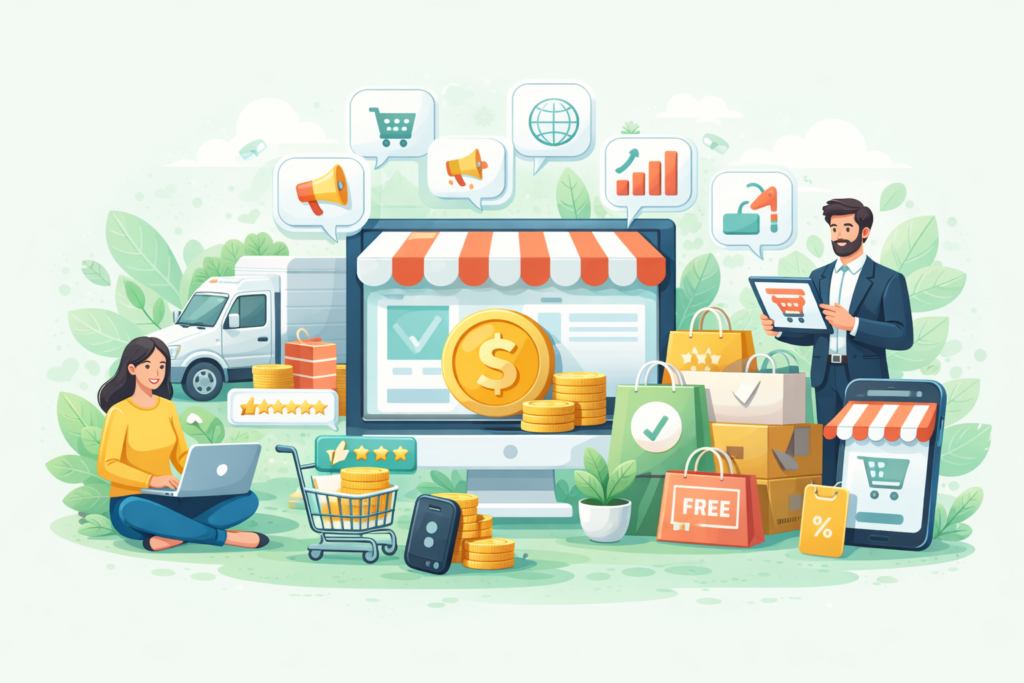
E-Commerce provides businesses with unparalleled advantages. One of the primary benefits is the ability to reach a global audience. Unlike brick-and-mortar stores, online businesses can attract customers from around the world, opening up limitless revenue opportunities.
Another significant advantage is the reduction of operational costs. Traditional retail stores require physical space, utilities, and staff, whereas E-Commerce businesses can operate efficiently with lower overhead. This allows companies to allocate resources to growth-oriented activities like marketing and product development.
E-Commerce also enables 24/7 availability, allowing customers to shop at any time of day. This constant accessibility increases sales potential and provides convenience that modern consumers demand. Furthermore, businesses can create personalized shopping experiences by analyzing user behavior, preferences, and purchase history. These insights allow for targeted recommendations and promotional strategies, boosting customer satisfaction and loyalty.
Finally, the scalability of E-Commerce means businesses can expand their operations without the constraints of physical stores. Whether it’s launching new product lines, entering new markets, or automating processes, online businesses can grow rapidly to meet demand. According to Harvard Business Review, companies leveraging E-Commerce effectively experience higher growth rates and stronger customer retention.
Key E-Commerce Trends in 2026
Staying ahead in E-Commerce requires understanding current trends. One of the most significant trends is AI and Machine Learning, which allows businesses to optimize product recommendations, manage inventory efficiently, and provide automated customer support.
Mobile commerce continues to dominate, with more than 70% of online shopping conducted through mobile devices, as reported by Statista. This trend emphasizes the importance of mobile-friendly websites and seamless checkout experiences.
Another emerging trend is voice commerce, where consumers use smart assistants like Alexa or Google Home to make purchases. This innovative method of shopping highlights the need for businesses to adopt voice-optimized strategies.
Social commerce is also rising, with platforms such as Instagram and TikTok becoming integral sales channels. Brands are increasingly leveraging social media to engage customers and drive transactions directly from these platforms.
Lastly, sustainable E-Commerce is gaining traction. Consumers are increasingly conscious of environmental impact, and businesses offering eco-friendly products or sustainable practices are more likely to earn trust and loyalty.
Essential E-Commerce Platforms
The choice of E-Commerce platform can make or break an online business. Shopify is ideal for small to medium-sized businesses due to its simple setup, wide range of features, and seamless integrations. WooCommerce is perfect for WordPress users who want flexibility and full control over their store’s design and functionality.
BigCommerce caters to larger enterprises that require advanced features, scalability, and customization options, while Magento provides unmatched flexibility for businesses with access to development resources. Although more complex, Magento allows for highly tailored solutions for large-scale operations.
Selecting the right platform depends on your business size, technical capability, and long-term goals, ensuring your online store can grow and adapt as your business evolves.
Payment Gateways and Security
Secure payment systems are essential for building trust with customers. Popular payment gateways like PayPal offer a widely recognized and easy-to-use solution. Stripe supports multiple currencies and international transactions, making it ideal for global sales. Square integrates online and offline sales, providing a unified experience for small businesses.
Beyond payment gateways, website security is crucial. Implementing SSL certificates ensures encrypted communication between your website and customers. Adhering to PCI compliance standards and providing secure checkout options prevents fraud and safeguards sensitive customer information, fostering trust and loyalty.
Optimizing Your E-Commerce Website for SEO
Search Engine Optimization (SEO) is vital for attracting organic traffic. Conducting keyword research helps identify long-tail search terms your customers are using, while on-page optimization ensures product pages, meta titles, and descriptions are search-engine friendly.
Content marketing, including blogs, guides, and videos, attracts traffic and establishes authority. Equally important is technical SEO, which involves fast loading times, mobile optimization, and clean site architecture. According to Moz, businesses with strong SEO strategies generate three times more traffic than those relying solely on paid advertising, highlighting the importance of investing in long-term organic growth.
E-Commerce Marketing Strategies
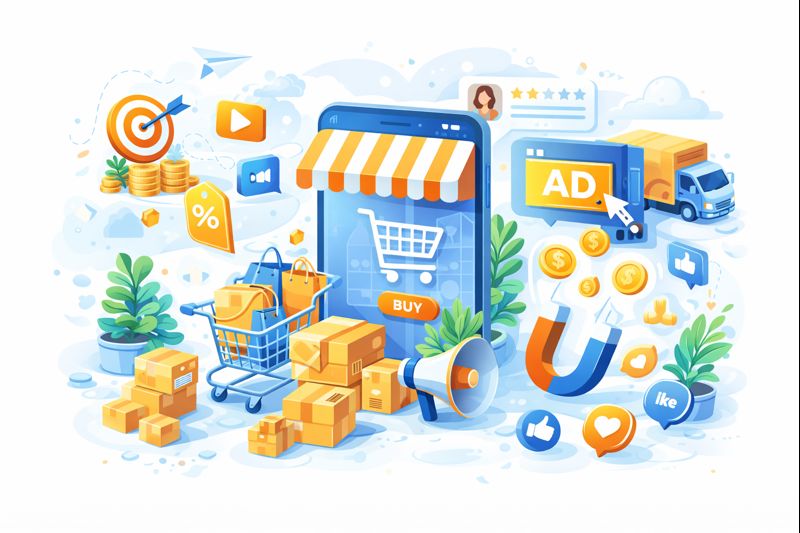
Effective marketing is essential for driving conversions. Email marketing allows businesses to reach customers with personalized campaigns, boosting retention and repeat sales. Social media advertising enables targeted campaigns on platforms like Facebook, Instagram, and TikTok, reaching potential customers based on interests, behaviors, and demographics.
Partnering with influencers helps brands connect with niche audiences, while retargeting ads remind visitors of abandoned carts, increasing the likelihood of completing purchases. Combining these strategies ensures your business can engage customers at every stage of the buying journey.
Advanced E-Commerce Strategies
To maximize revenue in 2026, businesses must go beyond basic marketing and adopt advanced strategies. One critical approach is conversion rate optimization (CRO). CRO involves analyzing user behavior, testing different layouts, call-to-action buttons, and checkout processes to increase the percentage of visitors who complete a purchase. According to HubSpot, even small improvements in conversion rates can lead to significant revenue growth.
Another effective strategy is personalization at scale. Using AI-powered tools, businesses can deliver personalized product recommendations, email campaigns, and dynamic website content tailored to individual users’ browsing and purchase history. Platforms like Dynamic Yield offer robust solutions for personalization that increase engagement and sales.
Omnichannel marketing is also essential in 2026. Customers interact with brands across multiple touchpoints, including social media, mobile apps, email, and physical stores. Integrating these channels ensures a seamless and consistent experience, which is crucial for building trust and loyalty.
E-Commerce Analytics and Tracking
Data-driven decisions are the backbone of successful E-Commerce. Using analytics platforms like Google Analytics and Hotjar, businesses can track user behavior, monitor sales performance, and identify bottlenecks in the purchasing process.
Key metrics include conversion rate, average order value, customer acquisition cost, and cart abandonment rate. Tracking these metrics allows businesses to optimize marketing campaigns, improve user experience, and increase profitability. For more advanced insights, tools like Kissmetrics provide detailed customer journey analysis, helping businesses tailor strategies based on real data rather than assumptions.
Customer Service and Retention
Customer service is a major differentiator in E-Commerce. Businesses that offer responsive, 24/7 support through live chat, email, or AI chatbots can significantly improve customer satisfaction and retention. High-quality service not only addresses problems but also creates a positive brand experience that encourages repeat purchases.
Retention strategies like loyalty programs and personalized follow-up emails are equally important. According to Forrester, acquiring a new customer can cost 5 times more than retaining an existing one. Offering incentives, exclusive deals, and personalized offers can turn first-time buyers into lifelong customers.
Shipping and Fulfillment Optimization
Fast and reliable shipping is a critical factor in customer satisfaction. Businesses should offer multiple shipping options, including standard, express, and same-day delivery if feasible. Integrating shipping solutions like ShipStation or Easyship can automate the fulfillment process and reduce errors.
Transparent tracking updates also improve the customer experience. Informing customers of estimated delivery times and providing real-time shipment tracking builds trust and reduces post-purchase anxiety.
Mobile and Social Commerce Best Practices

With mobile devices driving most online traffic, businesses must ensure mobile optimization for smooth navigation and fast checkout. This includes responsive design, easy-to-read fonts, optimized images, and mobile-friendly payment options.
Social commerce is another growing trend. Platforms like Instagram Shopping, Facebook Shops, and TikTok Shopping allow users to browse and purchase products without leaving the app. Incorporating shoppable posts, interactive stories, and influencer collaborations can significantly boost sales through social channels.
Common E-Commerce Mistakes to Avoid
Even experienced businesses can make mistakes that hurt performance. One common error is ignoring website speed. Slow-loading pages lead to higher bounce rates and lost sales. Optimizing images, leveraging caching, and using a content delivery network (CDN) can improve speed.
Another frequent mistake is poor product descriptions. Customers need clear, detailed, and persuasive information about your products to make purchasing decisions. High-quality images, videos, and user-generated content can enhance credibility.
Neglecting customer support is also a major pitfall. Businesses must provide quick, effective support to address issues and maintain trust. Finally, failing to implement analytics and tracking can result in missed opportunities, as you won’t know which marketing strategies or website improvements are effective.
FAQs
Q1: What is the difference between B2C and B2B E-Commerce?
B2C (Business-to-Consumer) focuses on selling directly to individual customers, whereas B2B (Business-to-Business) involves transactions between businesses. B2B usually involves bulk orders and longer sales cycles.
Q2: How important is mobile optimization for E-Commerce?
Mobile optimization is critical, as over 70% of E-Commerce traffic comes from mobile devices. A responsive, fast-loading mobile site can significantly increase conversions.
Q3: What is cart abandonment, and how can it be reduced?
Cart abandonment occurs when customers add products to their cart but leave without completing the purchase. Reducing it involves retargeting emails, simplified checkout processes, and offering incentives like discounts.
Q4: Should I invest in paid advertising for my online store?
Yes, paid advertising can drive targeted traffic quickly. Combining paid ads with SEO and content marketing ensures both short-term and long-term growth.
Q5: How can I ensure secure payments for customers?
Use trusted payment gateways like PayPal or Stripe, implement SSL certificates, and comply with PCI standards to secure customer transactions.
Conclusion
E-Commerce in 2026 is about more than just selling products online—it’s about creating a seamless, personalized, and secure experience for your customers. By leveraging advanced strategies, optimizing your website for SEO, adopting mobile and social commerce best practices, and learning from common mistakes, businesses can achieve sustainable growth.
At MyFunnelScript, we understand the evolving landscape of E-Commerce and provide insights and tools to help your business succeed online. Implementing these strategies ensures your store not only attracts traffic but also converts visitors into loyal customers, driving long-term profitability and brand success.