
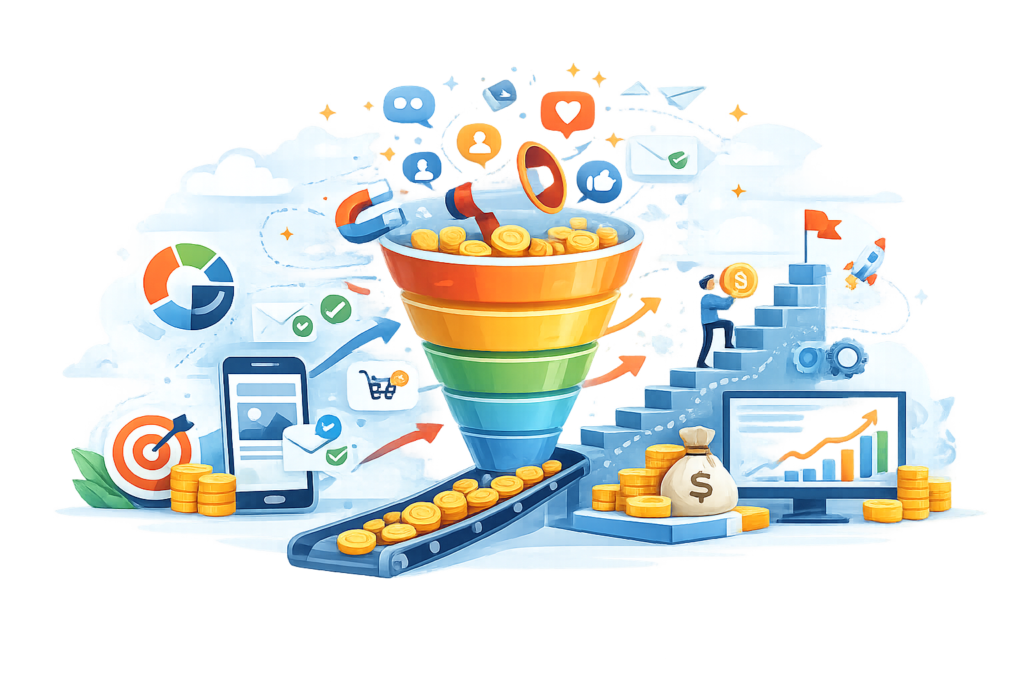
Sales Funnels are the foundation of a successful online business, helping convert visitors into loyal customers through a structured buying journey. Learn how sales funnels work, their key stages, best practices, optimization strategies, and proven techniques to increase conversions and maximize revenue.
Introduction
Every successful online business relies on a system that turns casual visitors into paying customers. That system is known as a sales funnel. Rather than expecting every website visitor to make an immediate purchase, a sales funnel guides people through a carefully planned journey that builds trust, answers objections, and encourages confident buying decisions. Businesses using optimized funnels often achieve higher conversion rates, stronger customer relationships, and better long-term profitability.
At My Funnel Script, we understand that an effective funnel is much more than a collection of landing pages. It combines persuasive messaging, valuable content, strategic offers, and data-driven optimization to create a seamless customer experience. Whether you’re selling digital products, coaching services, SaaS subscriptions, or physical products, a well-designed funnel can dramatically improve your marketing results.
This comprehensive guide explains everything you need to know about sales funnels, including how they work, why they matter, essential components, optimization strategies, and practical tips for increasing conversions while following modern digital marketing best practices.
What Is a Sales Funnel?
A sales funnel is a step-by-step marketing process that guides people from first discovering your brand to making a purchase and becoming loyal customers. It is called a “funnel” because many people enter at the top, but only the most interested ones move through each stage and become customers.
Unlike traditional marketing, modern sales funnels focus on building strong relationships instead of only promoting products. Each stage offers useful information through blog posts, free guides, email campaigns, webinars, free consultations, or product demos. These steps help build trust and show potential customers how your product or service can solve their problems.
A successful sales funnel does not end after the first purchase. Follow-up emails, helpful customer support, loyalty programs, and upselling can help build long-term relationships. They can also increase the value of each customer over time. Businesses that track funnel results and improve each step often get more conversions and stronger revenue growth.
Why Sales Funnels Matter for Business Growth
A sales funnel is a step-by-step marketing process that guides people from finding your brand to making a purchase and becoming loyal customers. It is called a “funnel” because many people enter at the top, but only those who are truly interested move through each stage and become customers.
Unlike traditional marketing, modern sales funnels focus on building strong relationships instead of simply promoting products. Each stage gives people useful information through blog posts, free guides, email campaigns, webinars, free consultations, or product demos. These steps help build trust and show potential customers how your product or service can solve their problems.
A successful sales funnel does not end after the first purchase. Follow-up emails, helpful customer support, loyalty programs, and upselling can help create long-term relationships. These efforts can also increase the value of each customer over time. Businesses that track their funnel results and improve each step often get more sales and stronger business growth.
The Core Stages of a Sales Funnel
A sales funnel is a step-by-step process that guides people from finding your brand to buying from you and becoming loyal customers. It is called a “funnel” because many people enter at the top, but only those who are truly interested move through each step and become customers.
Unlike old-style marketing, modern sales funnels focus on building strong relationships instead of only selling products. Each step gives people helpful content through blog posts, free guides, emails, webinars, free calls, or product demos. These steps help build trust and show people how your product or service can solve their problems.
A good sales funnel does not end after the first sale. Follow-up emails, helpful support, loyalty programs, and upselling can help build long-term customer relationships. These efforts can also increase the value of each customer over time. Businesses that track their results and improve each step can often get more sales and grow their business.
Essential Components of a High-Converting Sales Funnel
A sales funnel is a step-by-step process that guides people from finding your brand to buying from you and becoming loyal customers. It is called a “funnel” because many people enter at the top, but only those who are truly interested move through each step and become customers.
Unlike old-style marketing, modern sales funnels focus on building strong relationships instead of only selling products. Each step gives people helpful content through blog posts, free guides, emails, webinars, free calls, or product demos. These steps help build trust and show people how your product or service can help solve their problems.
A good sales funnel does not end after the first sale. Follow-up emails, helpful support, loyalty programs, and upselling can help build lasting customer relationships. These efforts can also increase the value of each customer over time. Businesses that track their results and improve each step can often get more sales and grow their business.
SEO and Content Marketing in Sales Funnels
Search engine optimization plays a vital role in attracting qualified visitors to the top of the funnel. High-quality blog articles, educational resources, and optimized landing pages increase organic visibility while helping businesses reach users actively searching for solutions.
Creating valuable content for every stage of the customer journey strengthens authority and improves trust. Informational articles educate new visitors, comparison guides help evaluate options, and case studies demonstrate real-world success. This content naturally moves prospects toward purchasing decisions without relying on aggressive sales tactics.
Following Google’s best practices is equally important. Learn more through Google Search Essentials.
For measuring funnel performance, use Google Analytics.
How to Build an Effective Sales Funnel
A sales funnel is a step-by-step process that guides people from finding your brand to buying from you and becoming loyal customers. It is called a “funnel” because many people enter at the top, but only those who are truly interested move through each step and become customers.
Unlike old-style marketing, modern sales funnels focus on building strong relationships instead of only selling products. Each step gives people helpful content through blog posts, free guides, emails, webinars, free calls, or product demos. These steps help build trust and show people how your product or service can solve their problems.
A good sales funnel does not end after the first sale. Follow-up emails, helpful support, loyalty programs, and upselling can help build lasting customer relationships. These efforts can also increase the value of each customer over time. Businesses that track their results and improve each step can often get more sales and grow their business.
Types of Sales Funnels
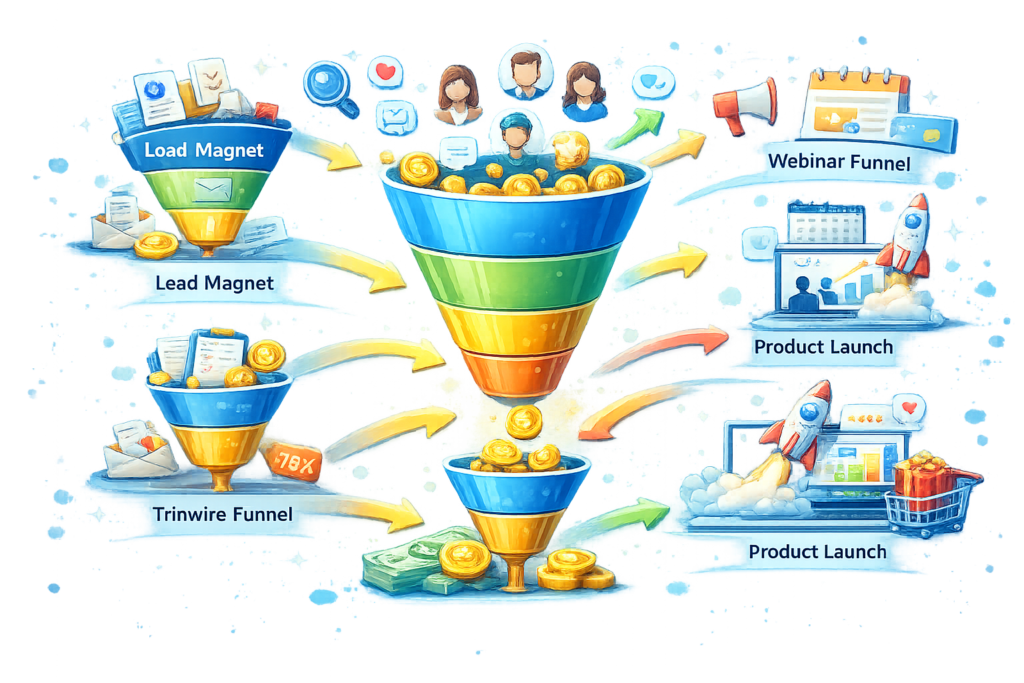
Not every business requires the same funnel structure. The most effective sales funnel depends on your products, services, audience, and sales cycle. Understanding different funnel models helps you choose the right strategy for your business goals.
A Lead Generation Funnel focuses on collecting contact information through downloadable resources, webinars, or free consultations. An E-commerce Funnel guides shoppers from product discovery to checkout while encouraging upsells and repeat purchases. A Webinar Funnel builds trust through educational presentations before introducing premium offers, while a Membership Funnel emphasizes recurring subscriptions and long-term customer engagement.
Service-based businesses often benefit from Consultation Funnels, where prospects schedule discovery calls before purchasing. SaaS companies commonly use Free Trial Funnels that allow users to experience software before subscribing. Selecting the appropriate funnel increases efficiency and improves overall conversion performance.
Measuring Sales Funnel Performance
A high-performing sales funnel is built on measurable data rather than assumptions. Tracking the right metrics helps identify strengths, weaknesses, and opportunities for improvement. Businesses that monitor performance consistently can make informed decisions that increase conversions and maximize return on investment.
One of the most important metrics is the conversion rate, which measures how many visitors complete a desired action. Other valuable metrics include click-through rate (CTR), bounce rate, cost per acquisition (CPA), customer acquisition cost (CAC), average order value (AOV), and customer lifetime value (CLV). These indicators reveal how efficiently your funnel moves prospects through each stage.
Use analytics platforms and heatmap tools to understand visitor behavior. Review where users exit the funnel, test alternative designs, and improve weak-performing pages. Regular reporting ensures continuous optimization and long-term business growth.
Learn more about website measurement using Google Analytics.
Optimizing Your Sales Funnel for Higher Conversions
Optimization is an ongoing process that improves every stage of the customer journey. Small changes often produce significant increases in leads, sales, and customer satisfaction. Successful businesses regularly analyze data instead of assuming their funnel is already performing at its best.
Start by improving headlines, page layouts, images, calls-to-action, and page loading speed. Simplify navigation, reduce unnecessary form fields, and ensure mobile responsiveness. Add trust signals such as customer reviews, testimonials, money-back guarantees, security badges, and frequently asked questions to reduce buyer hesitation.
A/B testing is one of the most effective optimization techniques. Compare different versions of landing pages, email subject lines, pricing strategies, or button colors to determine what performs best. Continue testing until each stage consistently delivers stronger conversion rates and a better customer experience.
Automation and AI in Modern Sales Funnels
Automation has transformed how businesses manage their sales funnels. Instead of manually following up with every prospect, companies can use automated workflows to send emails, qualify leads, schedule appointments, and deliver personalized recommendations. This saves time while ensuring every lead receives timely communication.
Artificial Intelligence (AI) enhances funnel performance by analyzing customer behavior, predicting purchasing intent, and personalizing content based on user preferences. AI-powered chatbots answer questions instantly, while predictive analytics helps businesses identify high-value prospects and improve conversion strategies.
Although automation increases efficiency, maintaining a human touch remains essential. Personalized messaging, responsive customer support, and authentic communication continue to build trust and long-term loyalty. Combining automation with meaningful customer interactions creates a balanced funnel that supports sustainable business growth.
Advanced Sales Funnel Strategies
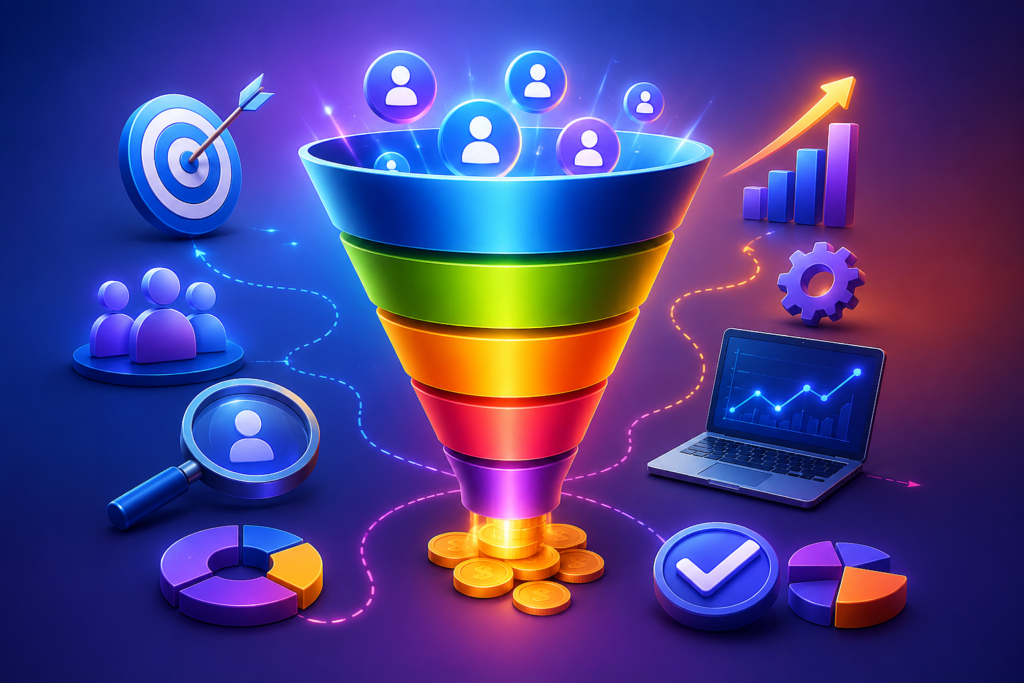
As your business grows, your sales funnel should become more sophisticated. Advanced strategies focus on delivering personalized experiences based on customer behavior instead of treating every visitor the same. Segment your audience by interests, purchase history, location, or engagement level to send highly relevant content and offers.
Retargeting campaigns are another effective strategy. Many visitors leave without making a purchase, but targeted advertisements and follow-up emails can remind them of your products or services and encourage them to return. Personalized recommendations, limited-time offers, and abandoned cart reminders can significantly improve conversion rates.
Businesses should also integrate customer feedback into their optimization process. Surveys, reviews, and user behavior analysis reveal valuable insights that help refine messaging, offers, and user experience. Continuous improvement ensures your funnel remains effective as customer expectations and market trends evolve.
Common Sales Funnel Mistakes to Avoid
Many businesses invest heavily in marketing but overlook critical funnel issues that reduce conversions. One of the most common mistakes is targeting the wrong audience. Even the best-designed funnel cannot generate consistent results if it attracts visitors who are not interested in the product or service.
Another mistake is creating complicated landing pages with too much information or multiple calls-to-action. Visitors should immediately understand what you offer and what action they need to take. Slow-loading pages, poor mobile optimization, and confusing navigation also increase bounce rates and reduce trust.
Many companies also fail to nurture leads after collecting contact information. Sending inconsistent emails or ignoring follow-up opportunities often causes potential customers to lose interest. Regular communication, valuable educational content, and personalized recommendations help maintain engagement until prospects are ready to purchase.
Best Practices Summary
Creating a successful sales funnel requires careful planning, continuous testing, and a customer-focused approach. Always begin by understanding your target audience and developing content that solves their problems. Every stage of the funnel should guide visitors naturally toward the next step without creating confusion.
Use clear headlines, persuasive copy, strong calls-to-action, and responsive designs across all devices. Build trust with customer testimonials, case studies, transparent pricing, and secure checkout experiences. Keep forms short, improve page speed, and regularly test different elements to increase conversions.
Most importantly, treat optimization as an ongoing process. Monitor key performance metrics, analyze customer behavior, and refine your funnel based on real data. Businesses that consistently improve their funnels are more likely to achieve sustainable growth and long-term customer loyalty.
Frequently Asked Questions
1. What is a sales funnel?
A sales funnel is a step-by-step process that guides potential customers from discovering your business to making a purchase and becoming loyal customers.
2. Why is a sales funnel important?
It helps businesses organize their marketing strategy, improve customer engagement, increase conversion rates, and generate more revenue through a structured buying journey.
3. What are the main stages of a sales funnel?
The typical stages are Awareness, Interest, Consideration, Decision, Action, and Retention.
4. How can I improve my sales funnel conversion rate?
Optimize landing pages, simplify forms, use persuasive calls-to-action, improve website speed, conduct A/B testing, and provide valuable follow-up content.
5. Which tools can help build a sales funnel?
Popular tools include CRM platforms, email marketing software, landing page builders, analytics tools, automation platforms, and customer relationship management systems.
6. How often should I optimize my sales funnel?
Review funnel performance monthly or quarterly. Regular testing and analysis help identify opportunities for improvement and maintain high conversion rates.
7. Can small businesses benefit from sales funnels?
Yes. Sales funnels help businesses of all sizes generate qualified leads, improve customer relationships, and increase sales without significantly increasing marketing costs.
8. What is the biggest mistake businesses make with sales funnels?
Failing to understand their target audience and neglecting lead nurturing after capturing contact information are two of the most common reasons funnels underperform.
Conclusion
A well-designed sales funnel is one of the most valuable assets any business can build. It transforms random website traffic into qualified leads, nurtures prospects with valuable information, and converts them into loyal customers through a structured and measurable process. By focusing on customer needs, optimizing every stage, and making data-driven improvements, businesses can achieve sustainable growth while delivering exceptional user experiences.
At My Funnel Script, businesses can access professional funnel solutions designed to improve lead generation, increase conversions, and streamline customer acquisition. Whether you’re launching your first funnel or optimizing an existing one, investing in a strategic funnel system creates long-term value and stronger business performance.
Want to Implement This Easily?
Prompt
You are an expert consultant. Based on the blog post titled “Sales Funnels”, provide a step-by-step, practical implementation guide. Include tools, best practices, common mistakes to avoid, and advanced tips. Assume the reader wants to implement everything discussed in this article effectively.
Call to Action
Want our help implementing this? Just reach out to us via our website contact form: