
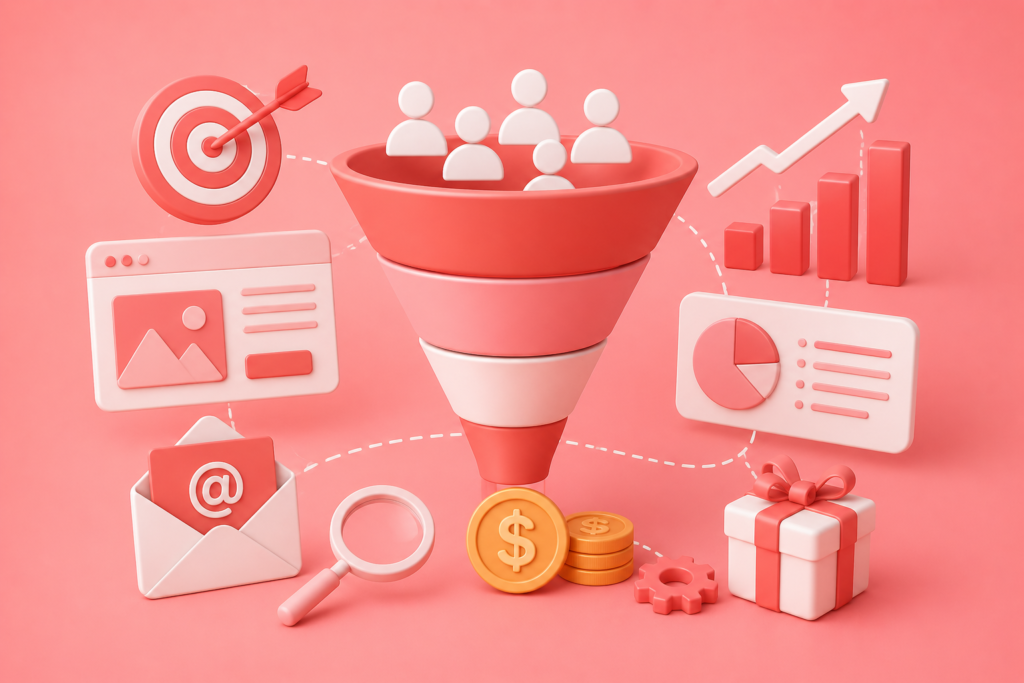
Learn how Sales Funnels help businesses attract qualified prospects, nurture relationships, increase conversions, and maximize revenue. Discover proven strategies, optimization techniques, automation best practices, and expert insights to build scalable, high-performing sales funnels.
Introduction
In today’s highly competitive digital marketplace, businesses need far more than an attractive website or a compelling product. They need a structured process that consistently transforms visitors into qualified leads and loyal customers. That process is known as a Sales Funnel. Rather than relying on chance, successful businesses create carefully planned customer journeys that educate, build trust, overcome objections, and encourage prospects to take meaningful action.
At My Funnel Script, we understand that every customer interaction matters. A professionally designed sales funnel creates predictable growth by guiding prospects through each stage of the buying journey using compelling messaging, persuasive content, strategic automation, and data-driven optimization. Whether you’re selling digital products, professional services, coaching programs, SaaS solutions, or physical products, an optimized sales funnel provides the framework needed for sustainable business growth.
This comprehensive guide explores every essential aspect of modern sales funnels—from understanding customer psychology to designing landing pages, automating follow-ups, optimizing conversions, leveraging analytics, and continuously improving performance. Throughout this guide, you’ll learn practical strategies, industry best practices, and proven methods that help businesses create high-performing funnels capable of delivering measurable results while aligning with Google’s Experience, Expertise, Authoritativeness, and Trustworthiness (E-E-A-T) principles.
Understanding Modern Sales Funnels and Why They Matter
Sales funnels have evolved dramatically over the past decade. Today’s consumers are more informed, conduct extensive research before purchasing, and interact with brands across multiple digital channels. As a result, businesses must create seamless experiences that guide prospects through every stage of the decision-making process. A well-designed funnel helps businesses provide the right information at the right time, reducing friction and improving customer confidence throughout the buying journey.
Modern sales funnels consist of several interconnected stages, typically beginning with awareness, progressing through consideration and evaluation, and ultimately leading to conversion and customer retention. Each stage requires tailored messaging, personalized content, and carefully selected calls-to-action that address the prospect’s evolving needs. Rather than focusing solely on immediate sales, effective funnels emphasize relationship-building, trust, and long-term customer value. This customer-centric approach not only increases conversion rates but also encourages repeat purchases, referrals, and brand advocacy.
Successful sales funnels also enable businesses to measure performance at every stage. By monitoring metrics such as traffic sources, click-through rates, conversion percentages, lead quality, customer acquisition costs, and lifetime value, organizations gain valuable insights into what’s working and where improvements are needed. Continuous testing and optimization ensure the funnel remains effective as customer behavior, market conditions, and technology continue to evolve. Ultimately, sales funnels provide a scalable framework for predictable growth, helping businesses generate consistent results while improving the overall customer experience.
The Psychology Behind High-Converting Sales Funnels
Understanding customer psychology is one of the most powerful advantages in building an effective sales funnel. Every purchasing decision is influenced by emotions, perceived value, trust, social proof, and risk assessment. Businesses that recognize these psychological drivers can create experiences that naturally encourage prospects to move forward rather than forcing aggressive sales tactics. Successful funnels are built around empathy, understanding customer challenges, and presenting meaningful solutions that align with genuine needs.
Trust forms the foundation of every successful sales funnel. Prospects are far more likely to engage with businesses that demonstrate expertise, transparency, and credibility through educational content, testimonials, case studies, guarantees, and clear communication. Consistent branding, professional website design, secure payment systems, and informative resources all contribute to reducing uncertainty. When customers feel confident in a company’s ability to deliver value, they become significantly more willing to complete purchases and develop long-term relationships.
Behavioral psychology also highlights the importance of reducing cognitive overload. Visitors should never feel overwhelmed by excessive information or complicated navigation. Instead, each funnel stage should present a logical progression with clear messaging and focused calls-to-action. Strategic use of urgency, scarcity, personalization, and social validation can further encourage action when applied ethically. Businesses that respect customer decision-making while simplifying the buying process often experience stronger engagement, higher conversion rates, and increased customer satisfaction over time.
Essential Stages of a Successful Sales Funnel
Every effective sales funnel follows a structured progression that aligns with the customer’s buying journey. While specific funnel designs vary across industries, most successful funnels include several core stages: awareness, interest, consideration, intent, conversion, and loyalty. Each stage serves a unique purpose and requires carefully crafted messaging that addresses customer questions while encouraging forward movement. Understanding these stages enables businesses to create more relevant experiences that support informed purchasing decisions.
The awareness stage introduces potential customers to your brand through channels such as search engine optimization, content marketing, paid advertising, email campaigns, webinars, podcasts, and social media. At this point, prospects may not yet recognize their problem or know that your solution exists. Educational blog articles, videos, downloadable guides, and valuable resources help establish authority while attracting qualified traffic. Providing genuinely helpful information early in the customer journey strengthens credibility and encourages further engagement.
As prospects move toward consideration and conversion, businesses should offer increasingly personalized experiences. Product comparisons, customer success stories, demonstrations, free consultations, webinars, and personalized email sequences help address objections while reinforcing value. After conversion, the funnel should continue nurturing customers through onboarding, ongoing support, loyalty programs, educational resources, and cross-selling opportunities. Customer retention often generates greater long-term profitability than acquiring entirely new customers, making post-purchase engagement an essential component of every successful sales funnel.
Identifying and Understanding Your Ideal Audience
An exceptional sales funnel begins with a thorough understanding of the people it serves. Businesses that attempt to market to everyone often struggle to connect with anyone effectively. Instead, identifying a well-defined target audience enables organizations to create highly relevant messaging that resonates with specific customer needs, challenges, goals, and motivations. Audience research forms the foundation upon which every successful funnel is built.
Developing detailed customer personas allows businesses to better understand demographics, professional roles, purchasing behaviors, decision-making processes, preferred communication channels, and common pain points. Interviews, surveys, customer feedback, website analytics, CRM data, and market research provide valuable insights that inform content creation and funnel design. The more accurately businesses understand their audience, the more effectively they can personalize messaging, recommend appropriate solutions, and build meaningful relationships throughout the customer journey.
Customer needs also evolve over time, making continuous research essential. Market trends, technological advancements, economic conditions, and competitive activity influence purchasing behavior and customer expectations. Businesses should regularly analyze customer feedback, monitor engagement metrics, and update audience profiles to ensure ongoing relevance. A customer-centric approach enables sales funnels to remain responsive, adaptable, and capable of delivering consistent value in changing markets while supporting long-term business growth.
Creating Compelling Lead Magnets That Generate Qualified Prospects
Generating high-quality leads is one of the primary objectives of a successful sales funnel. Lead magnets provide valuable resources in exchange for contact information, allowing businesses to begin meaningful relationships with prospective customers. Rather than offering generic content, effective lead magnets solve specific problems, answer common questions, or provide actionable insights that prospects can immediately apply. High-value resources naturally attract more qualified leads who are genuinely interested in your products or services.
Successful lead magnets come in many formats, including comprehensive guides, checklists, templates, calculators, webinars, video training, industry reports, free consultations, email courses, and downloadable toolkits. The most effective lead magnets align closely with the products or services offered later in the funnel. This alignment ensures that prospects entering the funnel are more likely to become paying customers because their initial interests match the solutions your business provides.
Equally important is the presentation of the lead magnet itself. Landing pages should clearly communicate the value proposition, highlight key benefits, minimize distractions, and feature persuasive calls-to-action supported by trust signals such as testimonials, privacy assurances, or professional credentials. Simple forms requesting only essential information often achieve higher conversion rates than lengthy registration processes. By consistently delivering genuine value before requesting a purchase, businesses establish trust and encourage deeper engagement throughout the remainder of the sales funnel.
Designing High-Converting Landing Pages
Landing pages serve as critical conversion points within every sales funnel. Unlike traditional website pages that offer numerous navigation options, landing pages focus on a single objective, guiding visitors toward one clear action. Whether promoting a lead magnet, product demonstration, consultation, or direct purchase, every design element should support that specific conversion goal. Simplicity, clarity, and relevance remain essential characteristics of successful landing pages.
Effective landing pages begin with compelling headlines that immediately communicate value while matching visitor expectations established by advertisements, emails, or search results. Supporting copy should clearly explain benefits, address common concerns, and demonstrate how the offered solution solves real problems. Visual elements such as product images, videos, diagrams, or customer testimonials reinforce credibility without distracting from the primary call-to-action. Consistency between messaging and design creates a seamless user experience that strengthens trust and reduces confusion.
Performance optimization also plays a significant role in landing page success. Fast loading speeds, mobile responsiveness, accessible design, secure browsing, and intuitive layouts contribute directly to higher engagement and improved conversion rates. Regular A/B testing of headlines, button text, images, forms, and page layouts helps identify opportunities for continuous improvement. Small enhancements made through data-driven experimentation often produce significant increases in lead generation and sales over time.
Building Trust Through Valuable Content and Social Proof
Trust is earned through consistent delivery of valuable information and authentic customer experiences. Throughout every stage of the sales funnel, businesses should provide educational content that helps prospects make informed decisions rather than relying solely on promotional messaging. Articles, videos, webinars, tutorials, case studies, and frequently asked questions demonstrate expertise while addressing customer concerns. This educational approach positions businesses as trusted advisors rather than merely product vendors.
Social proof significantly strengthens credibility by demonstrating that others have successfully benefited from your products or services. Customer testimonials, detailed case studies, verified reviews, industry certifications, awards, and client success metrics reassure prospects that they are making informed decisions. Authenticity is essential; genuine experiences supported by measurable outcomes carry far greater influence than vague marketing claims. Featuring diverse customer stories also enables prospects to identify with people facing similar challenges.
Transparency further enhances trust throughout the sales funnel. Clearly communicating pricing, service expectations, refund policies, implementation timelines, and support options reduces uncertainty and builds confidence. Businesses that openly address limitations, answer difficult questions, and provide realistic expectations often establish stronger long-term relationships than those relying on exaggerated promises. Trust developed through honesty, expertise, and consistent customer success becomes one of the most valuable competitive advantages in any sales funnel.
Email Marketing Automation That Nurtures Leads into Customers
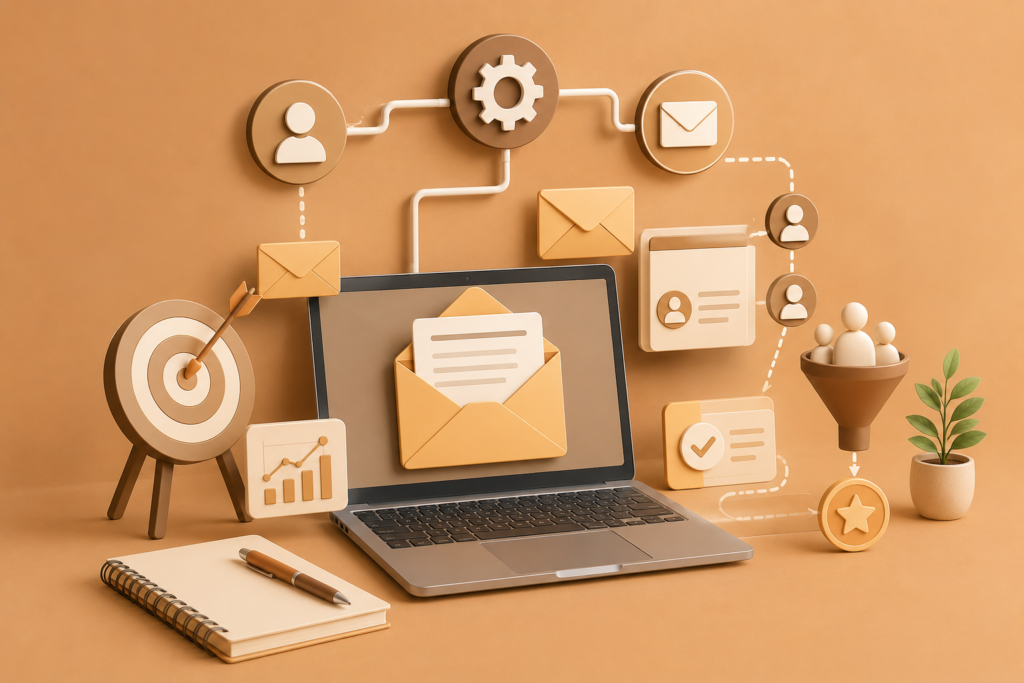
Email automation is one of the highest-performing components of any sales funnel because it maintains communication after a visitor leaves your website. Rather than relying on a single interaction, automated email sequences educate prospects, answer common questions, build trust, and guide subscribers toward making informed purchasing decisions. Welcome emails, educational sequences, product demonstrations, abandoned cart reminders, and post-purchase follow-ups all contribute to stronger customer relationships and improved conversion rates.
Segmentation significantly improves email performance. Instead of sending identical messages to every subscriber, businesses should group contacts based on interests, behaviors, previous purchases, or engagement levels. Personalized emails consistently achieve higher open rates, click-through rates, and conversions because they provide content that is directly relevant to the recipient’s needs. Automation platforms also allow businesses to trigger emails based on customer actions, creating timely and meaningful interactions throughout the buyer’s journey.
Businesses should continually evaluate email performance using Google Analytics and improve campaigns through A/B testing, personalization, and valuable educational content rather than excessive promotional messaging.
Funnel Analytics and Performance Measurement
Every successful sales funnel depends on accurate measurement. Without reliable analytics, businesses cannot determine where prospects disengage, which campaigns generate the highest-quality leads, or which marketing investments produce the greatest return. Data-driven decisions consistently outperform assumptions, making analytics essential for sustainable growth.
Important performance indicators include website traffic, landing page conversion rate, email open rate, click-through rate, customer acquisition cost, average order value, sales conversion rate, customer lifetime value, and return on advertising spend. Monitoring these metrics regularly enables businesses to identify bottlenecks and prioritize improvements where they will have the greatest impact.
Businesses should implement Google Analytics, Google Tag Manager, and conversion tracking to understand customer behavior and make informed optimization decisions based on measurable evidence rather than guesswork.
Conversion Rate Optimization (CRO)
Generating traffic is only valuable when visitors convert into customers. Conversion Rate Optimization focuses on improving existing funnel performance through continuous testing and refinement. Even small improvements in conversion rates can significantly increase revenue without increasing advertising costs.
High-performing funnels use clear headlines, persuasive value propositions, simplified forms, compelling calls-to-action, customer testimonials, trust badges, and mobile-friendly layouts. Removing unnecessary distractions and reducing friction encourages visitors to complete desired actions more confidently.
Businesses should also test different headlines, images, button colors, page layouts, pricing structures, and offers using structured A/B testing. Website performance should be monitored with PageSpeed Insights while optimizing Core Web Vitals to improve both user experience and search visibility.
Automation and AI in Modern Sales Funnels
Artificial Intelligence is transforming modern sales funnels by improving personalization, efficiency, and customer engagement. AI-powered tools analyze customer behavior, recommend relevant content, predict purchasing intent, and automate repetitive marketing tasks that previously required manual effort.
Modern automation platforms integrate CRM systems, email marketing, chatbots, lead scoring, appointment scheduling, and customer support into a unified workflow. This allows businesses to deliver consistent experiences while reducing administrative workload and improving operational efficiency.
Businesses should always balance automation with genuine human interaction. AI enhances customer experiences when it supports personalized communication rather than replacing authentic relationships and professional expertise.
Security, Compliance, and User Trust
Security is essential throughout every stage of the sales funnel. Customers expect their personal information, payment details, and account data to remain protected. Secure websites not only improve customer confidence but also contribute to better business credibility.
Businesses should implement HTTPS encryption, secure payment gateways, strong authentication, regular software updates, and ongoing security monitoring. Following recommendations from OWASP helps reduce security risks while protecting sensitive customer information.
Structured data using Schema.org can improve search engine understanding of website content, while following Google Search Essentials ensures websites remain aligned with Google’s quality recommendations.
Continuous Testing and Sales Funnel Optimization
No sales funnel should ever remain static. Customer expectations, technology, competition, and market trends continually evolve, requiring businesses to review and improve their funnels regularly.
Optimization involves analyzing user behavior, collecting customer feedback, reviewing analytics, testing new offers, refining messaging, improving page performance, and simplifying user journeys. Continuous improvement allows businesses to maintain strong conversion rates while adapting to changing customer needs.
Organizations that regularly test and optimize every stage of their sales funnel consistently outperform competitors who rely on outdated marketing strategies. Long-term success depends on ongoing experimentation, measurement, and refinement rather than one-time implementation.
Future Trends Shaping Sales Funnels
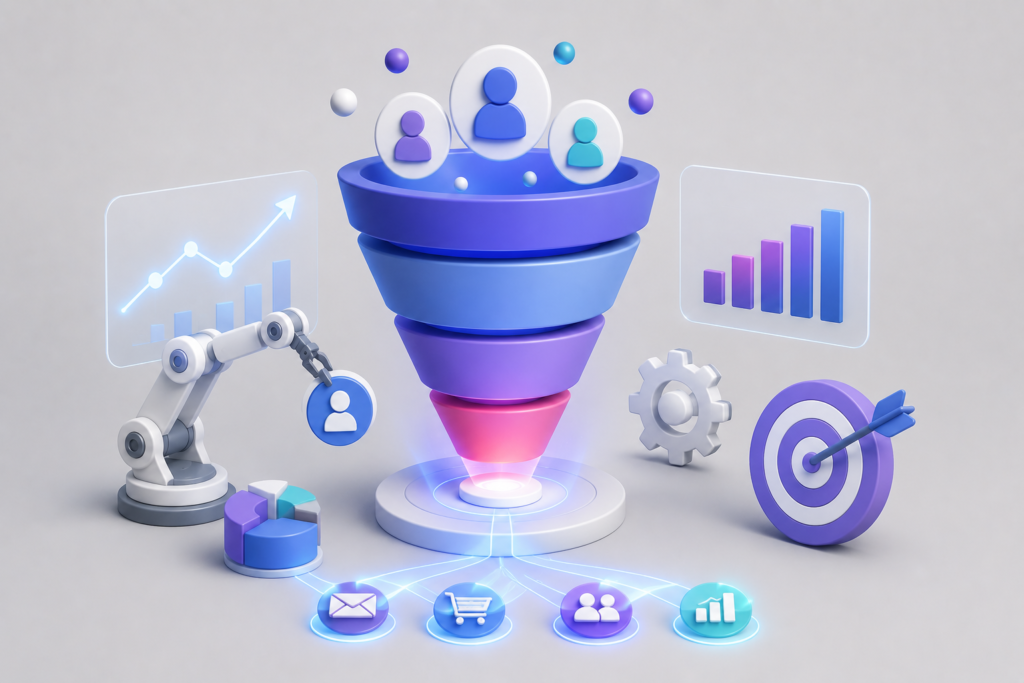
The future of sales funnels will emphasize personalization, predictive analytics, AI-assisted customer journeys, conversational marketing, omnichannel experiences, and privacy-first data collection. Customers increasingly expect seamless interactions across websites, email, mobile applications, social media, and live chat.
Businesses will continue investing in automation while maintaining transparency and trust. Interactive content, video-based selling, personalized recommendations, voice search optimization, and first-party data strategies will become increasingly important as digital marketing continues to evolve.
Organizations that embrace innovation while maintaining customer-focused experiences will remain well positioned for sustainable growth and long-term competitive advantage.
Common Sales Funnel Mistakes
Many businesses fail to achieve expected results because they focus exclusively on generating traffic while neglecting the overall customer journey. Common mistakes include weak value propositions, confusing landing pages, poor mobile optimization, slow-loading websites, inconsistent branding, lack of follow-up emails, ignoring analytics, excessive form fields, and failing to build trust before requesting a purchase.
Another frequent mistake is attempting to automate every interaction without considering customer expectations. Automation should enhance—not replace—meaningful communication. Businesses should also avoid making unrealistic promises, neglecting post-purchase engagement, or failing to optimize based on measurable data.
Regular testing, customer feedback, continuous education, and adherence to industry best practices help businesses avoid these pitfalls while creating more effective sales funnels.
Best Practices Summary
Building a successful Sales Funnel requires far more than attractive design or persuasive copy. Sustainable results come from combining customer research, valuable content, strategic automation, continuous testing, and ongoing optimization. Every stage of the funnel should help prospects make informed decisions while reducing friction and building long-term trust.
Follow these proven best practices:
- Understand your target audience before creating your funnel.
- Create compelling lead magnets that solve real problems.
- Design clear, fast, and mobile-friendly landing pages.
- Use personalized email automation to nurture leads.
- Continuously monitor funnel performance using Google Analytics.
- Improve website performance with PageSpeed Insights.
- Optimize Core Web Vitals for better user experience.
- Follow Google Search Essentials when creating content.
- Protect customer data by following OWASP security recommendations.
- Test headlines, offers, forms, CTAs, and layouts regularly.
- Continue improving every stage of the customer journey using real performance data.
Frequently Asked Questions
1. What is a sales funnel?
A sales funnel is a structured marketing and sales process that guides potential customers from discovering your business to becoming paying customers and, ultimately, loyal advocates. It helps businesses improve conversions by delivering the right information at each stage of the buyer journey.
2. Why are sales funnels important?
Sales funnels create a predictable customer journey, improve lead quality, increase conversion rates, reduce customer acquisition costs, and support long-term business growth through automation and ongoing optimization.
3. What are the main stages of a sales funnel?
A typical sales funnel includes:
- Awareness
- Interest
- Consideration
- Decision
- Purchase
- Retention
- Advocacy
Each stage serves a different purpose and requires targeted messaging.
4. How can I increase my funnel conversion rate?
Improve page speed, simplify forms, strengthen your value proposition, use compelling calls-to-action, build trust with testimonials, personalize email sequences, perform A/B testing, and monitor analytics to identify areas for improvement.
5. Which tools are commonly used for sales funnels?
Popular tools include CRM platforms, email marketing software, landing page builders, analytics tools, payment gateways, appointment scheduling software, automation platforms, and AI-powered personalization tools.
6. How often should a sales funnel be optimized?
Sales funnels should be reviewed continuously. Monthly performance reviews combined with ongoing A/B testing and quarterly strategic evaluations help ensure the funnel remains effective as customer behavior and market conditions evolve.
7. Can small businesses benefit from sales funnels?
Absolutely. Sales funnels help businesses of every size automate lead generation, improve customer relationships, increase marketing efficiency, and generate more predictable revenue without requiring a large sales team.
8. How do Google guidelines affect sales funnels?
Google encourages businesses to create helpful, trustworthy, and user-focused content. Following Google Search Essentials and demonstrating strong E-E-A-T principles improves both user experience and long-term search visibility.
Conclusion
A well-designed Sales Funnel is one of the most valuable assets a business can build. It transforms anonymous visitors into qualified leads, nurtures meaningful customer relationships, and creates predictable, scalable revenue through strategic planning, automation, and continuous optimization.
At My Funnel Script, we believe successful funnels combine customer psychology, compelling messaging, valuable educational content, performance optimization, and ongoing testing. Businesses that invest in improving every stage of the customer journey are better positioned to increase conversions, strengthen customer loyalty, and achieve sustainable long-term growth in an increasingly competitive digital marketplace.
Rather than treating your funnel as a one-time project, view it as an evolving business system. Continue measuring performance, learning from customer behavior, implementing new technologies, and refining your strategy to stay ahead of changing market expectations. With consistent improvement and a customer-first approach, your sales funnel can become a powerful engine for lasting business success.
Want to Implement This Easily?
Prompt
You are an expert consultant. Based on the blog post titled “Sales Funnels”, provide a step-by-step, practical implementation guide. Include tools, best practices, common mistakes to avoid, and advanced tips. Assume the reader wants to implement everything discussed in this article effectively.
Call to Action
Want our help implementing this? Just reach out to us via our website contact form: