
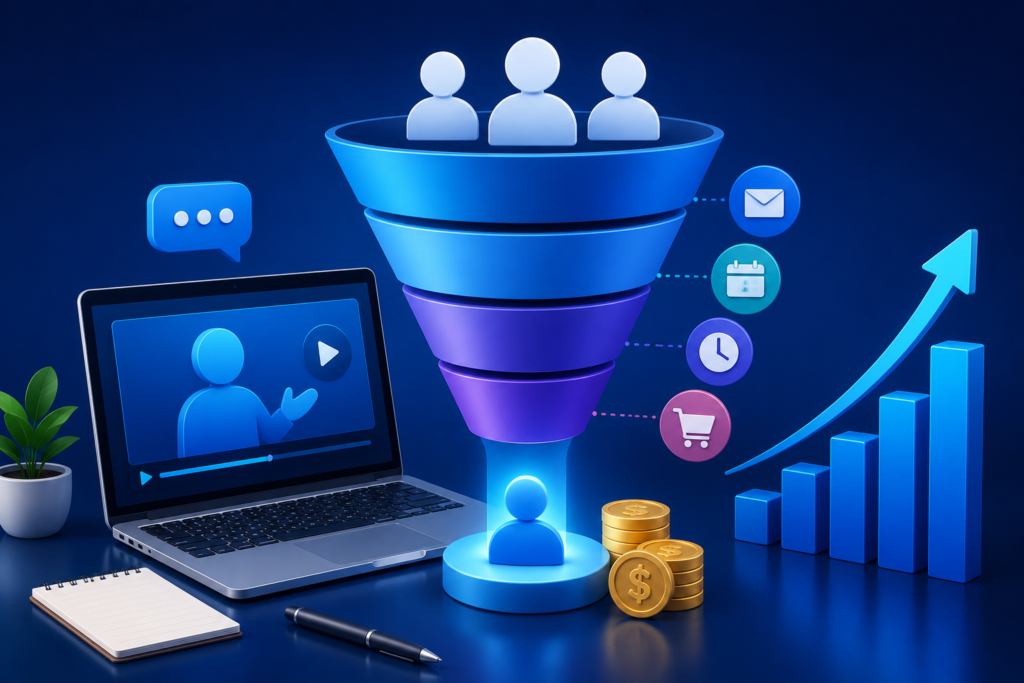
Learn how to build a Webinar Funnel that consistently attracts qualified leads, increases registrations, boosts live attendance, and converts viewers into loyal customers. This comprehensive guide covers proven webinar strategies, funnel optimization, automation, conversion best practices, and advanced techniques for sustainable business growth.
Introduction
In today’s competitive digital marketplace, businesses need more than a landing page and an email list to generate predictable revenue. They need a complete Webinar Funnel that educates prospects, builds trust, overcomes objections, and naturally leads potential customers toward making confident buying decisions. Unlike traditional sales tactics, webinar funnels combine valuable educational content with strategic marketing automation to create a scalable customer acquisition system that works around the clock.
At My Funnel Script, we understand that successful webinar marketing isn’t simply about hosting an online presentation. It’s about creating an entire customer journey—from the first advertisement or social media post through registration, reminder emails, live engagement, follow-up sequences, and ultimately conversion. Every stage of the funnel plays a vital role in maximizing registrations, attendance rates, customer trust, and long-term business growth.
This comprehensive guide explores every major component of a modern webinar funnel, including planning, audience targeting, automation, optimization, analytics, and long-term scaling. Following the latest recommendations from Creating Helpful, Reliable, People-First Content, SEO Starter Guide, and performance recommendations from web.dev, this article focuses on delivering practical, experience-driven insights that create measurable business results while aligning with Google’s quality standards.
Understanding What a Webinar Funnel Is
A Webinar Funnel is a structured marketing system designed to guide potential customers through every stage of the buying journey using educational online presentations. Rather than asking prospects to purchase immediately, webinar funnels first establish authority, provide valuable knowledge, solve meaningful problems, and gradually introduce products or services that naturally fit the audience’s needs. This educational-first approach significantly improves trust, engagement, and conversion rates compared to traditional direct-response advertising.
Unlike standalone webinars, a complete webinar funnel consists of multiple interconnected stages. These often include targeted advertisements, SEO-driven content marketing, registration pages, confirmation pages, automated email reminders, SMS notifications, live presentations, replay pages, post-webinar nurturing, sales pages, and long-term follow-up campaigns. Every interaction is intentionally designed to reduce friction while increasing confidence in the purchasing decision.
Modern businesses increasingly rely on webinar funnels because they are highly scalable and measurable. Marketing teams can analyze registration rates, attendance percentages, engagement metrics, conversion performance, and customer lifetime value to continually optimize results. Rather than relying on assumptions, organizations make data-driven improvements that strengthen every stage of the customer journey while creating sustainable revenue growth.
Why Webinar Funnels Continue to Grow
Educational marketing consistently outperforms aggressive sales messaging because customers prefer learning before buying. A webinar allows businesses to demonstrate expertise, answer objections, showcase real examples, and establish credibility in a way that static web pages cannot achieve.
Live interaction creates urgency and authenticity. Attendees have opportunities to ask questions, receive immediate answers, and engage directly with presenters. These real-time interactions significantly increase trust and reduce purchase hesitation.
Automated webinar technology has also expanded opportunities for businesses of every size. Evergreen webinars allow organizations to generate qualified leads continuously without scheduling live presentations every week. Combined with marketing automation, this creates an efficient customer acquisition engine that scales predictably.
Essential Components of Every Webinar Funnel
An effective webinar funnel typically includes:
- Targeted traffic generation
- Registration landing page
- Thank-you page
- Confirmation email
- Reminder sequence
- Live or evergreen webinar
- Offer presentation
- Sales page
- Follow-up email automation
- Customer onboarding
When each component works together, businesses create a seamless experience that nurtures prospects from initial awareness to loyal customer relationships.
Why Webinar Funnels Deliver Higher Conversion Rates
Many marketing channels generate website traffic but struggle to convert visitors into paying customers. Webinar funnels address this challenge by providing an immersive educational experience that builds trust before presenting an offer. Instead of interrupting prospects with sales messages, webinars invite them into a learning environment where they voluntarily invest their time and attention. This psychological commitment naturally increases engagement and purchasing intent.
One major reason webinar funnels outperform many traditional campaigns is their ability to address objections in real time. During a webinar, presenters can explain complex concepts, demonstrate products, share customer success stories, answer frequently asked questions, and eliminate uncertainty before asking attendees to make a buying decision. This process reduces perceived risk and strengthens buyer confidence.
Another important advantage is relationship building. Most purchasing decisions—particularly for premium products and services—are influenced by trust. Webinar presenters establish authority by sharing personal experiences, industry expertise, research, demonstrations, and actionable insights. This human connection creates a stronger emotional bond than standard advertisements or sales pages alone.
Psychological Factors That Increase Conversions
Webinars naturally incorporate several proven psychological principles:
- Authority through expertise
- Reciprocity by providing free education
- Social proof using testimonials
- Scarcity through limited-time offers
- Urgency using enrollment deadlines
- Commitment by encouraging attendee participation
These elements work together to create an authentic buying experience without relying on manipulative sales tactics.
Higher Engagement Means Better Results
Webinar attendees often spend between thirty and ninety minutes engaging with educational content. Few marketing channels maintain this level of audience attention. During that time, presenters can explain value propositions in depth, build emotional connections, and demonstrate practical outcomes.
Interactive features such as polls, live chat, downloadable resources, Q&A sessions, and audience participation further increase engagement while helping presenters better understand customer needs.
Long-Term Customer Relationships
Successful webinar funnels don’t stop after the purchase.
Businesses continue nurturing customers through onboarding emails, educational resources, exclusive communities, advanced training, product updates, and personalized recommendations. This ongoing relationship improves customer satisfaction, encourages repeat purchases, and increases customer lifetime value while strengthening brand reputation.
Planning a Webinar Funnel That Aligns with Business Goals
Building a successful webinar funnel begins long before the registration page goes live. Strategic planning determines whether the funnel generates qualified leads or attracts an audience with little interest in your products or services. Every decision—from topic selection to promotional strategy—should align with clearly defined business objectives and customer needs. A well-planned funnel creates consistency across messaging, improves audience engagement, and maximizes return on investment.
The first step is identifying the primary objective of the webinar. Some organizations focus on lead generation, while others aim to sell premium programs, demonstrate software, launch new products, or educate existing customers. Establishing a single, measurable objective allows every part of the funnel to support the same desired outcome. Without this clarity, webinars often become informational presentations that attract viewers but fail to produce meaningful business results.
Audience research is equally important during the planning phase. Understanding customer pain points, common questions, buying motivations, and industry challenges helps shape webinar content that feels relevant and valuable. Instead of covering broad topics, successful webinars address specific problems with practical solutions. This targeted approach increases registrations, improves attendance, and positions the presenter as a trusted authority rather than simply another marketer.
Defining Your Ideal Webinar Audience
An effective webinar begins with a clear understanding of who should attend. Creating detailed audience profiles helps identify demographics, professional roles, experience levels, business goals, and purchasing behaviors. Knowing exactly who the webinar is for also makes advertising, messaging, and email communication far more effective.
Consider questions such as:
- What problem keeps your audience from achieving success?
- What solutions have they already tried?
- What objections prevent them from buying?
- What transformation are they seeking?
Answering these questions creates messaging that resonates with potential attendees while filtering out unqualified leads.
Choosing a High-Impact Webinar Topic
A compelling webinar topic balances educational value with business relevance. Rather than promoting products directly, focus on solving a meaningful challenge your audience faces. Educational titles consistently outperform overtly promotional ones because they promise practical insights instead of a sales pitch.
Examples include:
- How to Double Qualified Leads with Automated Webinar Funnels
- Building a Webinar Funnel That Converts Without Paid Ads
- Advanced Webinar Marketing Strategies for Sustainable Business Growth
Each topic should naturally lead to the solution your business provides, making the final offer feel like the logical next step.
Setting Measurable Success Metrics
Before launching your webinar funnel, define key performance indicators (KPIs) such as:
- Registration rate
- Cost per registration
- Attendance percentage
- Engagement duration
- Offer conversion rate
- Revenue generated
- Customer acquisition cost
- Return on investment (ROI)
Tracking these metrics enables continuous optimization and ensures that future webinars become increasingly effective.
Identifying and Attracting the Right Audience for Your Webinar
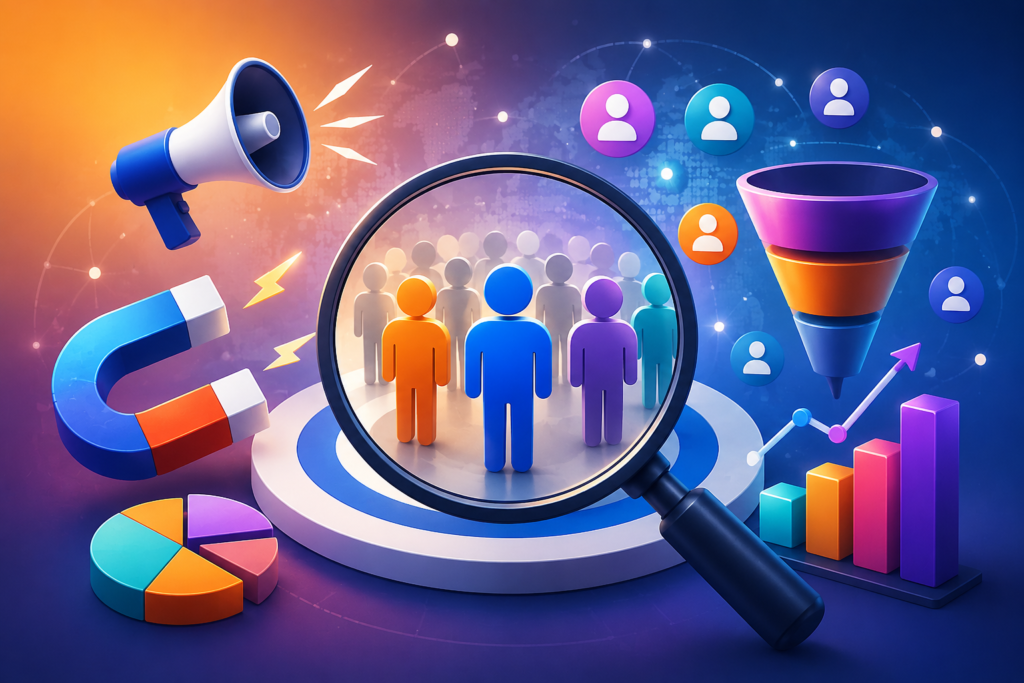
Even the most compelling webinar will struggle if it reaches the wrong audience. Attracting highly qualified attendees requires a strategic approach to audience segmentation, messaging, and traffic generation. Rather than promoting broadly, businesses should focus on reaching individuals who are actively searching for solutions related to the webinar topic. When marketing efforts align with audience intent, registration quality improves, attendance rates increase, and conversions become significantly more predictable.
Understanding search intent and customer behavior plays a critical role in attracting the right participants. Prospects in the awareness stage may respond well to educational blog articles, social media content, and search engine optimization, while those closer to making a purchase may engage more readily with paid advertising, email campaigns, or remarketing efforts. Aligning promotional channels with the audience’s buying stage creates a smoother journey from initial interest to webinar registration.
A diversified traffic strategy often delivers the strongest results. Combining organic search visibility, email marketing, strategic partnerships, referral campaigns, and paid advertising reduces reliance on a single traffic source while expanding audience reach. Consistent messaging across every promotional channel reinforces credibility and encourages prospective attendees to register with confidence.
Leveraging Organic Search and Content Marketing
Publishing informative articles, guides, videos, and downloadable resources around your webinar topic helps attract users actively researching related solutions. Optimizing this content for relevant keywords increases visibility in search results while positioning your brand as a trusted educational resource.
Educational content should answer common questions, demonstrate expertise, and naturally encourage readers to register for the webinar as the next step in their learning journey.
Using Paid Advertising Effectively
Paid campaigns can accelerate webinar registrations when targeted strategically. Audience segmentation based on interests, behaviors, demographics, or previous website interactions helps ensure promotional budgets are spent on users most likely to attend and convert.
Clear messaging, compelling visuals, and a strong value proposition are essential for maximizing click-through rates and reducing acquisition costs.
Building Trust Before Registration
Prospective attendees are more likely to register when they perceive the webinar as genuinely valuable. Displaying presenter credentials, highlighting learning outcomes, showcasing attendee testimonials, and clearly explaining the benefits of participation all contribute to stronger registration performance.
Trust begins before the webinar starts, making transparent communication and audience-focused messaging essential components of a successful webinar funnel.
Understanding What a Webinar Funnel Is
A Webinar Funnel is far more than a simple online presentation—it’s a strategic marketing system designed to attract qualified prospects, educate them with valuable insights, build trust through meaningful engagement, and guide them toward becoming loyal customers. Instead of relying on direct sales tactics, a webinar funnel nurtures potential buyers through a carefully planned journey that begins with awareness and ends with conversion. Businesses across industries use webinar funnels because they consistently generate higher-quality leads, improve customer relationships, and create scalable revenue opportunities. When designed correctly, a webinar funnel combines educational content, persuasive messaging, and marketing automation into a seamless experience that benefits both businesses and their audiences. Following Google’s recommendations for Creating Helpful, Reliable, People-First Content, adhering to the SEO Starter Guide, and implementing performance best practices from web.dev ensures that your webinar content remains valuable, trustworthy, user-focused, and aligned with modern search quality standards. A well-built webinar funnel not only increases registrations and attendance but also strengthens brand authority, improves customer confidence, and creates long-term business growth through consistent optimization and data-driven decision-making.
Understanding What a Webinar Funnel Is
A Webinar Funnel is far more than a simple online presentation—it’s a strategic marketing system designed to attract qualified prospects, educate them with valuable insights, build trust through meaningful engagement, and guide them toward becoming loyal customers. Instead of relying on direct sales tactics, a webinar funnel nurtures potential buyers through a carefully planned journey that begins with awareness and ends with conversion. Businesses across industries use webinar funnels because they consistently generate higher-quality leads, improve customer relationships, and create scalable revenue opportunities. When designed correctly, a webinar funnel combines educational content, persuasive messaging, and marketing automation into a seamless experience that benefits both businesses and their audiences. Following Google’s recommendations for Creating Helpful, Reliable, People-First Content, adhering to the SEO Starter Guide, and implementing performance best practices from web.dev ensures that your webinar content remains valuable, trustworthy, user-focused, and aligned with modern search quality standards. A well-built webinar funnel not only increases registrations and attendance but also strengthens brand authority, improves customer confidence, and creates long-term business growth through consistent optimization and data-driven decision-making.
Creating High-Converting Webinar Registration Pages
A webinar funnel is only as effective as its registration page. No matter how valuable your webinar content may be, potential attendees will not register if the landing page fails to communicate clear value. A high-converting registration page should immediately explain what attendees will learn, why it matters, and how it will help them achieve a specific outcome. Visitors should understand the webinar’s benefits within seconds of arriving on the page. Strong headlines, compelling subheadings, and a clear call-to-action work together to increase registration rates while reducing friction in the sign-up process.
The most successful webinar registration pages focus on outcomes rather than features. Instead of simply listing webinar topics, explain the transformation attendees can expect. For example, rather than saying “Learn Webinar Marketing,” communicate that participants will discover how to generate more qualified leads, improve conversions, and automate customer acquisition. This outcome-focused messaging resonates with potential attendees because it addresses their goals directly. Incorporating social proof such as testimonials, case studies, presenter credentials, and attendee success stories further strengthens trust and credibility.
Page performance also plays a significant role in conversion rates. Slow-loading pages often lead to abandoned registrations and lost opportunities. Following recommendations from web.dev and Google’s SEO Starter Guide can help improve page speed, mobile responsiveness, user experience, and overall performance. A streamlined registration form that requests only essential information typically produces better results than lengthy forms that create unnecessary friction. Every element on the page should support the primary goal: encouraging visitors to register quickly and confidently.
Building Effective Webinar Email Automation and Reminder Sequences
Email automation is one of the most important components of a successful webinar funnel. Even highly interested prospects can forget about an upcoming webinar due to busy schedules and competing priorities. A strategic email sequence ensures registrants remain engaged from the moment they sign up until the webinar concludes. Well-crafted reminder emails consistently improve attendance rates while reinforcing the value attendees will receive during the presentation.
The confirmation email should be delivered immediately after registration and include webinar details, calendar links, access instructions, and expectations for the session. This initial communication reassures registrants that their registration was successful while encouraging commitment. Subsequent reminder emails should highlight key benefits, address common questions, and build anticipation. Sending reminders one week before, one day before, one hour before, and shortly before the webinar begins often produces strong attendance results.
Modern marketing automation platforms allow businesses to personalize webinar communications based on user behavior. Registrants who engage with emails may receive advanced educational content, while inactive subscribers can receive re-engagement messages designed to increase participation. Following guidance from Creating Helpful, Reliable, People-First Content, email messaging should focus on providing genuine value rather than relying on excessive promotional language. Personalized, audience-focused communication builds trust and creates stronger engagement throughout the webinar funnel.
Delivering an Engaging Webinar Presentation That Builds Trust
The webinar itself represents the most critical stage of the funnel because it is where relationships are strengthened and purchasing decisions are influenced. An engaging presentation does far more than deliver information—it creates connection, demonstrates expertise, and helps attendees understand how to solve their challenges effectively. Presenters who focus on education first consistently outperform those who prioritize selling from the beginning.
Successful webinars typically follow a structured framework that includes audience engagement, problem identification, solution education, practical implementation strategies, and a natural introduction to the offer. Storytelling is especially effective because it makes complex concepts easier to understand while helping attendees connect emotionally with the presenter’s experiences. Real-world examples, case studies, demonstrations, and actionable insights reinforce credibility and establish authority within the subject matter.
Audience interaction is equally important. Polls, live chat discussions, Q&A sessions, and audience participation increase engagement while helping presenters understand attendee needs in real time. Interactive webinars maintain attention more effectively than one-way presentations. By consistently delivering valuable information, presenters create a positive experience that increases trust and makes attendees more receptive to future recommendations and offers. The focus should always remain on helping the audience achieve meaningful results rather than simply promoting products or services.
Presenting Webinar Offers That Convert Attendees into Customers
Many businesses struggle with webinar conversions because they transition too abruptly from education to selling. A successful webinar offer should feel like the natural next step in the attendee’s journey rather than an unexpected sales pitch. When the educational content clearly demonstrates a problem and provides valuable solutions, the offer becomes a logical extension of what attendees have already learned.
The most effective webinar offers focus on outcomes and transformation. Instead of emphasizing features alone, explain how the product or service helps attendees achieve specific goals faster, more efficiently, or with greater confidence. Case studies, testimonials, implementation examples, and success stories help reinforce credibility while reducing perceived risk. Social proof is particularly powerful because attendees often look for evidence that others have achieved positive results using the proposed solution.
Urgency and scarcity can also support conversions when used ethically and transparently. Limited-time bonuses, exclusive resources, implementation support, or enrollment deadlines can encourage timely decision-making without creating unnecessary pressure. Maintaining trust is essential throughout the offer presentation. According to Google’s Creating Helpful, Reliable, People-First Content principles, businesses should prioritize honesty, transparency, and user benefit above short-term sales tactics. When attendees genuinely believe the offer will help them achieve their goals, conversions occur naturally and sustainably.
Post-Webinar Follow-Up Strategies That Maximize Conversions
Many businesses underestimate the importance of post-webinar follow-up, yet a significant percentage of conversions often occur after the live event has ended. Attendees may need additional time to evaluate options, discuss decisions with stakeholders, or review webinar materials before making a purchase. A structured follow-up strategy ensures that valuable leads remain engaged while continuing to receive relevant information that supports their decision-making process.
The first follow-up email should be sent shortly after the webinar concludes and include access to the replay, presentation resources, key takeaways, and offer details. This communication serves both attendees and non-attendees by providing another opportunity to engage with the content. Additional follow-up emails can address common objections, share customer success stories, provide implementation insights, and answer frequently asked questions. Each message should focus on helping prospects move closer to a confident purchasing decision.
Segmentation significantly improves follow-up performance. Attendees who watched the entire webinar may receive different messaging than those who left early or failed to attend altogether. Behavioral data allows marketers to deliver more relevant content while increasing conversion opportunities. By combining automation, personalization, and value-driven communication, businesses can extend the impact of their webinar funnel well beyond the live presentation. Strong follow-up systems frequently determine whether a webinar generates average results or becomes a major source of long-term revenue growth.
Evergreen Webinar Funnels: Creating a 24/7 Lead Generation System
One of the greatest advantages of modern webinar marketing is the ability to transform a successful live presentation into an evergreen webinar funnel that generates qualified leads around the clock. Unlike live webinars, evergreen webinars allow prospects to register and watch presentations at their convenience while still experiencing a structured customer journey. This automation enables businesses to consistently educate, nurture, and convert potential customers without repeatedly hosting live events. By leveraging evergreen webinar technology, companies can scale marketing efforts, reduce operational workload, and create predictable revenue streams throughout the year.
Creating a successful evergreen webinar requires more than simply uploading a recording. The presentation should remain relevant over time by focusing on evergreen topics, timeless strategies, and practical solutions rather than temporary trends or outdated statistics. Automated registration pages, reminder emails, replay access, and follow-up sequences must work together seamlessly to recreate the engagement of a live event. Following Google’s Creating Helpful, Reliable, People-First Content guidance ensures the educational content remains genuinely useful and trustworthy for every new attendee.
Continuous optimization is essential for maintaining evergreen performance. Businesses should regularly review registration rates, attendance metrics, engagement levels, and conversion data to identify improvement opportunities. Updating case studies, examples, offers, and visual assets keeps the webinar fresh while maintaining audience confidence. When properly maintained, an evergreen webinar funnel becomes one of the most valuable long-term marketing assets for generating leads, increasing sales, and supporting sustainable business growth.
Measuring Webinar Funnel Performance with Analytics
A webinar funnel should never rely on assumptions. Measuring performance through accurate analytics enables businesses to understand how prospects interact with every stage of the customer journey. By monitoring registrations, attendance, engagement, conversions, and revenue, marketers gain valuable insights that support continuous optimization. Without meaningful data, businesses risk making decisions based on guesswork rather than measurable results.
Several key performance indicators (KPIs) should be monitored throughout the webinar funnel. These include registration conversion rate, attendance percentage, average viewing duration, audience engagement, click-through rates, sales conversion rate, customer acquisition cost, and overall return on investment (ROI). Tracking these metrics allows businesses to identify strengths, uncover weaknesses, and prioritize improvements that have the greatest impact on overall performance. Implementing Google Analytics alongside Google’s SEO Starter Guide recommendations provides reliable insights into user behavior and website performance.
Analytics also support effective testing and optimization. Businesses can experiment with different webinar titles, registration page layouts, email subject lines, presentation formats, call-to-action placements, and follow-up sequences to determine what produces the highest conversions. Small improvements across multiple stages of the funnel often generate significant increases in revenue over time. Data-driven decision-making transforms webinar funnels into scalable marketing systems that continuously improve through ongoing measurement and refinement.
Optimizing Webinar Funnels for Higher Conversions
Even high-performing webinar funnels can be improved through ongoing optimization. Consumer behavior, market conditions, technology, and competition evolve continuously, making regular refinement essential for maintaining strong conversion rates. Optimization should focus on improving the entire customer journey rather than isolated components, ensuring that every interaction supports the next step in the funnel.
Landing page optimization often produces immediate improvements. Testing different headlines, value propositions, registration forms, images, testimonials, and calls-to-action helps identify the messaging that resonates most effectively with the target audience. Likewise, optimizing email sequences by improving personalization, timing, and content relevance can increase both attendance and engagement. Enhancing webinar delivery with clearer visuals, interactive polls, live demonstrations, and audience participation also contributes to stronger overall performance.
Technical performance should never be overlooked. Fast-loading pages, responsive mobile design, secure browsing through HTTPS, and excellent user experience contribute to higher engagement and lower abandonment rates. Google’s recommendations available through web.dev and the SEO Starter Guide provide valuable best practices for improving website performance and usability. Continuous optimization ensures that webinar funnels remain competitive while delivering exceptional experiences for both new and returning visitors.
Future Trends Shaping Webinar Funnel Marketing
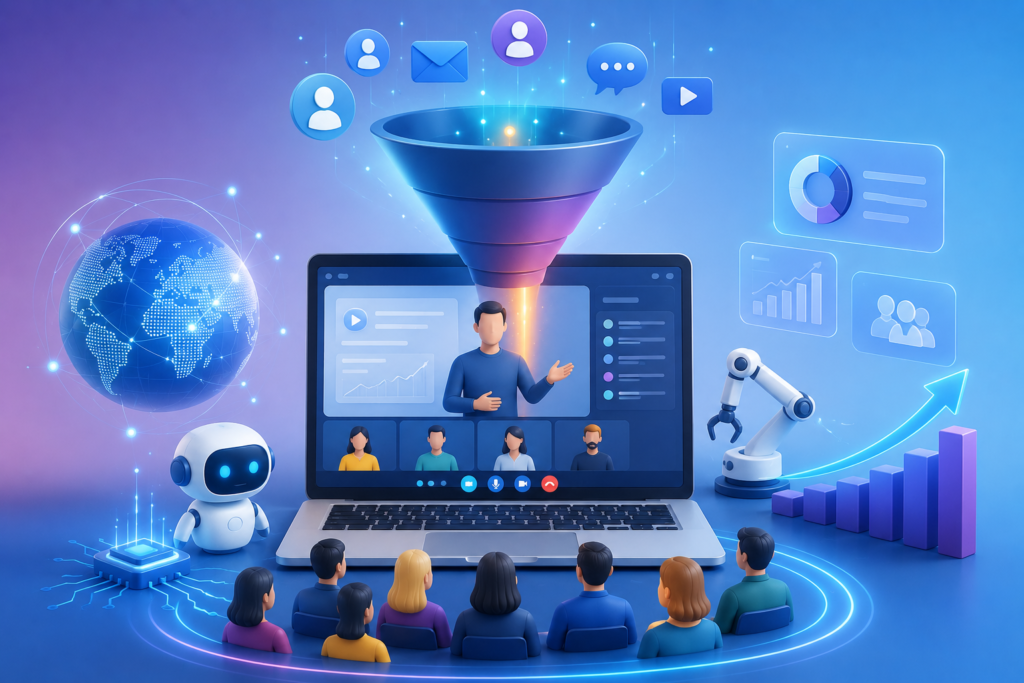
The webinar funnel landscape continues to evolve as new technologies, customer expectations, and digital marketing strategies emerge. Businesses that embrace innovation while maintaining a strong focus on user value will be best positioned to achieve long-term success. Future webinar funnels will become increasingly personalized, automated, interactive, and data-driven, providing attendees with more engaging learning experiences and businesses with greater marketing efficiency.
Artificial intelligence is already transforming webinar marketing through automated audience segmentation, predictive analytics, personalized email campaigns, AI-generated content recommendations, and intelligent chat assistants. These technologies help marketers deliver more relevant experiences while reducing manual effort. Enhanced analytics and machine learning also provide deeper insights into attendee behavior, enabling businesses to make more informed optimization decisions based on real-time performance data.
Interactive experiences will continue to play an increasingly important role in webinar success. Features such as live polls, personalized content paths, AI-powered question handling, virtual networking opportunities, and immersive multimedia presentations create stronger engagement while improving attendee satisfaction. Organizations that combine educational excellence with emerging technology will continue building stronger customer relationships, improving conversions, and maintaining a competitive advantage within their industries.
Frequently Asked Questions
1. What is a Webinar Funnel?
A Webinar Funnel is a structured marketing process that guides potential customers from discovering your webinar to becoming paying clients. It typically includes traffic generation, a registration page, confirmation emails, reminder sequences, the webinar presentation, a sales offer, and follow-up automation. Each stage is designed to educate prospects, build trust, and encourage informed purchasing decisions. A properly optimized webinar funnel generates qualified leads while creating a seamless customer experience.
2. Why are Webinar Funnels effective for lead generation?
Webinar funnels work because they educate prospects before selling. Instead of promoting products immediately, businesses provide valuable insights that solve real problems. This educational approach establishes credibility, increases audience engagement, and builds trust. As a result, attendees are more likely to view the business as an authority and are significantly more willing to purchase recommended solutions after the webinar.
3. How long should a webinar be?
Most successful webinars last between 45 and 90 minutes, depending on the topic and audience. This provides enough time to deliver meaningful educational content, demonstrate expertise, answer questions, and present an offer without overwhelming attendees. The ideal duration balances value with engagement, ensuring participants remain attentive throughout the presentation.
4. What tools are commonly used to build Webinar Funnels?
Businesses commonly use webinar platforms, landing page builders, email marketing software, CRM systems, analytics tools, and marketing automation platforms. Selecting tools that integrate seamlessly allows businesses to automate registrations, reminders, attendee tracking, follow-up campaigns, and customer management while improving operational efficiency.
5. How can I improve webinar attendance rates?
Attendance improves when businesses send multiple reminder emails, calendar invitations, SMS notifications, and valuable pre-webinar content that builds anticipation. Registration pages should clearly communicate attendee benefits, while reminder messages should reinforce what participants will gain by attending live. Consistent communication significantly reduces no-show rates.
6. Should I use live or evergreen webinars?
Both approaches have advantages. Live webinars encourage real-time interaction, audience engagement, and immediate Q&A sessions, making them highly effective for relationship building. Evergreen webinars provide scalability by allowing businesses to generate leads continuously without repeatedly hosting live presentations. Many organizations successfully combine both strategies for maximum reach and efficiency.
7. How do I measure Webinar Funnel success?
Success should be measured using key performance indicators such as registration rate, attendance percentage, engagement time, click-through rate, conversion rate, revenue generated, customer acquisition cost (CAC), and return on investment (ROI). Monitoring these metrics helps identify optimization opportunities while improving overall funnel performance.
8. How often should I optimize my Webinar Funnel?
A webinar funnel should be reviewed regularly using analytics and user feedback. Businesses should continuously test landing pages, email sequences, webinar content, calls-to-action, and follow-up campaigns to improve performance. Ongoing optimization ensures the funnel remains effective as customer behavior, technology, and market trends evolve.
Best Practices Summary
Building a successful Webinar Funnel requires more than delivering an engaging online presentation. It demands a strategic approach that combines audience research, valuable educational content, persuasive messaging, automation, analytics, and continuous optimization. Every stage of the funnel—from attracting visitors to nurturing long-term customer relationships—should focus on delivering genuine value while helping prospects make informed decisions. Organizations that prioritize user experience consistently achieve stronger engagement, higher conversion rates, and greater customer loyalty.
Some of the most effective webinar funnel best practices include identifying a clearly defined target audience, selecting topics that solve meaningful problems, designing high-converting registration pages, automating personalized email sequences, delivering engaging presentations, presenting ethical offers, and implementing comprehensive post-webinar follow-up campaigns. Businesses should also monitor key performance metrics, perform regular A/B testing, and continually improve their funnels based on real user behavior and measurable outcomes.
Following Google’s Creating Helpful, Reliable, People-First Content, SEO Starter Guide, and web.dev recommendations helps ensure that webinar-related content remains trustworthy, user-focused, technically optimized, and aligned with modern search quality standards. Businesses that consistently educate first, build trust naturally, and optimize continuously are well-positioned to create webinar funnels that generate sustainable growth for years to come.
Conclusion
A well-designed Webinar Funnel is much more than a marketing campaign—it is a complete customer acquisition system that attracts the right audience, builds meaningful relationships, and converts qualified prospects into loyal customers. By combining educational content, strategic automation, persuasive messaging, and continuous optimization, businesses can create predictable and scalable revenue while delivering genuine value to their audience. Every stage of the funnel, from the first visitor to the final follow-up email, contributes to a seamless customer experience that encourages trust and long-term engagement.
Success with webinar funnels does not happen by chance. It requires careful planning, audience research, compelling registration pages, engaging presentations, personalized follow-up sequences, and ongoing performance analysis. Businesses that regularly monitor key metrics, test new strategies, and refine their customer journey consistently outperform competitors that rely on outdated or one-time marketing efforts. Adhering to Google’s Creating Helpful, Reliable, People-First Content, SEO Starter Guide, and web.dev best practices further strengthens both search visibility and user experience.
At My Funnel Script, we believe that an effective webinar funnel should educate before it sells, solve real business challenges, and create lasting customer relationships built on trust and expertise. Whether you’re launching your first webinar or optimizing an existing funnel, implementing the strategies outlined in this guide will help you generate more qualified leads, improve conversions, and build a sustainable marketing system that supports long-term business growth.
Want to Implement This Easily?
Prompt
You are an expert consultant. Based on the blog post titled “Webinar Funnel”, provide a step-by-step, practical implementation guide. Include tools, best practices, common mistakes to avoid, and advanced tips. Assume the reader wants to implement everything discussed in this article effectively.
Call to Action
Want our help implementing this? Just reach out to us via our website contact form: