

Learn how to create high-converting sales pages that attract qualified prospects, build trust, communicate value effectively, and increase conversions through proven copywriting, design, psychology, and optimization strategies.
Introduction
In today’s competitive digital marketplace, a well-crafted sales page is one of the most powerful assets a business can have. Whether you are selling products, services, memberships, coaching programs, software, or digital downloads, your sales page serves as the primary conversion tool that transforms visitors into paying customers. Unlike a standard website page, a sales page is strategically designed with one goal: persuading visitors to take action.
Businesses often spend substantial budgets on advertising, content marketing, email campaigns, and social media promotion. However, without an effective sales page, even the best traffic sources can fail to produce meaningful results. A properly structured sales page aligns persuasive messaging, compelling design, customer psychology, and clear calls-to-action into a seamless conversion experience.
At My Funnel Script, understanding how sales pages influence buying decisions can help businesses maximize their marketing investments and achieve predictable growth. This guide explores every critical element required to create high-performing sales pages that generate measurable results while maintaining trust, credibility, and long-term customer relationships.
What Is a Sales Page and Why Does It Matter?
A sales page is a dedicated web page created specifically to persuade visitors to take a desired action. Unlike general informational pages, sales pages focus entirely on guiding prospects toward a conversion goal such as making a purchase, booking a consultation, requesting a demo, or subscribing to a service.
The effectiveness of a sales page lies in its ability to communicate value clearly and address customer concerns before they become objections. Visitors arrive with questions, doubts, and competing alternatives in mind. A strong sales page anticipates these concerns and provides persuasive answers through strategic messaging, social proof, benefits, and credibility indicators.
Modern consumers conduct extensive research before making purchasing decisions. A comprehensive sales page provides the information prospects need while reducing friction throughout the buying journey. By delivering relevant details in a structured and persuasive format, businesses can increase trust, shorten sales cycles, and improve conversion rates significantly.
Understanding the Psychology Behind High-Converting Sales Pages
Successful sales pages are built on a deep understanding of human behavior and decision-making psychology. Buyers rarely make decisions based solely on logic. Emotions often drive purchasing behavior, while logic is used afterward to justify the decision.
One of the most influential psychological triggers is the desire to solve problems. People actively seek solutions that eliminate frustration, save time, reduce costs, increase status, or improve their quality of life. Effective sales pages position products or services as solutions rather than simply listing features.
Another important psychological principle involves trust and risk reduction. Prospects naturally question whether a product will deliver on its promises. Testimonials, case studies, guarantees, certifications, and transparent communication help reduce perceived risk and encourage action. Understanding these psychological factors enables marketers to craft more persuasive and customer-focused sales experiences.
Identifying Your Target Audience Before Writing a Sales Page
Before writing a single headline, businesses must clearly define their target audience. Even the most persuasive copy can fail if it speaks to the wrong audience or addresses irrelevant concerns.
Audience research involves understanding demographics, motivations, goals, pain points, challenges, objections, and buying behavior. By identifying what customers truly want, businesses can create messaging that resonates deeply with their intended market. Surveys, interviews, analytics data, customer reviews, and sales conversations provide valuable insights.
A highly targeted sales page feels personal because it reflects the reader’s specific situation. Visitors should immediately recognize that the content understands their challenges and offers a relevant solution. This connection increases engagement, improves trust, and creates a stronger foundation for conversion-focused communication.
Crafting a Powerful Headline That Captures Attention
The headline is often the most important element of any sales page because it determines whether visitors continue reading. Studies consistently show that many visitors read headlines but never engage with the rest of the content if the opening message fails to capture interest.
Effective headlines communicate a clear benefit, outcome, or transformation. Rather than focusing on product features, strong headlines emphasize the value customers will receive. They answer the critical question every visitor asks: “What’s in it for me?”
Great headlines also create curiosity while remaining credible. Overly exaggerated claims may generate clicks but can damage trust and increase bounce rates. The most successful headlines balance emotional appeal with realistic expectations, encouraging visitors to continue exploring the page while maintaining confidence in the offer.
Developing a Unique Value Proposition That Stands Out
A unique value proposition explains why customers should choose a particular solution over competing alternatives. In crowded markets, differentiation becomes essential for attracting attention and influencing buying decisions.
An effective value proposition clearly communicates the primary benefit of the offer, identifies who it serves, and explains what makes it unique. Rather than relying on generic claims such as “best quality” or “excellent service,” businesses should focus on specific advantages that customers genuinely value.
The strongest value propositions are customer-centered rather than company-centered. Instead of highlighting organizational achievements, they emphasize outcomes, improvements, and solutions that matter most to potential buyers. This approach helps prospects quickly understand the relevance and potential impact of the offer.
Writing Persuasive Sales Copy That Converts

Sales copy serves as the core communication mechanism of a sales page. Every sentence should move visitors closer to a buying decision by educating, persuading, and addressing concerns throughout the customer journey.
High-converting sales copy focuses on benefits rather than features. While features describe what a product does, benefits explain how those features improve the customer’s life or business. Readers are generally more interested in outcomes than technical specifications.
Persuasive copy also uses storytelling to create emotional connections. Stories help prospects visualize success, understand real-world applications, and see themselves achieving desired results. By combining clear benefits, emotional engagement, and practical value, businesses can create compelling narratives that drive action.
The Role of Customer Pain Points in Sales Page Success
One of the most effective ways to engage prospects is by addressing their existing challenges. Customers actively seek solutions when they experience frustration, inefficiency, uncertainty, or unmet goals.
Successful sales pages clearly identify common pain points and demonstrate a deep understanding of the customer’s situation. This validation helps visitors feel understood and increases confidence in the proposed solution. When readers recognize their challenges in the copy, they become more receptive to the message.
After highlighting pain points, the sales page should present the solution in a logical and compelling manner. The transition from problem awareness to solution presentation should feel natural, helping prospects connect their current struggles with the potential benefits of the offer.
Using Storytelling to Increase Engagement and Trust
Storytelling remains one of the most powerful communication tools available to marketers. Stories capture attention, simplify complex concepts, and create emotional connections that traditional sales messaging often cannot achieve.
A compelling story demonstrates transformation. It shows how a problem existed, what challenges were encountered, and how the solution produced meaningful results. This narrative structure allows prospects to relate to the experience and imagine similar outcomes for themselves.
Stories also enhance credibility because they provide context and authenticity. Real-world examples, customer journeys, founder stories, and case studies make marketing messages more believable and memorable. When integrated strategically, storytelling can significantly improve engagement and conversion performance.
Building Credibility Through Social Proof
Trust is a fundamental requirement for online conversions. Since visitors cannot physically interact with a product or service before purchasing, they rely heavily on external validation when making decisions.
Social proof includes customer testimonials, reviews, ratings, case studies, client logos, industry recognition, awards, and success stories. These elements demonstrate that other people have already experienced positive outcomes, reducing uncertainty for potential buyers.
Research consistently shows that consumers trust peer recommendations more than promotional messaging. Including authentic testimonials with measurable results can strengthen credibility and reinforce the value proposition. The more relevant and specific the social proof, the greater its impact on conversion rates.
Creating Irresistible Calls-to-Action
A call-to-action (CTA) directs visitors toward the desired next step. Without clear guidance, even highly interested prospects may leave without converting.
Effective CTAs are specific, action-oriented, and benefit-focused. Rather than generic phrases such as “Submit” or “Click Here,” stronger CTAs communicate value and reinforce outcomes. Examples include “Start Growing Your Business Today” or “Get Your Free Strategy Session.”
CTA placement is equally important. Strategic positioning throughout the sales page ensures visitors can take action whenever they feel ready. Multiple opportunities to convert help accommodate different reading behaviors while maintaining a smooth user experience.
Designing Sales Pages for Exceptional User Experience
A visually appealing sales page is important, but design should always support conversions rather than distract from them. User experience (UX) directly impacts how visitors interact with content, process information, and ultimately make purchasing decisions. A cluttered design, confusing layout, or overwhelming presentation can cause visitors to leave before fully understanding the offer.
Effective sales page design follows a logical content hierarchy. Headlines should immediately communicate value, subheadings should guide readers through the page, and supporting visuals should reinforce key messages. White space plays a crucial role in improving readability and preventing cognitive overload. When information is presented in digestible sections, visitors are more likely to remain engaged and continue reading.
Consistency also contributes significantly to user experience. Fonts, colors, button styles, imagery, and messaging should align throughout the page. Consistent branding creates familiarity and professionalism, helping prospects feel more comfortable moving forward. A well-designed sales page not only looks appealing but also removes obstacles that might prevent conversions.
Mobile Optimization for Sales Pages
Mobile traffic continues to dominate online browsing behavior, making mobile optimization a critical component of sales page success. Visitors expect fast-loading pages, intuitive navigation, and seamless functionality regardless of the device they use.
A mobile-friendly sales page adapts content for smaller screens without sacrificing readability or usability. Headlines should remain clear, paragraphs should be concise, and call-to-action buttons should be easily clickable. Large blocks of text can discourage engagement on mobile devices, so formatting should prioritize readability and accessibility.
Performance optimization is equally important. According to SEO Starter Guide recommendations, page speed contributes to overall user experience. Compressing images, minimizing unnecessary scripts, and optimizing page elements can improve loading times and reduce abandonment rates. Mobile optimization is no longer optional—it is essential for maximizing conversions.
SEO Strategies for Sales Pages
Although sales pages primarily focus on conversions, search engine optimization can significantly increase visibility and attract qualified traffic. A well-optimized sales page can rank for relevant commercial-intent keywords while maintaining persuasive messaging.
Keyword research should focus on terms potential customers use when actively searching for solutions. Primary keywords, secondary keywords, and related semantic phrases should appear naturally throughout the content. Overusing keywords can negatively affect readability and user experience, so balance is essential.
Technical optimization also plays a role in search performance. Following guidance from Creating Helpful, Reliable, People-First Content, businesses should prioritize valuable, original content that genuinely helps users make informed decisions. Optimized title tags, meta descriptions, structured headings, internal links, and relevant external references contribute to stronger search visibility while supporting conversion goals.
Common Sales Page Mistakes That Hurt Conversions
Many businesses unknowingly reduce conversion rates by making avoidable sales page mistakes. Identifying and correcting these issues can dramatically improve performance without increasing advertising costs.
One of the most common mistakes is focusing excessively on features instead of benefits. Visitors care primarily about outcomes and solutions. Technical specifications have value, but they should support customer-focused messaging rather than dominate the page. Another frequent issue involves weak headlines that fail to communicate a compelling reason to continue reading.
Overwhelming visitors with excessive information can also reduce conversions. While comprehensive content is important, clarity should always remain a priority. Confusing navigation, multiple competing offers, inconsistent messaging, and unclear calls-to-action often create friction that prevents prospects from taking the next step. Simplifying the user journey can significantly improve results.
Testing and Conversion Rate Optimization
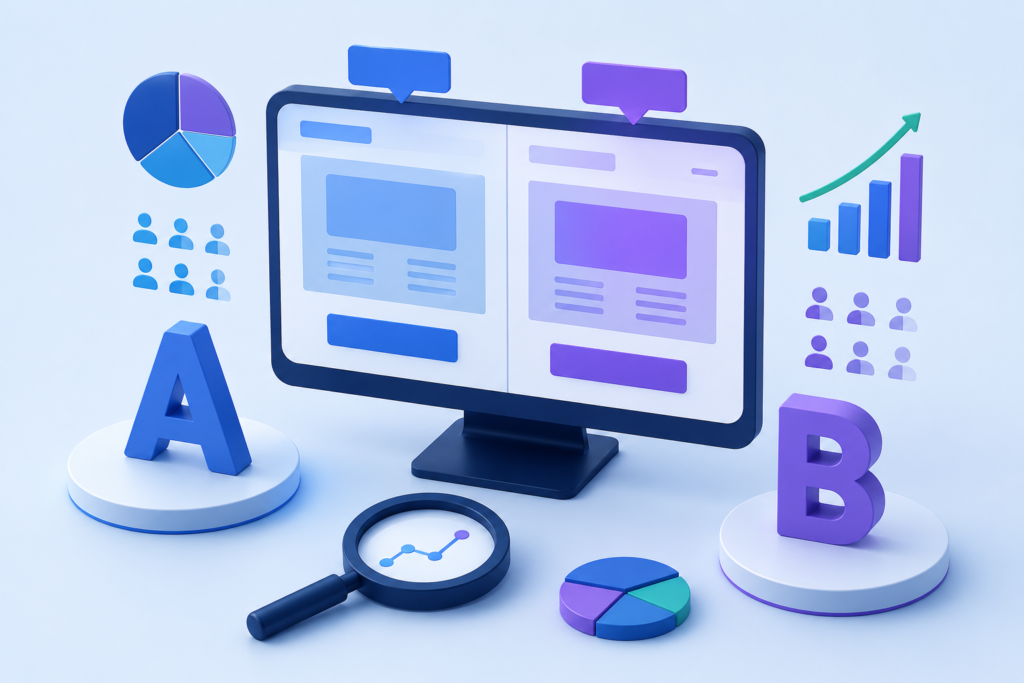
Even highly successful sales pages can often perform better through systematic testing and optimization. Conversion rate optimization (CRO) involves analyzing user behavior, identifying opportunities for improvement, and testing changes to increase performance.
A/B testing allows marketers to compare different versions of headlines, images, calls-to-action, layouts, pricing presentations, and other page elements. Small adjustments can sometimes produce substantial improvements in conversion rates. Rather than relying on assumptions, testing provides data-driven insights that guide decision-making.
Optimization should be an ongoing process rather than a one-time project. Consumer preferences, market conditions, and competitive environments change over time. Regular analysis helps businesses adapt their sales pages to evolving customer expectations while maintaining strong performance and maximizing return on investment.
Measuring Sales Page Performance with Analytics
Successful sales page management requires accurate measurement and continuous evaluation. Analytics tools provide valuable insights into visitor behavior, helping businesses understand what works and where improvements are needed.
Key performance indicators (KPIs) may include conversion rate, bounce rate, average time on page, click-through rate, form completion rate, and revenue per visitor. Monitoring these metrics helps identify bottlenecks that may be limiting results. For example, a high bounce rate could indicate messaging misalignment, while low CTA engagement may suggest unclear calls-to-action.
Data analysis should focus not only on outcomes but also on user behavior patterns. Heatmaps, session recordings, and funnel analysis can reveal how visitors interact with content and where they encounter friction. These insights support more effective optimization strategies and help create increasingly efficient sales experiences.
Best Practices Summary for High-Converting Sales Pages
Building an effective sales page requires a strategic combination of psychology, design, copywriting, trust-building, and optimization. While every audience is unique, several best practices consistently contribute to stronger performance.
First, prioritize customer needs over company messaging. Prospects care most about solving problems and achieving desired outcomes. Every section of the page should reinforce value and relevance. Second, establish trust through transparency, social proof, guarantees, and authentic communication. Trust remains one of the strongest drivers of online purchasing behavior.
Third, continuously test and improve. Markets evolve, customer expectations shift, and competitors adapt. Ongoing optimization ensures sales pages remain effective over time. Businesses that commit to testing, learning, and refining their approach often achieve significantly higher conversion rates than those relying on static designs and assumptions.
Frequently Asked Questions
1. What is the primary purpose of a sales page?
The primary purpose of a sales page is to persuade visitors to take a specific action, such as making a purchase, booking a consultation, registering for a service, or requesting additional information. Every element of the page should support that objective.
2. How long should a sales page be?
The ideal length depends on the complexity of the offer, audience awareness, and purchase price. High-ticket offers often require longer pages because prospects need more information before making a decision. Simpler offers may perform well with shorter pages.
3. What makes a sales page convert effectively?
Successful sales pages combine compelling headlines, clear value propositions, persuasive copy, trust signals, social proof, strong calls-to-action, and an optimized user experience.
4. Should every business have a dedicated sales page?
Most businesses can benefit from dedicated sales pages, especially when promoting specific products, services, campaigns, webinars, consultations, or lead generation offers.
5. How important are testimonials on a sales page?
Testimonials play a major role in reducing uncertainty and building trust. Authentic customer experiences help prospects feel more confident about purchasing decisions.
6. How often should sales pages be updated?
Regular reviews are recommended. Businesses should update sales pages when customer needs change, new testimonials become available, offers evolve, or analytics reveal optimization opportunities.
7. Can SEO and conversion optimization work together?
Yes. Effective sales pages can rank in search engines while still focusing on conversions. The key is balancing valuable content, keyword relevance, and persuasive messaging without sacrificing user experience.
8. What is the biggest mistake businesses make with sales pages?
One of the biggest mistakes is focusing too much on products and not enough on customer outcomes. Visitors are more interested in benefits, solutions, and results than technical features alone.
Conclusion
Sales pages remain one of the most valuable assets in modern digital marketing. When strategically designed and optimized, they can attract qualified prospects, communicate value effectively, build trust, and drive meaningful business growth. Every component—from headlines and storytelling to social proof and calls-to-action—contributes to the overall conversion experience.
For businesses seeking sustainable growth, investing in high-quality sales pages can significantly improve marketing performance and maximize return on investment. At My Funnel Script, understanding the principles outlined in this guide can help organizations create persuasive sales experiences that convert visitors into loyal customers while maintaining credibility and trust.
Want to Implement This Easily?
Prompt Text:
You are an expert consultant. Based on the blog post titled “Sales Pages”, provide a step-by-step, practical implementation guide. Include tools, best practices, common mistakes to avoid, and advanced tips. Assume the reader wants to implement everything discussed in this article effectively.
Call to Action:
Want our help implementing this? Just reach out to us via our website contact form: