
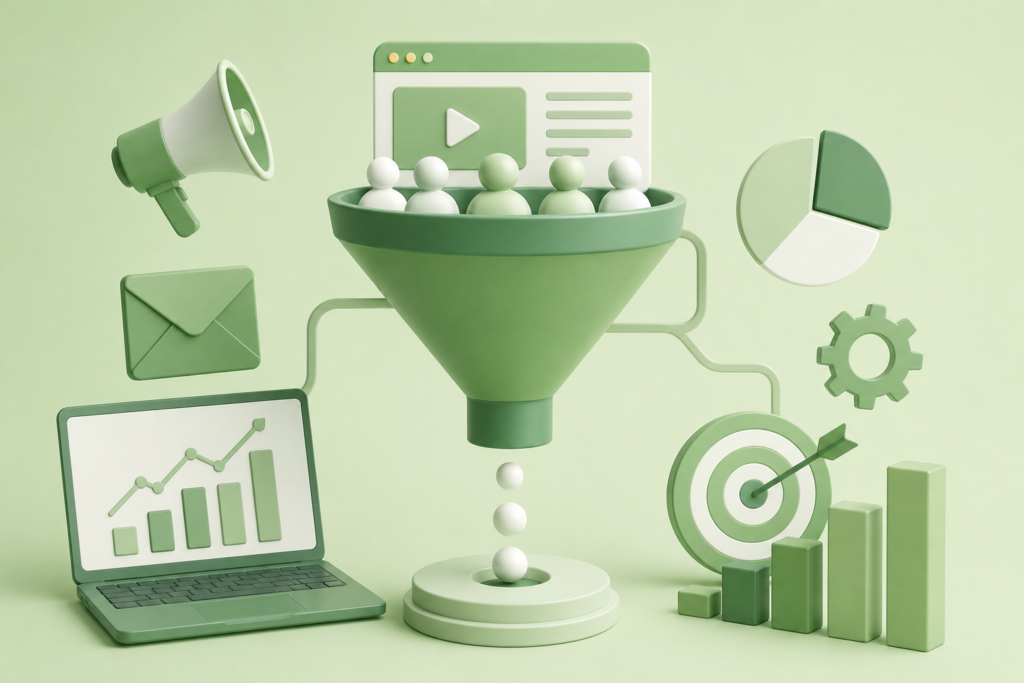
Learn how webinar funnels attract qualified leads, build trust, increase engagement, and convert prospects through strategic registration pages, email sequences, presentations, offers, and follow-up systems.
Introduction
A webinar can be one of the most effective ways to turn expertise into a structured customer journey. Unlike a short advertisement or static landing page, a webinar gives prospects time to understand a problem, learn a practical solution, evaluate the person or business providing that solution, and decide whether the next step makes sense for them. When the experience is strategically designed from the first advertisement or referral through registration, attendance, presentation, offer, and follow-up, it becomes more than an online event. It becomes a webinar funnel.
The real advantage of a webinar funnel is that it combines education with conversion. Instead of asking a cold visitor to make an immediate purchase, the funnel can first provide useful information, address objections, demonstrate expertise, and establish relevance. This makes webinars particularly valuable for consultants, coaches, agencies, educators, software businesses, professional service providers, course creators, and companies selling products or services that require explanation before purchase. A well-structured funnel gives prospects an opportunity to understand the problem before they are asked to commit to a solution.
For businesses building a complete customer journey, My Funnel Script provides resources designed around different stages of online marketing, including Sales Pages, Landing Pages, Webinar Promos, and Nurture Emails. The objective of a webinar funnel should remain straightforward: attract the right audience, communicate a specific promise, collect registrations, prepare attendees, deliver meaningful education, present a relevant next step, and continue the conversation after the event.
What Is a Webinar Funnel and How Does It Work?
A webinar funnel is a sequence of marketing and conversion stages designed to move a potential customer from initial awareness to webinar registration, attendance, engagement, and ultimately a desired business outcome. That outcome might be a consultation, product purchase, course enrollment, software trial, application, strategy call, or another qualified conversion. The webinar itself is only one component. The complete funnel can include traffic sources, advertisements, social content, registration pages, confirmation pages, reminder emails, webinar delivery, offer pages, follow-up sequences, and measurement systems.
A useful way to understand the funnel is to divide it into stages based on intent. At the top, prospects may not fully understand their problem or may simply recognize that they want a better result. The registration stage gives them a reason to commit time. The reminder stage protects that commitment by reducing forgetfulness and increasing anticipation. The webinar stage delivers the promised transformation or insight. The offer stage connects the education to an appropriate solution. Finally, follow-up helps prospects who were interested but not yet ready to act. Each stage therefore has a different job, and treating every stage as a sales page can weaken the overall experience.
The strongest webinar funnels are built around alignment. The advertisement should attract the type of person who can genuinely benefit from the webinar. The registration page should make the webinar’s promise clear without exaggeration. The presentation should deliver what the registration page promised. The offer should logically extend the solution presented during the webinar. Follow-up should address genuine questions and objections rather than simply repeating “buy now.” This people-first approach aligns with Google’s guidance to create helpful, reliable content primarily for users rather than content created mainly to manipulate search rankings. Creating Helpful, Reliable, People-First Content emphasizes originality, depth, usefulness, and trust.
Define the Audience Before Building the Webinar Funnel
The quality of a webinar funnel depends heavily on how clearly the target audience is defined. A broad audience may appear attractive because it creates a larger potential reach, but broad targeting often produces weaker registrations, lower attendance, poor engagement, and disappointing conversion rates. Before creating the funnel, identify who has the problem you solve, how significant that problem is, what they have already tried, what outcome they want, and what might prevent them from taking action. This creates a customer profile that can guide the entire funnel rather than merely the advertising stage.
Audience research should go beyond basic demographics. Consider the prospect’s intent, awareness level, urgency, sophistication, and buying context. Someone searching for a basic explanation needs a different webinar promise from someone comparing advanced solutions. A beginner may respond to a foundational workshop, while an experienced professional may want a strategic masterclass, case-study session, audit, demonstration, or advanced implementation framework. The more precisely the webinar matches the prospect’s current situation, the easier it becomes to write relevant messaging and structure useful educational content.
A practical audience profile should answer questions such as: What is the audience trying to achieve? What frustrates them most? Which alternatives have disappointed them? What does success look like? What terminology do they naturally use? What objections might they have about price, time, complexity, risk, or credibility? These answers can influence the webinar title, registration copy, examples, presentation structure, bonuses, offer positioning, and follow-up. The goal is not to manufacture an artificial persona. It is to understand a real decision-making process so the funnel feels relevant rather than generic.
Choose a Webinar Topic That Creates Genuine Demand
A high-converting webinar topic begins with a problem or desired outcome that the target audience already cares about. Weak topics are often too broad, too promotional, or too disconnected from an immediate business need. A title such as “Everything About Marketing” creates little urgency because the attendee cannot easily identify what they will learn. A stronger concept focuses on a specific transformation, such as improving lead quality, reducing wasted advertising spend, building a repeatable sales process, or understanding how to turn educational content into qualified opportunities.
The topic should be valuable enough to justify the prospect’s time while remaining connected to the product or service being offered afterward. This is an important strategic balance. If the webinar is completely unrelated to the commercial solution, attendees may enjoy the presentation but have no reason to continue. If the webinar is simply a disguised sales pitch, people may leave early or lose trust. The most useful model is to teach a meaningful framework, explain why the problem exists, demonstrate practical improvements, and then show how a more complete solution can help someone implement those principles.
Consider building the topic around a specific promise, mechanism, and audience. The promise describes the desired result. The mechanism explains the approach or system being taught. The audience identifies who should attend. For example, instead of “How to Improve Your Sales,” a more focused concept could be “How Service Businesses Can Build a Predictable Lead-to-Consultation Process Without Depending Entirely on Referrals.” This type of positioning creates a clearer expectation, helps attract qualified attendees, and gives the presenter a natural bridge into the next solution.
Build a Registration Page That Converts Without Overpromising
The registration page has one primary responsibility: help the right visitor understand the webinar’s value and make an informed decision to register. It should communicate the topic, audience, date or access details, major learning outcomes, presenter credibility, and registration action without unnecessary distractions. The headline should quickly answer the question, “Why should I spend my time on this?” Supporting copy can then explain what the attendee will learn and why the material is relevant to their situation.
A strong registration page should also reduce uncertainty. Visitors may wonder whether the webinar is suitable for beginners, whether the content is practical, how long it will take, whether the event is live or recorded, and whether they will receive anything after registering. Address those questions clearly. Avoid fabricated scarcity, exaggerated earnings claims, fake countdowns, or unsupported statements about guaranteed results. Trust is more valuable than a temporary increase in clicks, particularly when the webinar leads into a higher-value commercial decision.
The page should also be technically sound. Make the registration form easy to complete on mobile devices, minimize unnecessary fields, ensure buttons are clearly identifiable, and make important information easy to scan. Performance matters because a visitor cannot register efficiently if the page is slow or unstable. Google’s page experience guidance recommends considering overall usability, Core Web Vitals, secure delivery, mobile experience, and other aspects of a good user experience rather than obsessing over one isolated metric.
Create a Confirmation Experience That Builds Commitment
Registration is not the end of the conversion process. It is the beginning of the attendee relationship. A confirmation page should immediately reassure the visitor that registration succeeded and explain exactly what happens next. Include the event details, access instructions, calendar information where appropriate, and a concise explanation of what the attendee should expect. If there is preparation material, provide it in a way that is easy to understand and use.
The confirmation experience can also strengthen commitment through micro-engagement. Ask the registrant a useful question, encourage them to submit their biggest challenge, invite them to save the event, or provide a short pre-webinar resource. These actions do more than collect information. They create psychological involvement. Someone who has already identified a problem and written it down is more likely to pay attention when the webinar addresses that problem.
However, avoid turning the confirmation page into another aggressive sales page. The person has already taken the requested action. The immediate priority should be confidence and clarity. A good confirmation experience tells the registrant, “You made the right decision, and here is what happens next.” This is also an opportunity to establish the tone of the brand: organized, useful, transparent, and respectful of the prospect’s time.
Use Email Reminders to Increase Webinar Attendance
One of the most common problems in webinar marketing is the gap between registration and attendance. People register with genuine interest and then become distracted by work, family, notifications, or competing priorities. A well-designed webinar email sequence helps protect the original commitment. Instead of relying on one generic reminder, create a sequence that gradually reinforces the value of attending.
A practical sequence may include an immediate confirmation, an early reminder, a reminder on the day of the event, and a final reminder shortly before the webinar begins. Each message should have a different purpose. The first confirms the details. The next reminds the prospect why the session matters. Another can highlight a specific problem that will be addressed. The final message should make access extremely simple. If the webinar is recorded, the messaging can also explain what happens for people who cannot attend live, but avoid using replay access as an excuse for unnecessary absenteeism if live participation is important.
The quality of the email matters as much as the timing. Avoid repetitive messages that simply say “Webinar tomorrow.” Instead, use concise subject lines, clear benefits, practical reminders, and a single obvious action. Personalization should improve relevance rather than become superficial. If you collected the registrant’s challenge during registration, use that information where appropriate. The objective is to make attendance feel valuable, convenient, and relevant rather than creating artificial pressure.
Design the Webinar Presentation Around a Clear Transformation
The webinar presentation is where the funnel must earn the trust created by the earlier stages. Start by establishing the problem and the desired outcome. Then explain why the common approaches may not work, introduce your framework or methodology, demonstrate how the framework works, and provide actionable examples. A strong webinar does not simply dump information on attendees. It creates a structured learning journey in which each section builds on the previous one.
A useful presentation framework is problem → insight → framework → application → opportunity. First, help attendees understand the cost or consequence of the problem. Second, introduce an insight that changes how they think about it. Third, teach a repeatable framework. Fourth, demonstrate how the framework can be applied. Finally, explain what becomes possible when the complete system is implemented. This sequence creates a natural transition into an offer without requiring a sudden shift from teaching to selling.
The presenter should also use examples, demonstrations, stories, comparisons, and practical scenarios. These elements make abstract concepts easier to understand and can demonstrate genuine expertise. Avoid inventing customer stories or presenting unsupported statistics simply to make the webinar sound impressive. If you use case studies, clearly distinguish between documented results, illustrative examples, and hypothetical scenarios. This supports the trust-centered approach Google describes when discussing helpful, reliable, people-first content and E-E-A-T. Google’s helpful-content guidance specifically encourages original, substantial, accurate, trustworthy information.
Structure the Webinar Offer as the Logical Next Step
The offer should not feel like an interruption. It should feel like the logical next step for someone who wants to apply the concepts taught during the webinar. This begins with understanding the difference between education and implementation. A webinar can explain the framework, reveal important principles, and demonstrate a process. The paid solution can provide the tools, templates, services, technology, customization, implementation, support, coaching, or accountability needed to put that knowledge into practice.
An effective offer presentation should explain what the solution does, who it is for, what is included, how it works, and what problem it solves. If there are different packages or levels of service, explain the differences clearly. Avoid overwhelming the prospect with unnecessary features. Focus on outcomes, process, support, and fit. If there are legitimate limitations, eligibility requirements, or conditions, disclose them rather than hiding them behind complicated copy.
Objection handling should also be built into the offer. Prospects may wonder whether they have enough time, whether the solution will work for their situation, whether they need prior experience, whether implementation will be complicated, or whether the investment is justified. Address these concerns honestly. A persuasive webinar does not eliminate every objection through pressure. It gives the prospect enough relevant information to decide whether the solution is appropriate. That approach creates stronger customers and reduces the likelihood of refunds, dissatisfaction, and poor-fit sales.
Connect the Webinar to Relevant Funnel Assets
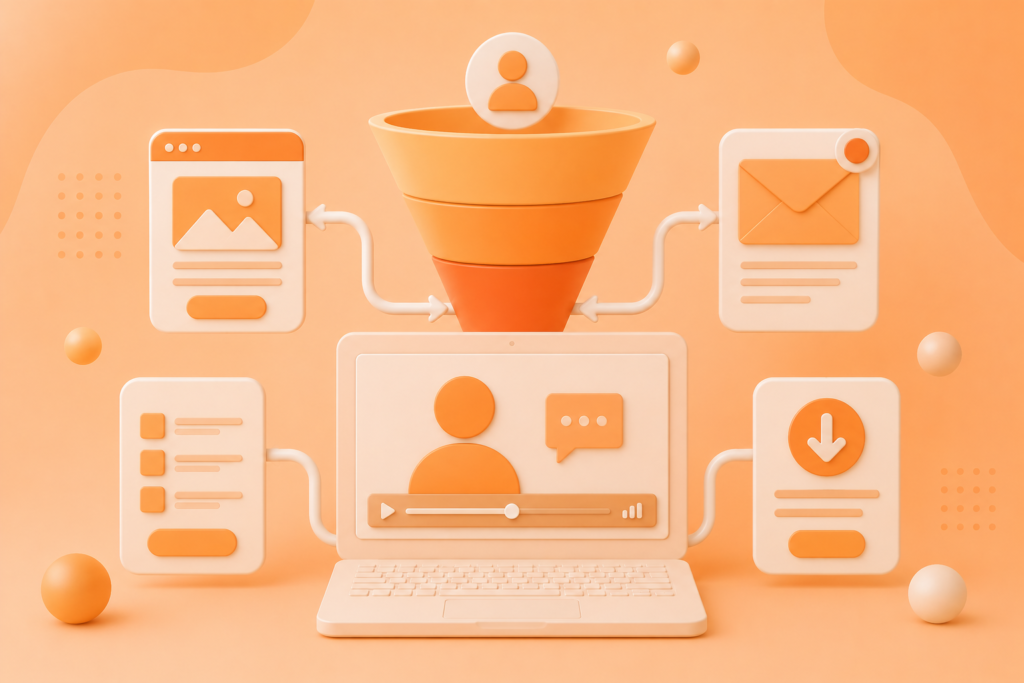
A webinar rarely operates effectively as an isolated marketing asset. Its registration page, promotional materials, emails, presentation, offer page, and follow-up communication should support the same message and customer journey. If the webinar promises one transformation but the offer page discusses something unrelated, the prospect experiences a disconnect that can reduce confidence.
This is where contextual funnel assets become valuable. For example, Webinar Promos can support the promotional stage, while Nurture Emails can support the relationship-building and follow-up stages. A registration page can connect with Landing Pages, while a webinar offer can transition into Sales Pages. These resources should not be treated as disconnected pieces. They should form a coherent journey.
The anchor text itself should also be descriptive. Google recommends using relevant, contextual anchor text so that users and search systems can better understand the destination of a link. SEO link best practices explains why descriptive internal links are preferable to vague anchors such as “click here.” This means that when a relevant resource is genuinely useful, link the meaningful phrase itself rather than adding an unrelated “learn more” link.
Prepare a Follow-Up Strategy Before the Webinar Starts
Follow-up should be designed before the webinar launches, not written hastily after the event. The reason is simple: different prospects will require different communication. Some people will attend the entire webinar. Others will register and miss it. Some will attend but leave before the offer. Others will click the offer but not purchase. Some may purchase immediately. Each group has a different context.
The follow-up system should therefore define what happens after each meaningful behavior. Attendees can receive a summary, resources, answers to questions, and the relevant next step. Non-attendees can receive replay information if available. Highly engaged prospects may receive additional clarification or an invitation to speak with someone. Customers should exit promotional sequences and enter onboarding or fulfillment communication.
This creates a more professional experience because the funnel responds to what the prospect actually did. Automation should reduce unnecessary repetition rather than increase it. A person who has already purchased should not continue receiving messages encouraging them to purchase the same product. A person who has asked for a consultation should not receive generic “you missed this” messaging. Behavioral logic makes the funnel feel more relevant and less automated.
Use Segmentation and Behavioral Data to Improve Funnel Performance
Not every webinar registrant behaves in the same way, so treating every prospect identically can significantly reduce the effectiveness of a funnel. Some people register but never attend, some attend for the entire presentation, some leave before the offer, while others watch a replay several times before making a decision. A sophisticated webinar funnel recognizes these behavioral differences and uses them to create more relevant communication. Segmentation should therefore be based on meaningful actions and information rather than collecting excessive personal data simply because a marketing platform makes it possible.
Useful segments can include registered-but-did-not-attend, attended-live, watched-replay, engaged-with-offer, requested-more-information, booked-a-call, and purchased. You can also use information voluntarily provided during registration, such as business type, experience level, primary challenge, or desired outcome. Each segment can receive messaging that reflects its actual stage in the decision process. Someone who missed the webinar needs access information; someone who watched the complete presentation but did not purchase may need clarification; and someone who already purchased should immediately transition into onboarding rather than receiving more sales messages.
Behavioral segmentation should always serve a practical purpose. If collecting a particular data point does not change the experience, it may not be worth asking for it. Excessive forms can create friction and reduce registration completion. The better approach is to identify the few pieces of information that can materially improve relevance. When implemented correctly, segmentation turns a generic automation system into a more responsive customer journey, allowing prospects to receive the information most useful to their current situation.
Track the Right Webinar Funnel Metrics
A webinar funnel becomes much easier to improve when every stage has measurable objectives. Start with traffic and registration metrics such as impressions, clicks, landing-page visits, registration rate, traffic source, and cost per registration when paid advertising is involved. Then measure attendance-related performance, including attendance rate, live attendance duration, replay consumption, engagement, questions, and interactions. Finally, track commercial outcomes such as offer clicks, applications, purchases, revenue, customer acquisition cost, and return on advertising spend where appropriate.
The important point is that no single metric tells the complete story. A funnel generating thousands of registrations may look impressive while producing very few qualified customers. Another funnel might generate fewer registrations but attract prospects who have a stronger need, higher purchasing intent, and greater customer lifetime value. For this reason, registration volume should be evaluated alongside attendance quality, conversion rates, revenue, refunds, customer satisfaction, and lead quality.
A useful diagnostic process is to identify where the largest drop-off occurs. If traffic is strong but registrations are weak, investigate audience targeting, webinar positioning, headline clarity, landing-page usability, and page speed. If registrations are strong but attendance is poor, examine reminders, commitment-building, scheduling, and the original webinar promise. If attendance is strong but purchases are weak, review the educational structure, offer transition, perceived value, objections, and product-market fit. Measurement becomes valuable when it leads to a specific decision rather than simply producing a dashboard full of numbers.
Optimize the Webinar Funnel Through Structured Testing
Conversion optimization should be treated as a learning process rather than a collection of random design changes. Before running a test, establish a clear hypothesis. For example, you might believe that changing a generic headline to an audience-specific promise will help qualified visitors understand the webinar faster. You can then compare the relevant versions and measure an outcome that directly relates to the hypothesis.
Potential testing opportunities include webinar titles, registration-page headlines, page layouts, call-to-action wording, registration-form length, presenter positioning, email subject lines, reminder timing, webinar duration, presentation structure, offer framing, bonuses, and follow-up messaging. However, testing everything simultaneously makes results difficult to interpret. Begin with elements likely to influence a significant portion of the audience or those associated with a known bottleneck.
Testing should also be interpreted carefully. Small differences do not automatically mean that one version is genuinely superior. Traffic quality, campaign changes, audience composition, seasonality, technical problems, and other variables can influence results. Record the hypothesis, dates, audience, traffic source, change, and outcome. Over time, these records create an internal optimization library based on your actual audience instead of generic conversion claims. This can become a significant competitive advantage because the funnel gradually becomes informed by real customer behavior.
Optimize Webinar Funnel Pages for SEO, Performance, and User Experience
Webinar funnels are primarily designed to generate conversions, but public-facing funnel pages can also benefit from strong SEO and technical foundations. Registration pages, educational articles, webinar resources, and supporting content should be useful, accessible, mobile-friendly, secure, and technically sound when organic search visibility is part of the acquisition strategy. Google’s Search Essentials provides guidance covering technical requirements, spam policies, and key best practices for content intended to appear in Google Search. (developers.google.com)
Technical implementation should include appropriate indexing decisions. Not every funnel page needs to appear in search results. For example, a personalized confirmation page, private thank-you page, temporary campaign page, or sensitive checkout step may not need organic visibility. On the other hand, an educational webinar article designed to attract search traffic should be technically accessible and contain useful content. Google explains that its basic technical requirements include allowing Googlebot access, serving a functioning page, and providing indexable content where indexing is desired. Technical requirements for Search provides further guidance. (developers.google.com)
Performance is equally important because a slow registration page can undermine the entire campaign. Large video files, excessive third-party scripts, poorly optimized images, unnecessary tracking technologies, and heavy page-builder elements can create delays. Google’s Core Web Vitals guidance focuses on loading performance, responsiveness, and visual stability. (developers.google.com) The goal should not be to chase a perfect technical score while damaging the design. The goal is to deliver a fast, stable, secure, and useful experience that makes registration and participation easy.
Scale the Webinar Funnel Without Sacrificing Quality
Scaling should begin only after the funnel demonstrates that it can reliably produce a valuable outcome from an appropriate audience. Increasing advertising spend before fixing a weak registration page, poor attendance, low engagement, or weak offer conversion simply sends more visitors into the same problems. A more sustainable approach is to identify the bottleneck, improve it, validate the improvement, and then gradually increase qualified traffic.
Once the basic system is working, scaling can involve multiple acquisition channels, additional webinar topics, evergreen webinars, partnerships, referral campaigns, content marketing, paid advertising, retargeting, email marketing, and strategic collaborations. Each source should be measured independently because different channels can generate dramatically different levels of lead quality. A traffic source that produces inexpensive registrations may ultimately be less valuable than a more expensive source that produces customers with stronger retention and higher lifetime value.
Automation can make scaling considerably easier, but automation should never replace quality control. Regularly review webinar recordings, audience questions, customer feedback, sales objections, refund reasons, support conversations, and funnel analytics. Update examples, statistics, screenshots, claims, and resources when they become outdated. Test integrations and forms regularly. Check the entire journey from advertisement to checkout on both desktop and mobile devices. If AI is used to support content production, the final material should still be reviewed for originality, accuracy, usefulness, and human value. Google’s guidance about AI-generated content explains that the issue is not simply whether AI was involved, but whether content is useful, original, accurate, and created for people rather than primarily for manipulating search rankings. (developers.google.com)
Webinar Funnel Best Practices Summary
A high-performing webinar funnel begins with audience clarity. Before writing the webinar title, landing page, advertisement, or presentation, understand the exact problem the audience wants to solve. Determine what they already know, what they have attempted, what has failed, what result they want, and what objections may prevent action. This information creates the foundation for every subsequent stage.
The webinar topic should offer a specific and believable promise. The registration page should communicate that promise clearly without exaggerated claims. The confirmation page should make the next step obvious. Reminder emails should increase anticipation and reduce missed attendance. The presentation should provide meaningful education rather than functioning as an extended advertisement. The offer should be presented as a logical next step for people who want additional implementation, support, tools, or expertise.
Technical quality should receive the same attention as marketing copy. Test registration forms, confirmation pages, webinar links, calendar information, emails, video playback, checkout systems, analytics, and integrations. Make sure pages work properly on mobile devices and that unnecessary scripts do not create performance problems. Where SEO visibility matters, follow Google’s Search Essentials and maintain appropriate technical foundations. (developers.google.com)
Trust should be maintained at every stage. Use genuine testimonials, accurate claims, transparent pricing, realistic expectations, and real examples. Do not create fake urgency or manufacture evidence. Google describes E-E-A-T through Experience, Expertise, Authoritativeness, and Trustworthiness, with trust being particularly important. Its people-first content guidance encourages content that demonstrates knowledge, originality, usefulness, and a clear purpose. (developers.google.com)
Finally, optimize based on evidence. Measure the complete funnel rather than focusing on registrations alone. Identify where prospects leave, develop a hypothesis, test an improvement, and document the result. Over time, this creates a webinar funnel that becomes increasingly aligned with the audience and business rather than relying on generic marketing formulas.
Common Webinar Funnel Mistakes
Mistake 1: Choosing a Topic That Is Too Broad
A broad topic may attract curiosity but often fails to create strong intent. “Digital Marketing Strategies” is less specific than a webinar addressing a particular audience, problem, and desired outcome.
Mistake 2: Making the Webinar a Sales Pitch
Attendees expect education when they register for a webinar. If most of the event consists of aggressive promotion, the presenter may lose credibility. Teach something genuinely useful before introducing the commercial solution.
Mistake 3: Promising Unrealistic Results
Claims about guaranteed income, instant success, effortless conversions, or universal results can damage trust. Use evidence and clearly communicate that outcomes depend on factors such as execution, market conditions, audience, resources, and implementation.
Mistake 4: Ignoring Webinar Attendance
Registration does not equal attendance. A thoughtful confirmation and reminder system can make the difference between someone merely signing up and someone actually consuming the presentation.
Mistake 5: Sending the Same Follow-Up to Everyone
A person who watched the webinar and a person who never opened the reminder email are at different stages. Segmentation makes follow-up more relevant.
Mistake 6: Collecting Excessive Registration Information
Long forms can reduce completion rates. Request information only when it has a clear role in personalization, qualification, or fulfillment.
Mistake 7: Ignoring Mobile Experience
Prospects may register, read emails, watch the webinar, and complete an offer from smartphones. Every stage should therefore be tested on smaller screens.
Mistake 8: Measuring Vanity Metrics
Registrations and webinar views can look impressive, but they do not necessarily represent business value. Track qualified leads, conversions, revenue, customer quality, and retention.
Mistake 9: Changing Everything at Once
If you change the traffic source, landing page, webinar presentation, email sequence, offer, and pricing simultaneously, you may not know which change influenced the result.
Mistake 10: Neglecting Technical Maintenance
Broken forms, incorrect time zones, missing tracking, expired links, failed integrations, poor email deliverability, and slow pages can destroy performance even when the strategy is strong.
Mistake 11: Overusing Automation
Automation should make the customer journey smoother, not make communication feel robotic. Review automated sequences regularly and remove messages that are repetitive or no longer relevant.
Mistake 12: Forgetting the Customer After Purchase
Once someone becomes a customer, their journey changes. Remove them from unnecessary promotional campaigns and move them into onboarding, fulfillment, education, support, and retention processes.
FAQs
1. What is a webinar funnel?
A webinar funnel is a sequence of marketing and conversion stages that moves a prospect from awareness to webinar registration, attendance, education, and a desired next action. The funnel may include advertising, organic content, a registration page, confirmation page, reminder emails, webinar presentation, offer, follow-up, and measurement.
2. What makes a webinar funnel effective?
An effective funnel connects every stage to the same customer problem and desired outcome. The audience should be appropriately targeted, the webinar promise should be specific, the registration experience should be simple, the presentation should provide genuine value, and the offer should logically connect to the solution taught during the event.
3. How many emails should a webinar funnel contain?
There is no fixed number. A basic sequence may include confirmation, several reminders, a live-event message, and post-webinar follow-up. The correct number depends on the event format, audience, sales cycle, and whether a replay is available. Quality and relevance are more important than sending a specific number of messages.
4. Should I offer a replay?
A replay can be valuable because registration does not guarantee attendance. Providing replay access allows interested prospects to consume the educational material at another time. However, the replay experience should still have a clear purpose and should not become an excuse for poorly managed live-event reminders.
5. What should I sell after a webinar?
The offer should naturally extend the problem-solving process introduced during the webinar. Depending on the business, this might be a service, consultation, course, software product, implementation package, coaching program, template collection, or another relevant solution. The important factor is fit, not the specific product type.
6. Can a webinar funnel generate leads without paid advertising?
Yes. Organic search, social media, email lists, partnerships, referrals, communities, existing customers, content marketing, and direct outreach can all contribute to webinar registrations. Paid advertising can accelerate traffic, but it is not a requirement for building the underlying funnel.
7. What is an evergreen webinar funnel?
An evergreen webinar funnel is designed to deliver a webinar experience repeatedly rather than relying exclusively on a single scheduled live event. It can be useful for businesses that want prospects to access educational content continuously. However, the experience should accurately communicate whether the event is live, recorded, automated, or a hybrid format.
8. How do I know whether my webinar funnel is working?
Look beyond registration numbers. Review registration quality, attendance, engagement, offer interaction, conversion, revenue, customer acquisition cost, refund rates, and customer quality. The right performance benchmark depends on your audience, offer, traffic source, price point, and sales cycle.
How to Create a Webinar Funnel Step by Step
Start by identifying a specific audience and problem. Do not begin with the webinar software or landing-page design. Begin with the customer’s situation. Define the desired transformation, research common objections, and determine what information the prospect needs before they can reasonably consider your solution.
Next, develop the webinar concept. Create a clear title and promise that accurately communicate the educational value. Build the registration page around that promise. Use concise copy, relevant proof, presenter credibility, learning outcomes, event details, and a straightforward registration form. If you have complementary funnel resources, contextual assets such as Webinar Promos, Landing Pages, and Nurture Emails can support different stages of the journey.
After registration, create the confirmation and reminder system. Make access details obvious, provide calendar information where appropriate, and use reminders to reinforce the value of attending. Prepare the webinar presentation around a logical educational structure. Teach the problem, introduce the framework, demonstrate application, and then transition naturally toward the solution that helps attendees implement the strategy more completely.
Finally, build the post-webinar system before launching traffic. Separate attendees and non-attendees, create appropriate follow-up, track meaningful behaviors, and define what happens after purchase. Test the complete funnel from the perspective of a real visitor. Check the form, emails, links, video, mobile experience, payment or booking process, tracking, and automation. Only after the system works should you begin increasing traffic.
Advanced Webinar Funnel Strategies
One advanced approach is to create content continuity across the entire customer journey. The advertisement, registration page, reminder emails, webinar presentation, offer, and follow-up should reinforce the same central idea. This reduces cognitive friction because the prospect repeatedly encounters a consistent message rather than a collection of unrelated marketing claims.
Another strategy is to use the webinar as a source of customer intelligence. Questions asked during the presentation can reveal objections that were not discovered during initial research. Chat interactions can reveal terminology customers actually use. Sales conversations can reveal where prospects become uncertain. Post-purchase feedback can show whether the webinar accurately prepared customers for the solution. These insights can then improve the next version of the webinar and its supporting funnel.
A third strategy is to develop multiple entry points into the same core funnel. Educational articles can attract search traffic. Social content can introduce specific insights. Email subscribers can receive invitations. Existing customers can refer relevant contacts. Paid campaigns can reach targeted audiences. Each source can have different messaging while eventually connecting qualified prospects to the webinar experience.
Another advanced opportunity is to create different webinar presentations for different stages of awareness. A beginner-focused educational webinar may be appropriate for prospects who are still defining the problem. A comparison or implementation webinar may be better for prospects already researching solutions. Instead of forcing every prospect through one generic presentation, create experiences that correspond to genuine differences in intent.
The final advanced principle is continuous optimization. Do not consider the funnel finished when it launches. Customer expectations change, competitors change, technology changes, and your own offer evolves. Review performance regularly and improve the weakest stage first. A webinar funnel should become a living marketing asset rather than a one-time campaign.
E-E-A-T and Trust Guidelines for Webinar Funnel Content

High-quality webinar funnel content should demonstrate genuine knowledge rather than merely repeat common marketing statements. Experience can be demonstrated through practical examples, documented processes, lessons learned, case studies, demonstrations, and explanations of how strategies work in real situations. Expertise can be shown through accurate explanations and thoughtful analysis rather than simply adding credentials to a page.
Authoritativeness develops through consistency, useful resources, credible references, transparent information, and recognition within the relevant subject area. Trust depends on accuracy, honesty, transparency, and responsible claims. These principles should influence both the educational content and the commercial components of the funnel.
Google’s guidance on E-E-A-T and helpful content explains that strong content should be created to help people, demonstrate appropriate expertise, and provide a satisfying experience. (developers.google.com) For webinar marketers, that means avoiding fabricated testimonials, misleading statistics, fake scarcity, unsupported guarantees, copied content, and pages created primarily to capture search traffic.
The “Why” behind the content also matters. If a webinar article exists solely to rank for “webinar funnels,” it may provide little value. If it exists to genuinely help business owners understand how webinar funnels work and make better implementation decisions, the purpose is much stronger. This people-first approach can improve both the usefulness of the content and the quality of the customer experience.
Conclusion
A successful webinar funnel is not simply a webinar connected to a registration form. It is a carefully designed customer journey that begins before registration and continues after the presentation ends. Every component has a role: audience research creates relevance, the webinar topic creates demand, the registration page communicates value, reminder emails increase attendance, the presentation builds understanding, the offer provides a next step, and follow-up helps prospects make an informed decision.
The most effective funnels balance conversion with trust. They do not depend on exaggerated promises or aggressive tactics. Instead, they educate the right audience, demonstrate expertise, provide practical value, answer objections, and clearly explain what the next step involves. This makes the funnel more useful for the prospect and more sustainable for the business.
Technical quality should also be treated as part of funnel strategy. Pages should load efficiently, forms should work correctly, links should be tested, mobile experiences should be smooth, analytics should be accurate, and indexing should be intentional. Where organic search is part of the strategy, following Google Search Essentials and creating helpful, original content provides a stronger foundation than trying to manipulate rankings. (developers.google.com)
Ultimately, the objective is not to build the most complicated funnel. It is to build the clearest and most useful journey for the right customer. When strategy, content, technology, analytics, presentation, and follow-up work together, a webinar can become a repeatable system for educating prospects, building relationships, generating qualified opportunities, and creating sustainable business growth.
Want to Implement This Easily?
You are an expert consultant. Based on the blog post titled “(Webinar Funnels)”, provide a step-by-step, practical implementation guide. Include tools, best practices, common mistakes to avoid, and advanced tips. Assume the reader wants to implement everything discussed in this article effectively.
Call to Action: Want our help implementing this? Just reach out to us via our website contact form: website contact form