
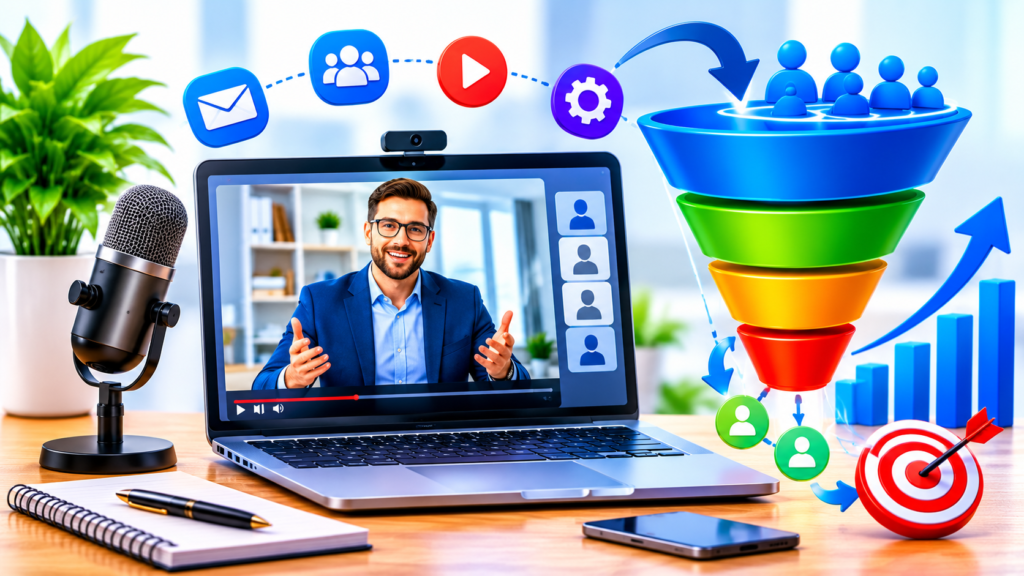
Discover how to build high-converting webinar funnels that attract qualified prospects, increase registrations, engage audiences, generate leads, and turn webinar attendees into paying customers through effective marketing automation and strategic follow-up.
Introduction
Webinar funnels have become an important part of modern digital marketing because they allow businesses to educate potential customers, demonstrate expertise, build relationships, and generate sales through a structured online experience. Unlike traditional advertising, which often attempts to persuade someone to purchase within a short interaction, a webinar funnel creates an opportunity to provide valuable information before presenting a relevant product, service, or solution. It combines several marketing elements, including landing pages, registration forms, email sequences, webinar presentations, audience engagement, sales offers, and automated follow-ups. When these elements work together, businesses can guide prospects from initial awareness to informed purchasing decisions without relying entirely on direct sales conversations.
A successful webinar funnel does much more than collect registrations. It attracts the right audience, establishes expectations, encourages attendance, delivers meaningful educational content, addresses customer objections, and provides a clear next step. Every stage should have a specific purpose and contribute to the overall customer journey. For example, someone who discovers a webinar through a social media advertisement needs a different experience from someone who has already subscribed to a business newsletter or visited a product page. Understanding these differences helps marketers create more relevant messaging, improve audience engagement, and increase the likelihood of conversions. The most effective webinar marketing strategies therefore combine persuasive communication with audience research, practical education, reliable technology, and measurable performance indicators.
At MyFunnelScript, webinar funnels represent an opportunity to help businesses create more organised and effective customer acquisition systems. Whether you are a coach, consultant, course creator, agency owner, service provider, or established business, a properly structured webinar funnel can support lead generation, product launches, appointment bookings, and long-term customer relationships. However, achieving these outcomes requires more than selecting a webinar platform and creating a presentation. You need a clear strategy, a compelling topic, an audience-focused registration process, a valuable presentation, and an appropriate follow-up system. This comprehensive guide explains how webinar funnels work, which components matter most, how to build an effective funnel, and how to optimise each stage for sustainable business growth.
Understanding Webinar Funnels and How They Work
A webinar funnel is a structured marketing system that guides potential customers through a series of interactions leading towards a specific business objective. That objective might be purchasing a digital product, enrolling in an online course, booking a consultation, requesting a demonstration, or subscribing to a service. The funnel usually begins when someone discovers a webinar invitation through an advertisement, search engine, social media post, email campaign, referral, or business website. The prospect then visits a registration page, provides their contact information, receives confirmation and reminder messages, and attends the webinar either live or through an automated presentation. After the event, additional communication encourages the participant to take the next appropriate action. Each stage is designed to reduce uncertainty and move the prospect closer to a decision.
The central principle behind webinar funnels is education before conversion. Instead of immediately asking an unfamiliar visitor to purchase something, a business first offers useful information related to a problem the audience wants to solve. A financial consultant might host a webinar explaining practical budgeting strategies, while a marketing agency could demonstrate how businesses can improve their lead generation campaigns. A software company might organise a product demonstration showing how its platform solves a particular operational challenge. These presentations allow potential customers to understand the subject, evaluate the presenter’s expertise, and recognise the relevance of the proposed solution. When the webinar provides genuine value, the commercial offer becomes a logical continuation of the educational experience rather than an unrelated sales interruption.
A complete webinar funnel typically includes several connected components: traffic generation, registration, confirmation, audience preparation, webinar delivery, offer presentation, follow-up communication, and conversion tracking. Each component influences the performance of the next. For example, an advertisement might generate thousands of visitors, but a poorly written registration page could prevent interested people from signing up. Similarly, a high registration rate does not guarantee strong results if attendees fail to receive reminders or find the webinar presentation unhelpful. Businesses should therefore evaluate the entire customer journey instead of focusing on a single conversion metric. A well-designed webinar funnel creates consistency between the original promotional message, the educational presentation, and the final offer. This alignment builds trust, improves the participant experience, and makes it easier to identify where improvements are needed.
Why Webinar Funnels Are Important for Modern Businesses
Modern customers often research several alternatives before making purchasing decisions. They compare providers, read reviews, explore educational resources, and evaluate whether a particular product or service addresses their requirements. Webinar funnels provide businesses with an opportunity to participate in this research process by delivering focused information in an organised format. Rather than depending exclusively on short advertisements or static website pages, companies can explain complicated subjects through presentations, demonstrations, examples, and audience questions. This is particularly useful for businesses selling higher-value services, professional solutions, specialist software, consulting packages, and educational products because customers may require additional information before committing financially.
Another important advantage is the ability to develop stronger relationships with potential customers. A webinar creates a more interactive environment than many conventional marketing channels. Participants can listen to explanations, submit questions, respond to polls, and evaluate the presenter’s knowledge. These interactions help businesses understand their audience’s concerns while giving prospects a clearer picture of the company’s approach. For example, an agency delivering a webinar about improving advertising performance can explain common campaign problems, demonstrate an analytical process, and discuss realistic optimisation methods. The audience receives practical knowledge, while the business establishes credibility through relevant expertise. This relationship-building process can support future sales conversations even when participants do not purchase immediately.
Webinar funnels also create opportunities for marketing automation and performance measurement. Once the core system is established, registration confirmations, event reminders, replay invitations, and follow-up messages can be delivered through connected marketing tools. Automation reduces repetitive administrative work and helps ensure that registered participants receive consistent communication. Businesses can also analyse important performance indicators, including registration conversion rate, attendance rate, average viewing duration, audience engagement, offer clicks, consultation bookings, and completed purchases. These measurements reveal which parts of the funnel perform effectively and which require improvement. However, automation should support genuine communication rather than replace it with irrelevant messages. The strongest webinar strategies combine technology with useful content, accurate audience targeting, transparent offers, and a customer-focused approach. This creates a more reliable marketing system that can support business growth over time.
Identifying Your Target Audience and Choosing the Right Webinar Topic
Audience research should take place before designing registration pages, writing advertisements, or preparing presentation slides. A webinar can be professionally produced and visually impressive but still perform poorly if it addresses a subject that the intended audience does not consider important. Start by identifying the people most likely to benefit from your product or service. Consider their professional roles, business size, experience levels, purchasing responsibilities, current challenges, and desired outcomes. A webinar designed for beginner entrepreneurs, for example, should not assume the same level of knowledge as a presentation intended for experienced marketing directors. Understanding these differences helps determine the appropriate language, examples, presentation depth, and commercial offer.
The next step is identifying the specific problem your webinar will address. Broad subjects such as digital marketing, business development, productivity, or online selling can attract general interest, but they may not create a compelling reason to register. A focused topic is often more effective because it communicates a clear benefit. Instead of presenting a general webinar about marketing, consider a more specific subject such as improving qualified lead generation through automated sales funnels. Instead of discussing business growth generally, explore how service providers can convert educational webinars into consultation bookings. These topics give potential attendees a clearer understanding of what they will learn. Useful research methods include customer interviews, sales-call notes, frequently asked questions, website search data, support conversations, industry discussions, and feedback from existing customers.
After identifying the audience’s challenges, develop a webinar title that communicates a meaningful outcome without making unrealistic promises. Strong titles are specific, understandable, and relevant to the intended participants. For example, How to Build a Webinar Funnel That Generates Qualified Leads explains both the subject and its practical purpose. You can also use a subtitle to clarify the intended audience or learning outcome. Before finalising the topic, consider whether you have sufficient knowledge, evidence, examples, and practical recommendations to deliver a genuinely useful presentation. A good webinar should answer an important question rather than simply promote a product. Its educational content should remain valuable even to someone who decides not to purchase the final offer. This approach attracts more relevant prospects, establishes appropriate expectations, and creates a stronger foundation for audience trust and conversion.
Planning the Structure and Strategy of a High-Converting Webinar Funnel
A high-converting webinar funnel begins with a clearly defined business objective. Before creating any marketing assets, determine what you want participants to do after attending the presentation. Your goal might be selling a course, generating software subscriptions, booking discovery calls, promoting a professional service, or introducing a premium programme. The objective influences nearly every strategic decision, including the webinar topic, target audience, presentation structure, offer, pricing, and follow-up sequence. For example, a webinar designed to generate consulting appointments should encourage interested participants to discuss their specific circumstances. A webinar selling a self-paced course may instead direct viewers to a product page containing the curriculum, pricing, and enrolment information. Defining this objective prevents the presentation from becoming a collection of disconnected educational and promotional messages.
Once the objective is established, map the complete funnel journey from first contact to final conversion. A typical structure includes a traffic source, registration landing page, confirmation page, pre-webinar email sequence, webinar room, sales presentation, offer page, and post-webinar follow-up campaign. Each stage should have a clear message and a measurable purpose. For example, the advertisement introduces the webinar’s primary benefit, while the registration page explains the learning outcomes and collects necessary information. The confirmation page reassures the registrant that their booking is complete and explains how to attend. Reminder messages help participants prepare, while the webinar itself delivers the promised information. The final offer should connect naturally to the problems and opportunities discussed during the presentation. This creates a consistent experience instead of making prospects feel that they have moved between unrelated marketing campaigns.
Your strategy should also account for different participant behaviours. Some people register and attend live, others register but miss the event, and some watch only a portion of the presentation. Additional participants may attend but require more time before purchasing. Treating every registrant identically can reduce the relevance of your follow-up communication. A more thoughtful system segments participants according to their actions, interests, and expressed needs. For example, live attendees who clicked the offer link may receive information about the next purchasing step, while non-attendees receive a replay invitation. People who watched the webinar but did not convert might receive additional educational resources addressing common objections. Establishing these pathways before launch makes the funnel easier to manage, measure, and improve. It also helps businesses use automation responsibly while maintaining communication that reflects each prospect’s actual experience.
Creating a High-Converting Webinar Registration Landing Page
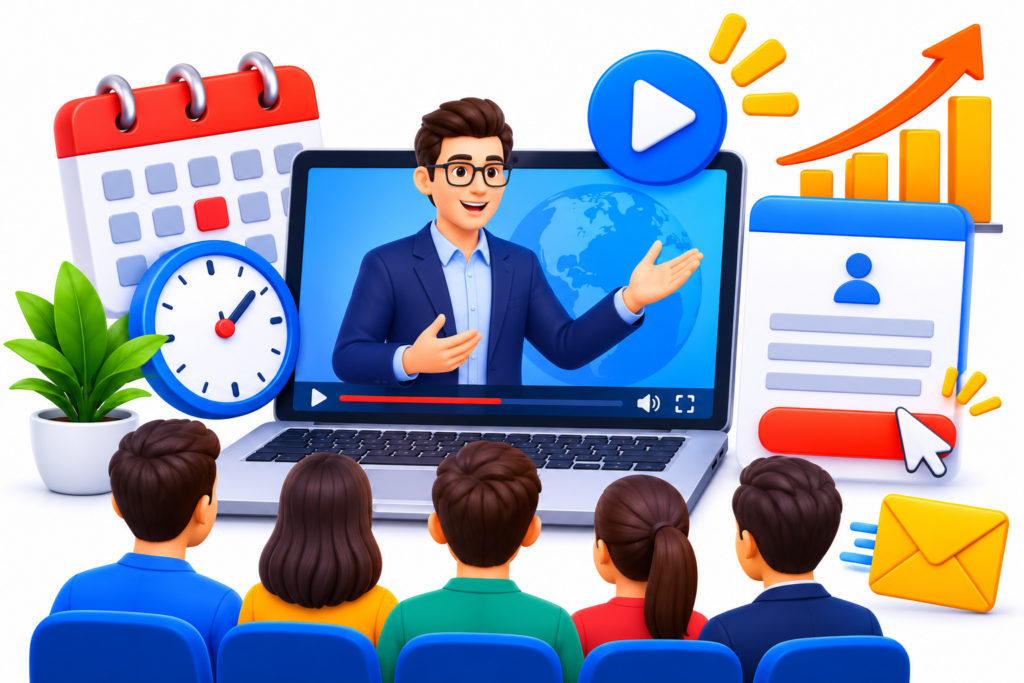
The registration landing page is one of the most important components of a webinar funnel because it converts interested visitors into registered participants. Its primary responsibility is to explain what the webinar offers and make registration straightforward. Visitors should immediately understand the subject, intended audience, key learning outcomes, event format, and date or availability. A clear headline should communicate the main benefit without exaggeration, while supporting copy should explain why the subject matters and what participants can expect to learn. For example, a webinar about automated lead generation could explain how attendees will understand funnel structure, improve registration experiences, and organise follow-up communication. The messaging should reflect the advertisement or promotional content that brought visitors to the page, creating continuity between the original promise and the registration experience.
A persuasive registration page should include several essential elements. These generally include a benefit-focused headline, concise introduction, clear webinar description, learning outcomes, presenter information, event details, and a visible registration form. Where appropriate, include the presenter’s professional experience, relevant qualifications, practical achievements, or subject expertise. Such information helps visitors evaluate whether the session is worth their time. Avoid unsupported claims, invented testimonials, or exaggerated income promises. If you have genuine feedback from previous participants, use it accurately and obtain appropriate permission before publishing it. The registration form should request only information necessary for delivering the webinar and managing relevant follow-up. Asking for excessive details can introduce unnecessary friction. For many webinars, a name and email address may be sufficient, although business-to-business events may require additional information when there is a clear reason for collecting it.
Page performance and usability also influence the registration experience. A landing page should load efficiently, display correctly on mobile devices, use readable typography, and provide a straightforward route to registration. Ensure the form works correctly, confirmation messages appear, and visitors can understand what happens after submitting their details. Explain whether the webinar is live, recorded, or available on demand. If registration includes marketing communication beyond event-related messages, provide appropriate disclosures and obtain consent where required by applicable privacy and marketing laws. Avoid distracting navigation, unnecessary pop-ups, and competing calls to action that make the primary decision harder. For technical quality, review Google’s guidance on page experience and Core Web Vitals. These resources help website owners understand performance, usability, and secure browsing considerations. A well-built landing page combines persuasive copywriting with reliable functionality, accessibility, and transparent communication.
Designing Webinar Confirmation Pages and Registration Experiences
The confirmation page is the next important step after someone submits the webinar registration form. Although businesses sometimes treat this page as a simple acknowledgement, it has a valuable role in preparing participants and encouraging attendance. Its first responsibility is to confirm that registration was successful. Display a clear message explaining that the participant’s place has been reserved and identify the event date, start time, time zone, and attendance method. If the webinar is live, explain how the joining link will be delivered and whether participants need to download software or complete any preparation. If the presentation is automated or available on demand, clarify when and how access will be provided. Clear instructions reduce uncertainty and help prevent avoidable support requests.
The confirmation page can also reinforce the value of attending. Include a brief overview of the main topics, a short introduction to the presenter, and any useful preparation materials. For example, a webinar about building an automated sales funnel might provide a simple worksheet that helps participants identify their current customer acquisition challenges. A session about business marketing could offer a checklist for evaluating existing campaigns. These resources should complement the webinar rather than overwhelm the participant with additional tasks. Where appropriate, include an option to add the event to a calendar, but ensure that the calendar details are accurate. You can also invite participants to submit questions in advance, helping the presenter understand the audience’s priorities and prepare more relevant examples.
An effective confirmation experience should also establish reliable communication expectations. Explain which email address will send event reminders, whether a replay will be available, and where participants can request assistance if they encounter technical problems. Send an immediate confirmation email containing the essential registration details and a working access link or clear instructions for receiving it. Test this process using different email providers and devices before launching the campaign. Check that form submissions are recorded correctly, duplicate registrations are handled appropriately, and automation does not send conflicting messages. Businesses should also avoid adding unrelated promotional offers that distract from the primary purpose of the page. The confirmation stage should make attendees feel informed, prepared, and confident about participating. When this experience is clear and professional, it supports the transition from initial interest to actual webinar attendance.
Building Automated Webinar Email Sequences That Increase Attendance
Email automation is an important part of webinar funnel management because registration does not automatically translate into attendance. People may forget the event, become busy, overlook their confirmation message, or lose track of the original joining link. A carefully planned email sequence helps maintain interest and reminds participants why the webinar is worth attending. The first message should be sent immediately after registration and confirm the essential details, including the webinar topic, date, time, and access instructions. Subsequent messages should provide useful reminders at appropriate intervals. Depending on the event schedule, businesses might send reminders one day before the session, one hour before it begins, and shortly before the presentation starts. The exact schedule should reflect the audience, event format, and communication preferences rather than relying on unnecessary message volume.
Effective reminder emails should offer more than repeated announcements. Each message can reinforce a different reason to attend. An early reminder might explain the key problems the webinar will address, while a later message could introduce the presenter or highlight a practical exercise participants will complete. The final reminder should make joining easy by placing the webinar access link somewhere visible and providing clear instructions. Subject lines should be descriptive and honest, avoiding misleading urgency or exaggerated promises. The email content should also remain concise enough for mobile readers. If participants need to prepare a document, review a short resource, or bring questions, explain this clearly. The purpose is to reduce friction and help attendees arrive with the right expectations.
After the webinar, automated communication should respond to participant behaviour. People who attended live may receive a thank-you message, presentation resources, relevant next steps, or a replay where available. Registrants who missed the event may receive a recording invitation and a clear explanation of how long access will remain available, provided that the stated deadline is genuine. Participants who expressed interest in the offer but did not purchase may benefit from additional information addressing common questions, product details, or implementation concerns. Meanwhile, customers who already purchased should receive onboarding or delivery instructions instead of continuing to receive acquisition-focused sales emails. This segmentation makes communication more useful and reduces unnecessary repetition. It is also important to respect unsubscribe requests, applicable privacy requirements, and the preferences communicated by subscribers. When thoughtfully designed, an automated webinar email sequence supports attendance, strengthens relationships, and creates a more consistent experience across the entire funnel.
Selecting the Right Webinar Platform and Marketing Automation Tools
Choosing the right technology is an important decision when building a webinar funnel because the platform affects registration, presentation delivery, audience interaction, recording, and follow-up. However, businesses should avoid selecting software simply because it offers the largest number of features. The most appropriate solution depends on the webinar format, audience size, technical requirements, budget, and wider marketing system. A small consultancy hosting occasional educational sessions may need straightforward live-streaming and registration functionality. A course creator running regular automated webinars may require scheduled presentations, replay management, audience segmentation, and integrations with an email marketing platform. A software company conducting product demonstrations may prioritise screen sharing, audience questions, presenter controls, and reliable recording.
Before selecting a platform, evaluate its core capabilities. Check whether it supports registration pages or integrates with an existing landing page builder. Review its attendee limits, video quality, recording options, audience engagement features, and compatibility with desktop and mobile devices. Consider whether it supports polls, chat, questions, presenter permissions, and automated reminders. If you plan to sell during the presentation, examine how easily the platform connects with payment pages, scheduling tools, customer relationship management systems, and email automation software. Also consider data handling, access controls, account security, and the provider’s privacy documentation. A technically impressive platform is not necessarily suitable if it creates a complicated experience for attendees or requires more administrative work than the business can reasonably manage.
The wider technology stack should work as a connected system rather than a collection of disconnected subscriptions. Your landing page should send registration information to the appropriate database, the email platform should deliver confirmation and reminder messages, and the webinar software should provide reliable access to the event. After the presentation, participant information and relevant engagement data should support appropriate follow-up. Test these integrations before launch instead of assuming that a successful connection during setup guarantees reliable performance during a real campaign. Conduct a complete rehearsal using a test registration, confirmation email, webinar link, presentation recording, and follow-up message. Review the process on different devices and internet connections. Also make sure that only authorised team members have access to sensitive customer information. The best webinar technology is not necessarily the most expensive option; it is the combination of tools that reliably supports your business objectives while delivering a smooth, secure, and convenient experience for participants.
Creating an Engaging Webinar Presentation That Builds Trust
The webinar presentation is the central experience of the entire funnel because it is where registered participants receive the information they originally signed up to learn. A successful presentation should educate, engage, and gradually help attendees understand how to solve a relevant problem. It should not feel like an extended sales pitch disguised as an educational event. Instead, begin by acknowledging the challenges your audience faces and explaining why those challenges deserve attention. Introduce the main subject, establish the learning objectives, and provide a clear structure for the session. For example, a webinar about building automated sales funnels could begin by explaining why businesses struggle to convert website visitors into customers. It could then explore audience targeting, landing page optimisation, lead nurturing, and conversion tracking. This logical progression helps participants understand the subject without feeling overwhelmed.
Presentation quality depends heavily on how information is communicated. Use simple language, practical examples, relevant demonstrations, and visual explanations to make complicated ideas easier to understand. Slides should support the presenter’s message rather than contain every word being spoken. Include charts, diagrams, screenshots, workflow examples, and case studies when they genuinely improve understanding. Where you discuss results or customer experiences, provide accurate information and explain the circumstances behind those results. Avoid presenting exceptional outcomes as guaranteed achievements. You should also maintain an appropriate speaking pace, introduce transitions between topics, and allow sufficient time for participants to process important information. A useful webinar presentation typically follows a clear sequence: introduction, problem identification, educational content, practical examples, solution framework, and relevant next steps. This structure makes the presentation easier to follow while creating a natural connection between the educational material and the product or service being offered.
Audience engagement should be planned throughout the presentation rather than added as an afterthought. Invite participants to submit questions, use relevant polls, encourage discussion, and include short activities that help attendees apply what they are learning. For example, ask participants to identify the biggest obstacle in their current marketing process or evaluate how effectively their existing lead generation system works. These interactions help maintain attention and provide valuable information about audience needs. When delivering live webinars, reserve time for questions and respond honestly, including when you do not have an immediate answer. For automated webinars, consider using pre-recorded audience questions, clearly identified interactive elements, or supplementary live support where practical. Ultimately, an effective presentation should leave participants with useful knowledge, a better understanding of their challenges, and confidence in the presenter’s ability to provide relevant solutions. Trust developed through education creates a stronger foundation for future purchasing decisions.
Developing a Persuasive Webinar Sales Pitch and Irresistible Offer
The sales presentation should connect naturally with the educational content delivered during the webinar. Once participants understand their problem and the potential solutions, you can introduce a product or service that helps them take the next step. The transition should feel relevant rather than sudden. For example, after teaching attendees how to structure an effective lead generation funnel, a marketing consultant could explain how their implementation service helps businesses build and optimise that system. A course creator might introduce a training programme that provides detailed lessons, templates, and practical exercises. The important principle is that the offer should solve a problem that has already been discussed. When the relationship between the educational content and the commercial solution is clear, participants can evaluate the offer more confidently.
A persuasive webinar offer should explain exactly what customers receive and why those components matter. Describe the main product or service, its features, practical benefits, delivery method, pricing, and relevant conditions. If the offer includes additional resources, templates, training sessions, or support, explain how each element contributes to the intended outcome. For example, a webinar funnel implementation package might include registration page development, email automation, webinar setup, and conversion tracking. These deliverables help potential customers understand what they are purchasing rather than relying on vague promises. You should also address common objections, such as implementation time, technical complexity, suitability, and support availability. Genuine customer testimonials, documented results, and relevant examples can strengthen the presentation, provided they are authentic and accurately represented. Avoid guaranteeing financial outcomes or implying that every customer will achieve identical results.
The call to action should be specific and easy to understand. Tell participants whether they should visit a sales page, book a consultation, complete an application, or purchase directly. Make sure the destination matches the offer presented during the webinar and contains all necessary information. If you use limited-time pricing or additional bonuses, the conditions should be genuine and clearly explained. Artificial countdowns, fabricated scarcity, and misleading discounts can damage customer trust. A strong offer also gives prospects sufficient information to make an informed decision, including relevant limitations, payment terms, refund conditions, and support arrangements. You do not need to pressure every participant into purchasing immediately. Some people will need additional research or internal approval before making a decision. A well-structured sales pitch respects this process while making the next step clear. The goal is to help suitable prospects recognise the value of the solution and understand how to proceed.
Building Automated and Evergreen Webinar Funnels
An evergreen webinar funnel allows businesses to deliver webinar content repeatedly without requiring the presenter to conduct every session live. Instead of organising a new presentation for every audience group, the business records a webinar and makes it available through a scheduled or on-demand experience. This approach can be particularly useful for online educators, consultants, software companies, and businesses that receive enquiries continuously. Once the presentation, registration process, reminder sequence, and follow-up campaign have been properly developed, the system can support ongoing lead generation. However, an evergreen webinar should still provide an experience that feels relevant and reliable. Simply uploading a recording and directing visitors towards it does not automatically create an effective funnel.
There are several ways to structure an automated webinar. An on-demand webinar allows participants to watch whenever convenient, while a scheduled evergreen webinar provides selected viewing times throughout the day or week. Some businesses also use hybrid formats, combining recorded educational content with live question-and-answer sessions or support. The most suitable model depends on the subject, audience expectations, and business resources. For example, a software company may use an automated product demonstration to explain its main features, while a consultant might prefer scheduled presentations followed by personal discovery calls. Whatever format you select, communicate clearly whether attendees are watching a live presentation or a recording. Transparency is essential because presenting a recording as a live event can create misleading expectations and damage credibility.
Building an evergreen system requires attention to the complete customer journey. Registration forms must work correctly, access links must be reliable, and email automation should deliver accurate information. The webinar should be reviewed regularly to ensure that examples, product features, pricing, screenshots, and other time-sensitive details remain current. A presentation that was accurate a year ago may contain outdated information today. You should also analyse engagement data and conversion performance to identify opportunities for improvement. For example, if participants consistently leave before the offer section, review the presentation length, pacing, and relevance of the educational material. If many viewers watch the complete webinar but rarely click the offer, examine whether the proposed solution matches the audience’s needs. Evergreen automation can improve operational efficiency, but it still requires ongoing quality control, accurate communication, and periodic optimisation.
Driving Targeted Traffic to Your Webinar Registration Page
A webinar funnel needs relevant traffic to generate registrations and business opportunities. Even an excellent presentation will produce limited results if the intended audience never discovers it. Traffic generation should therefore be based on audience research and channel suitability. Different acquisition channels attract people with different levels of awareness and purchasing intent. Search engine traffic may include individuals actively researching a problem, while social media advertising can introduce your webinar to people who have not yet considered the subject. Email marketing can reach an existing audience that already knows your business. Partnerships, industry communities, and referral campaigns can provide additional opportunities to reach people with relevant interests. The objective is not simply to maximise website visits but to attract visitors who are genuinely interested in the webinar’s subject and potential solution.
Search engine optimisation can support long-term webinar registration by making relevant educational pages discoverable through organic search. Create useful supporting content around the problems your webinar addresses. For example, a webinar about automated marketing funnels could be supported by articles explaining lead generation strategies, landing page design, customer journey mapping, and email automation. These resources can attract visitors who are researching related questions and introduce them to the webinar through contextual calls to action. Use descriptive page titles, relevant headings, helpful explanations, and internal links that connect related resources. Ensure that landing pages are accessible and provide a clear registration experience. You can review Google’s official recommendations in its SEO Starter Guide. Remember that SEO should prioritise useful information and a positive visitor experience rather than repetitive keyword placement.
Paid advertising can accelerate webinar promotion when campaigns are properly targeted and measured. Businesses may use search advertising to reach people actively looking for relevant solutions or social advertising to introduce educational events to suitable audiences. Campaign messaging should clearly communicate the webinar’s subject, intended audience, and genuine learning benefits. Avoid making promises that cannot be supported by the presentation or business offer. When selecting audiences, consider professional interests, customer characteristics, existing website engagement, and relevant first-party data that you are authorised to use. Test different headlines, creative concepts, and audience segments while maintaining a consistent message between the advertisement and registration page. Track the cost per registration, attendance rate, and eventual customer acquisition cost rather than evaluating success solely by clicks. A balanced traffic strategy combines appropriate organic promotion, targeted paid campaigns, useful content, and relationship-based marketing to create a more sustainable flow of qualified webinar participants.
Tracking Webinar Funnel Performance and Optimising Conversion Rates
Tracking performance is essential because webinar funnel results depend on several connected stages. A campaign might generate a large number of registrations but still produce few paying customers. Another campaign might attract fewer participants but generate higher-quality leads and stronger sales. Without accurate measurement, businesses may focus on the wrong improvements. Start by identifying the key performance indicators that correspond to your business objectives. Common measurements include landing page conversion rate, registration volume, cost per registration, attendance rate, viewing duration, audience engagement, offer click-through rate, consultation bookings, purchase conversion rate, and revenue generated. For business-to-business webinars, additional indicators may include qualified lead volume, sales opportunities, and the number of attendees progressing into the sales pipeline.
A useful way to analyse webinar funnel performance is to evaluate each stage separately. Consider a hypothetical campaign that attracts 1,000 landing page visitors and generates 200 registrations. The registration conversion rate is 20%. If 100 people attend the webinar, the attendance rate is 50% of registrations. If 10 participants purchase the advertised service, the purchase rate is 10% of attendees. These numbers provide a starting point for identifying possible improvements, but they should not be treated as universal industry benchmarks. Performance varies according to audience quality, offer value, traffic source, webinar topic, pricing, and customer purchasing behaviour. For example, a high-value consulting offer may generate fewer immediate purchases than a low-cost digital product but still produce greater revenue. Always interpret conversion metrics in relation to the business model and the quality of resulting customers.
Optimisation should follow a structured testing process. If registration conversion is low, examine the headline, offer clarity, page layout, form length, and traffic relevance. If attendance is weak, review reminder timing, confirmation instructions, event scheduling, and the perceived value of the webinar. If viewers leave early, analyse presentation length, pacing, content quality, and audience expectations. If engagement is strong but purchases remain low, investigate offer relevance, pricing, trust signals, objections, and the clarity of the call to action. Use analytics and controlled experiments where possible, changing one major variable at a time so that results can be interpreted more reliably. Google provides useful guidance through Google Analytics, which can help businesses understand website and marketing interactions. Accurate tracking, regular evaluation, and evidence-based improvements turn webinar funnels into measurable marketing systems rather than campaigns managed through assumptions.
Common Webinar Funnel Mistakes Businesses Should Avoid
One of the most common webinar funnel mistakes is selecting a topic without properly understanding the intended audience. Businesses sometimes choose subjects because they are easy to present or closely related to their products, without checking whether potential customers actually want to learn about them. This can attract low-quality registrations or generate little interest. Another frequent mistake is making the webinar invitation too broad. A headline such as “Learn About Business Growth” does not communicate a sufficiently specific outcome. Visitors may struggle to understand why they should attend or what they will gain. A better approach is to identify a particular challenge and explain how the webinar will help participants understand or address it. Audience interviews, customer questions, and keyword research can help identify topics with genuine relevance.
Another significant mistake is treating registration numbers as the main measure of success. A large registration list can look impressive, but it does not necessarily represent meaningful business growth. Some campaigns attract people who have little interest in the offer, while others generate registrations through exaggerated advertising promises. Weak confirmation pages, missing reminders, unclear event instructions, and technical problems can further reduce attendance. Businesses also sometimes create presentations that are too long, overly promotional, or difficult to follow. Participants may leave when the webinar fails to deliver the educational value promised during registration. To prevent these problems, align advertising with presentation content, test every technical component, provide useful information early, and maintain a clear structure throughout the session.
Poor follow-up is another mistake that can significantly limit webinar funnel performance. Some businesses send a single promotional email after the presentation and then stop communicating with attendees who do not purchase immediately. Others send identical messages to people who attended, missed the event, purchased the product, or requested additional information. This creates an irrelevant experience and can reduce engagement. Effective follow-up should reflect participant behaviour and provide suitable next steps. Businesses should also avoid fake scarcity, misleading testimonials, excessive promotional messages, unclear pricing, and complicated purchasing processes. Technical security and data privacy should never be overlooked either. Collect only necessary personal information, protect customer records, restrict account access, and respect communication preferences. The best way to prevent webinar funnel mistakes is to test the entire process before launch, collect meaningful feedback, monitor performance, and improve the system based on actual participant behaviour.
Best Practices Summary for Building Successful Webinar Funnels

Successful webinar funnels are built around a clear understanding of the audience and a genuine commitment to delivering useful information. Before launching a campaign, identify the problem your intended participants want to solve and create a webinar topic that addresses it directly. Develop a clear business objective and map the customer journey from the first promotional interaction to the final conversion. Your landing page should communicate realistic benefits, explain what attendees will learn, and make registration straightforward. Confirmation pages and email reminders should provide accurate event information, while the presentation should deliver the educational value promised during promotion. Each stage should feel connected and contribute to a consistent participant experience.
Technology and automation should support the marketing strategy rather than become the strategy itself. Select tools that meet your actual requirements, test integrations before launch, and ensure that registrations, emails, access links, recordings, and follow-up processes function correctly. Use segmentation to provide relevant communication to attendees, non-attendees, interested prospects, and customers. Your webinar presentation should balance education, interaction, examples, and a relevant commercial offer. Explain products and services honestly, provide transparent pricing information, and make the next step easy to understand. When promoting webinars through search engines, advertising, social media, and email, ensure that the audience and message remain consistent. Focus on qualified participants rather than pursuing registration volume without considering conversion quality.
Continuous improvement is essential for long-term webinar funnel performance. Measure registration rates, attendance, engagement, offer interactions, and customer conversions. Analyse the results to understand where participants lose interest or encounter difficulties. Test meaningful changes to headlines, landing pages, email reminders, presentation structure, and offers. Keep evergreen webinar content updated and regularly review your marketing technology, security practices, and privacy procedures. Most importantly, treat the webinar as part of a wider customer relationship rather than an isolated sales event. Participants should receive genuine value regardless of whether they purchase immediately. By combining audience research, useful education, transparent selling, reliable automation, and consistent optimisation, businesses can build webinar funnels that support lead generation, strengthen credibility, and create sustainable opportunities for growth.
Frequently Asked Questions
1. What Is a Webinar Funnel?
A webinar funnel is a structured marketing process that guides potential customers from discovering a webinar to registering, attending, engaging with the presentation, and taking a desired action. That action could involve purchasing a product, booking a consultation, enrolling in a course, or requesting a service demonstration. A typical webinar funnel includes promotional campaigns, registration pages, confirmation messages, automated reminders, webinar presentations, sales offers, and follow-up emails. Each component has a specific role in the customer journey. The primary purpose is to educate potential customers, build trust, and help suitable prospects make informed purchasing decisions through a connected marketing experience.
2. How Do Webinar Funnels Generate Leads and Sales?
Webinar funnels generate leads by offering valuable educational content in exchange for registration information, usually an email address and sometimes additional business-related details. Once someone registers, the business can send relevant event information and reminders. During the webinar, the presenter explains a problem, provides practical information, demonstrates possible solutions, and introduces a relevant product or service where appropriate. Follow-up communication then provides additional resources and purchasing information. The process creates multiple opportunities to build relationships and understand customer needs. However, successful lead generation depends on attracting the right audience and delivering genuinely useful information rather than simply collecting as many email addresses as possible.
3. What Is the Difference Between a Live Webinar and an Evergreen Webinar Funnel?
A live webinar is delivered by a presenter at a scheduled time, allowing participants to interact through questions, polls, and discussions. It is particularly useful when the subject benefits from real-time explanations, personalised responses, or audience participation. An evergreen webinar uses recorded or automated content that can be accessed repeatedly, either on demand or through scheduled viewing sessions. This reduces the need for the presenter to conduct every event personally. Both formats can support lead generation and sales. Live webinars generally offer more direct interaction, while evergreen webinars can improve operational efficiency. The right choice depends on the audience, subject, business objectives, and available resources.
4. How Many Emails Should a Webinar Funnel Include?
There is no universal number of emails that works for every webinar funnel. A practical sequence often includes an immediate registration confirmation, one or more pre-event reminders, and several post-event messages. The appropriate number depends on how far in advance participants register, whether the webinar is live or automated, and the complexity of the offer. Pre-event emails should help participants remember the session and understand how to attend. Post-event messages should provide suitable next steps, such as a replay, educational resources, product information, or consultation booking details. Businesses should avoid excessive communication and respect subscribers’ preferences and applicable marketing regulations.
5. Which Tools Are Needed to Build a Webinar Funnel?
The tools required depend on the complexity of your webinar marketing strategy. Most businesses need a landing page builder, webinar hosting platform, email marketing system, and analytics solution. Additional tools may include a customer relationship management platform, calendar integration, payment processing software, scheduling applications, and automation services. Smaller businesses can often begin with a relatively simple technology stack, while larger organisations may require more advanced integrations and reporting. The most important consideration is whether the tools work together reliably. Before purchasing multiple subscriptions, identify the essential funnel stages and select technology that supports those requirements without introducing unnecessary complexity.
6. How Can I Increase My Webinar Registration and Attendance Rates?
Improving registration and attendance requires attention to both the promotional message and the participant experience. Start with a focused webinar topic that addresses a genuine audience problem. Create a landing page that clearly explains the benefits, learning outcomes, presenter information, and event details. Ensure that registration is straightforward and that confirmation messages are delivered immediately. Send well-timed reminders containing clear access instructions and useful reasons to attend. You should also test different promotional headlines, advertising audiences, and landing page layouts. Review registration and attendance data separately because attracting more registrations does not automatically solve attendance problems. Continuous testing helps identify which changes produce meaningful improvements.
7. Are Webinar Funnels Suitable for Small Businesses?
Yes. Webinar funnels can be particularly useful for small businesses because they provide an organised way to demonstrate expertise and communicate with potential customers. Consultants can use them to generate discovery calls, coaches can introduce educational programmes, agencies can explain their services, and software businesses can demonstrate product features. Small businesses do not necessarily need expensive equipment or complicated automation to get started. A clear presentation, reliable webinar platform, simple registration page, and basic email sequence may be sufficient for an initial campaign. As the business gains experience and gathers performance data, additional automation and segmentation can be introduced where they provide measurable value.
8. How Long Does It Take to Build a Profitable Webinar Funnel?
The development time depends on the complexity of the presentation, existing marketing assets, technology requirements, and available resources. A simple webinar funnel can sometimes be prepared relatively quickly if the business already has a defined audience, established offer, and suitable presentation materials. More advanced funnels involving extensive research, professional design, multiple email sequences, integrations, and automated segmentation require additional planning and testing. Profitability is a separate consideration because it depends on traffic costs, registration quality, attendance, conversion rates, pricing, and customer acquisition expenses. Businesses should begin with a functional, well-tested system, monitor its results, and make improvements over several campaigns rather than expecting immediate profitability.
Conclusion
Webinar funnels provide businesses with a practical way to combine education, audience engagement, lead generation, and sales within one structured marketing system. By guiding prospects from their first interaction to a relevant purchasing opportunity, businesses can create a more meaningful customer journey than relying exclusively on short promotional messages or direct sales campaigns. However, the success of a webinar funnel depends on the quality and consistency of every stage. A compelling topic must attract the right audience, the registration experience must communicate clear value, and the reminder sequence must help participants attend. The webinar itself should provide useful knowledge, demonstrate genuine expertise, and introduce a relevant offer that addresses the audience’s needs.
Long-term success also requires reliable technology, thoughtful automation, and regular performance analysis. Businesses should track the complete funnel rather than focusing only on registrations or attendance. Understanding how people interact with the landing page, webinar presentation, sales offer, and follow-up communication makes it easier to identify opportunities for improvement. It is equally important to maintain transparent marketing practices, protect customer information, and avoid exaggerated promises. Whether you are launching your first educational webinar or improving an established automated webinar system, the objective should remain the same: create a valuable experience that helps potential customers understand their challenges and discover suitable solutions.
At MyFunnelScript, the opportunity is to turn these principles into a practical webinar marketing strategy that supports stronger lead generation and more organised sales processes. A carefully planned webinar funnel can become an important part of your wider digital marketing system, helping your business communicate expertise, build relationships, and create opportunities for sustainable growth. Start with a clear audience, a valuable webinar topic, and a straightforward customer journey. Test the complete process, measure meaningful results, and improve each stage as you gain experience. With the right strategy and consistent execution, webinar funnels can become a valuable asset for attracting qualified prospects and developing lasting customer relationships.
Want to Implement This Easily?
AI Implementation Prompt
You are an expert consultant. Based on the blog post titled “(Webinar Funnels)”, provide a step-by-step, practical implementation guide. Include tools, best practices, common mistakes to avoid, and advanced tips. Assume the reader wants to implement everything discussed in this article effectively.
Call to Action
Want our help implementing this? Just reach out to us via our website contact form: