
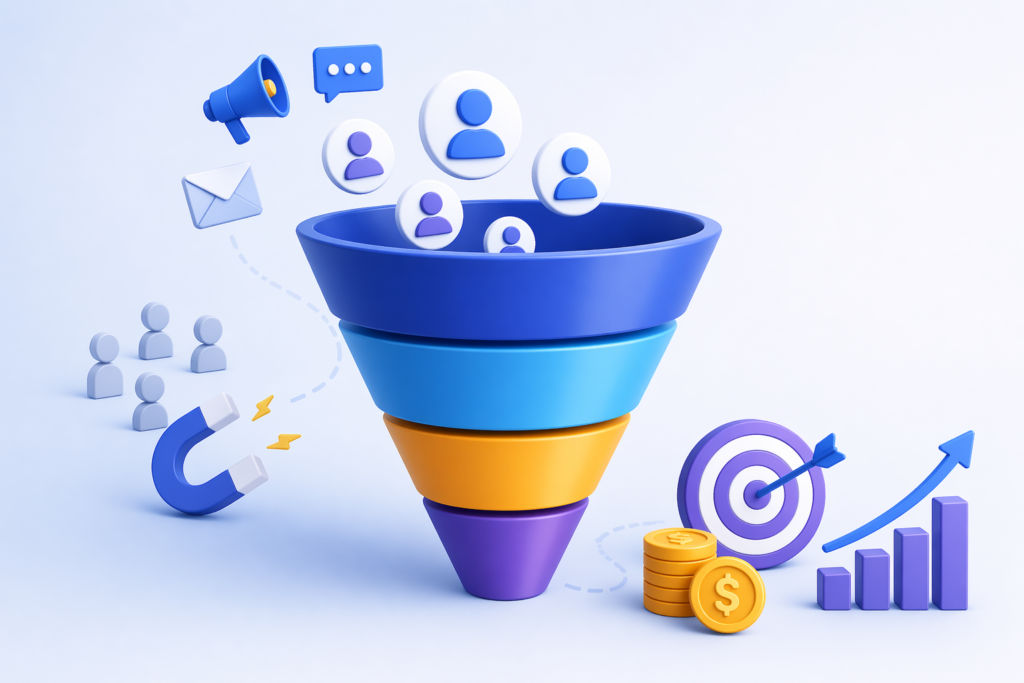
Sales Funnel Guide 2026: Learn how to build high-converting sales funnels, optimize every stage, increase conversions, and scale your business with proven strategies and best practices.
Introduction
In today’s competitive digital landscape, understanding how to guide potential customers from awareness to purchase is essential. A well-structured sales funnel is the backbone of successful online marketing, helping businesses systematically convert prospects into loyal customers. Whether you’re running an e-commerce store, SaaS platform, or service-based business, mastering the sales funnel can dramatically improve your conversion rates and revenue.
At its core, a sales funnel represents the journey a user takes—from discovering your brand to making a purchase decision. Each stage of the funnel requires tailored messaging, optimized user experience, and strategic engagement. Businesses that ignore funnel optimization often struggle with low conversions, high bounce rates, and missed revenue opportunities.
This comprehensive guide will walk you through every aspect of building and optimizing a high-converting sales funnel. From foundational concepts to advanced strategies, you’ll gain actionable insights designed to help you create scalable, results-driven funnels. This guide is brought to you by My Funnel Script, where data-driven marketing meets real-world results.
What Is a Sales Funnel and Why It Matters
A sales funnel is a strategic framework that maps out the journey a potential customer takes before making a purchase. It’s called a “funnel” because it starts broad—attracting a large audience—and gradually narrows down to those who convert into paying customers. Understanding this structure is essential for any business aiming to maximize conversions and improve marketing ROI.
At the top of the funnel (TOFU), the focus is on awareness. This is where users first discover your brand through channels like search engines, social media, or paid ads. As they move further down, they enter the middle of the funnel (MOFU), where they evaluate your offerings. Finally, at the bottom of the funnel (BOFU), they are ready to make a purchase decision. Each stage requires a different strategy, content type, and level of engagement.
The importance of a sales funnel lies in its ability to provide clarity and direction. Without a defined funnel, marketing efforts become scattered and ineffective. Businesses often waste resources targeting the wrong audience or delivering the wrong message at the wrong time. A well-optimized funnel ensures that every interaction is purposeful, guiding users seamlessly toward conversion while building trust and credibility.
The Core Stages of a High-Converting Sales Funnel
A successful sales funnel consists of multiple stages, each designed to move the prospect closer to conversion. The most widely recognized stages include Awareness, Interest, Consideration, Intent, Evaluation, and Purchase. Understanding these stages allows marketers to craft targeted campaigns that resonate with users at every step of their journey.
In the Awareness stage, the goal is visibility. This is where SEO, content marketing, and paid advertising play a critical role. According to Google Search Essentials, creating helpful, user-focused content is key to attracting and retaining users. Once users are aware of your brand, they move into the Interest stage, where educational content such as blogs, videos, and guides help nurture their curiosity.
As users progress into the Consideration and Intent stages, they begin comparing options and evaluating solutions. This is where case studies, testimonials, and product demonstrations become crucial. Finally, in the Evaluation and Purchase stages, strong calls-to-action (CTAs), trust signals, and seamless checkout experiences help close the deal. Each stage must be optimized to reduce friction and build confidence in your offering.
Understanding Customer Psychology in Sales Funnels
A high-performing sales funnel is not just about technology or marketing tactics—it’s deeply rooted in customer psychology. Understanding how people think, feel, and make decisions is critical to guiding them through the funnel effectively. Every stage of the funnel should align with the emotional and cognitive state of the user.
At the top of the funnel, users are often unaware of their problem or only vaguely aware of it. This means your messaging should focus on education and awareness rather than direct selling. As users move down the funnel, their intent becomes clearer, and they start looking for solutions. Here, your content should address pain points, provide solutions, and position your product or service as the ideal choice.
Trust plays a major role in decision-making. Users are more likely to convert when they feel confident in your brand. This is why elements such as social proof, reviews, and transparent communication are essential. Additionally, principles like scarcity, urgency, and reciprocity can be strategically used to influence decisions—when applied ethically and responsibly.
Top-of-Funnel Strategies to Attract Qualified Traffic
The top of the funnel is where the customer journey begins, making it crucial to attract the right audience. Without high-quality traffic, even the most optimized funnel will fail to deliver results. This stage focuses on generating awareness and capturing the attention of potential customers.
Search Engine Optimization (SEO) is one of the most effective TOFU strategies. By targeting relevant keywords such as “sales funnel strategy,” “conversion optimization,” and “lead generation techniques,” businesses can attract users actively searching for solutions. Following Google Search Quality Guidelines ensures your content meets E-E-A-T standards, improving visibility and credibility.
In addition to SEO, content marketing plays a vital role. Blog posts, infographics, videos, and social media content help engage users and drive traffic. Paid advertising, including Google Ads and social media campaigns, can further amplify reach. The key is to focus on delivering value rather than pushing sales, as this builds trust and encourages users to move deeper into the funnel.
Middle-of-Funnel Techniques to Nurture Leads
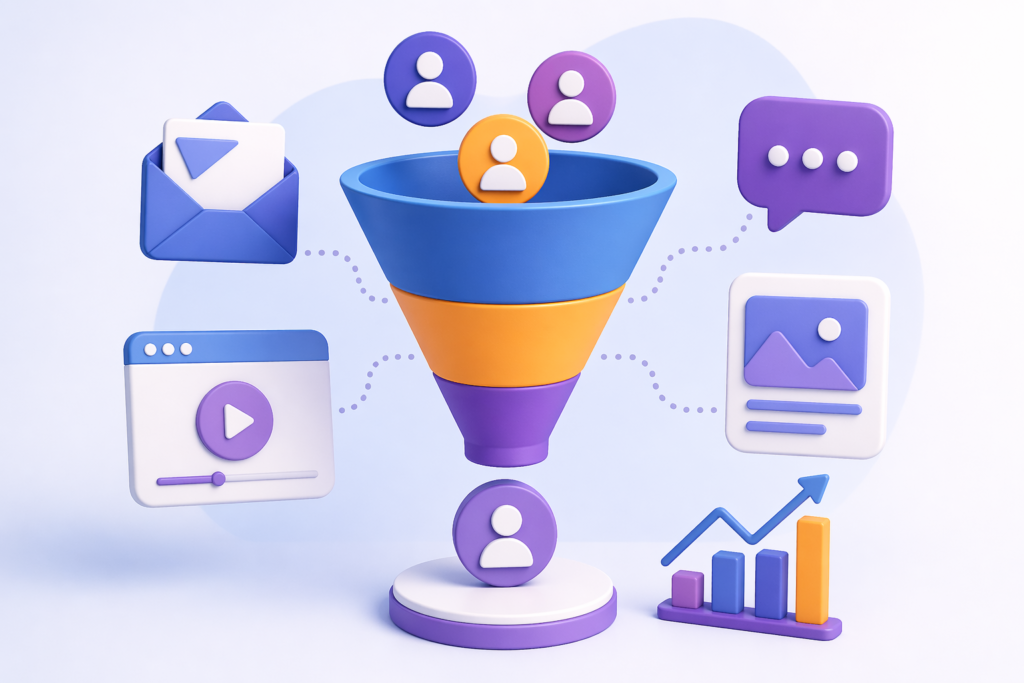
Once users enter the middle of the funnel, the focus shifts from attraction to engagement and nurturing. At this stage, prospects are evaluating their options and seeking more information. Your goal is to build relationships, address objections, and guide them toward making a decision.
Email marketing is one of the most effective MOFU strategies. By delivering personalized and relevant content, businesses can keep prospects engaged and move them closer to conversion. Automated email sequences, lead magnets, and webinars are powerful tools for nurturing leads. Personalization is key—generic messaging often fails to resonate with users.
Content such as case studies, whitepapers, and detailed guides can help establish authority and credibility. Additionally, retargeting campaigns ensure that your brand stays top-of-mind. By providing consistent value and addressing user concerns, you can significantly increase the likelihood of conversion.
Bottom-of-Funnel Optimization for Maximum Conversions
The bottom of the funnel is where conversions happen. At this stage, users are ready to make a decision, but even small obstacles can prevent them from completing the process. Optimizing this stage is critical to maximizing revenue and ROI.
One of the most important factors is user experience. A seamless, intuitive, and fast-loading website is essential. According to Google Page Experience, factors such as loading speed, mobile usability, and interactivity directly impact user satisfaction and conversions. Ensuring a smooth checkout process with minimal friction is key.
Trust signals also play a crucial role. Customer reviews, testimonials, secure payment options, and clear return policies help build confidence. Strong CTAs, limited-time offers, and guarantees can further encourage users to take action. By eliminating friction and reinforcing trust, businesses can significantly improve their conversion rates.
Building a Sales Funnel That Aligns With Business Goals
A successful sales funnel must align with your overall business objectives. Whether your goal is to generate leads, increase sales, or build brand awareness, your funnel should be designed to support these outcomes. This requires careful planning, strategic thinking, and continuous optimization.
The first step is defining your target audience. Understanding who your ideal customers are, what they need, and how they behave is essential for creating an effective funnel. This involves conducting market research, analyzing data, and developing detailed buyer personas.
Next, you need to map out the customer journey and identify key touchpoints. Each stage of the funnel should have clear objectives, metrics, and strategies. By aligning your funnel with your business goals, you can ensure that every effort contributes to measurable results and long-term growth.
Essential Tools and Technologies for Sales Funnels
Building and managing a high-performing sales funnel requires the right combination of tools and technologies. These tools streamline processes, automate repetitive tasks, and provide valuable insights into user behavior. Without the proper tech stack, even the best strategies can fall short due to inefficiencies and lack of data visibility.
Customer Relationship Management (CRM) systems are at the heart of any sales funnel. They help track interactions, manage leads, and maintain customer data. Marketing automation platforms further enhance efficiency by enabling email sequences, lead scoring, and behavioral triggers. Analytics tools, such as Google Analytics, provide deep insights into user journeys, helping you identify bottlenecks and optimization opportunities.
Landing page builders, A/B testing tools, and conversion optimization platforms also play a critical role. These technologies allow you to experiment with different designs, messaging, and CTAs to find what works best. By leveraging the right tools, businesses can create scalable, data-driven funnels that continuously improve over time.
Creating High-Converting Landing Pages
Landing pages are one of the most critical components of a sales funnel. They serve as the primary touchpoint where users take action—whether it’s signing up, downloading a resource, or making a purchase. A poorly designed landing page can significantly reduce conversion rates, regardless of how much traffic you generate.
A high-converting landing page focuses on clarity, relevance, and simplicity. The headline should immediately communicate value, while the supporting content addresses user pain points and highlights benefits. Visual elements, such as images and videos, should enhance the message rather than distract from it. Strong, action-oriented CTAs guide users toward the desired outcome.
Performance and usability are equally important. According to Core Web Vitals, fast-loading pages and responsive design are essential for a positive user experience. Ensuring mobile optimization, minimizing distractions, and maintaining a clean layout can significantly improve conversion rates. Continuous testing and optimization are key to achieving long-term success.
The Role of Content Marketing in Sales Funnels
Content marketing is the driving force behind a successful sales funnel. It attracts, educates, and nurtures users at every stage of their journey. Without high-quality content, it becomes difficult to build trust, establish authority, and guide users toward conversion.
At the top of the funnel, content such as blog posts, videos, and social media updates helps generate awareness. In the middle of the funnel, more in-depth content like guides, case studies, and webinars provides value and builds credibility. At the bottom of the funnel, persuasive content such as product comparisons, testimonials, and demos helps close the deal.
To ensure effectiveness, content must align with user intent and follow best practices outlined in Google Helpful Content System. This means focusing on originality, relevance, and usefulness. By consistently delivering valuable content, businesses can strengthen relationships and drive higher conversions.
Leveraging Email Marketing for Funnel Success
Email marketing remains one of the most powerful tools for nurturing leads and driving conversions. Unlike other channels, email allows for direct and personalized communication with your audience. When used effectively, it can significantly enhance the performance of your sales funnel.
A successful email strategy begins with segmentation. By dividing your audience based on behavior, preferences, and demographics, you can deliver highly targeted messages. Automated workflows, such as welcome sequences, abandoned cart reminders, and follow-ups, ensure timely and relevant communication.
Personalization is key to engagement. Emails that address the recipient’s needs and interests are more likely to be opened and acted upon. Additionally, tracking metrics such as open rates, click-through rates, and conversions helps optimize performance. By continuously refining your approach, you can maximize the impact of your email campaigns.
Conversion Rate Optimization (CRO) Strategies
Conversion Rate Optimization (CRO) is the process of improving your funnel to increase the percentage of users who take the desired action. It involves analyzing data, identifying issues, and implementing changes to enhance performance. CRO is essential for maximizing ROI and ensuring long-term growth.
One of the most effective CRO techniques is A/B testing. By comparing different versions of a page or element, you can determine what resonates best with your audience. Factors such as headlines, images, CTAs, and layout can significantly impact conversion rates.
User behavior analysis is another critical aspect. Tools like heatmaps and session recordings provide insights into how users interact with your site. According to Google Conversion Optimization Guidelines, focusing on user experience and relevance is key to improving conversions. By continuously testing and optimizing, businesses can achieve sustainable growth.
Sales Funnel Metrics You Must Track
Tracking the right metrics is essential for understanding the performance of your sales funnel. Without data, it becomes impossible to identify what’s working and what needs improvement. Key performance indicators (KPIs) provide valuable insights into user behavior and conversion efficiency.
Some of the most important metrics include conversion rate, click-through rate (CTR), cost per acquisition (CPA), and customer lifetime value (CLV). These metrics help you evaluate the effectiveness of your strategies and make informed decisions. Additionally, tracking funnel drop-off rates can help identify bottlenecks and areas for improvement.
Analytics platforms like Google Analytics Reporting enable businesses to monitor performance in real-time. By analyzing data and making data-driven decisions, you can continuously refine your funnel and achieve better results.
Scaling and Automating Your Sales Funnel
Once your sales funnel is optimized, the next step is scaling and automation. This allows you to handle increased traffic and leads without compromising performance. Automation reduces manual effort and ensures consistency across all stages of the funnel.
Marketing automation tools enable you to create workflows that trigger actions based on user behavior. For example, users who download a resource can automatically receive follow-up emails. Retargeting campaigns can bring back users who didn’t convert, increasing overall efficiency.
Scaling also involves expanding your reach through additional channels. This may include paid advertising, partnerships, and new content strategies. By leveraging automation and scaling techniques, businesses can achieve exponential growth while maintaining efficiency and quality.
Future Trends in Sales Funnels (AI, Personalization & Automation)
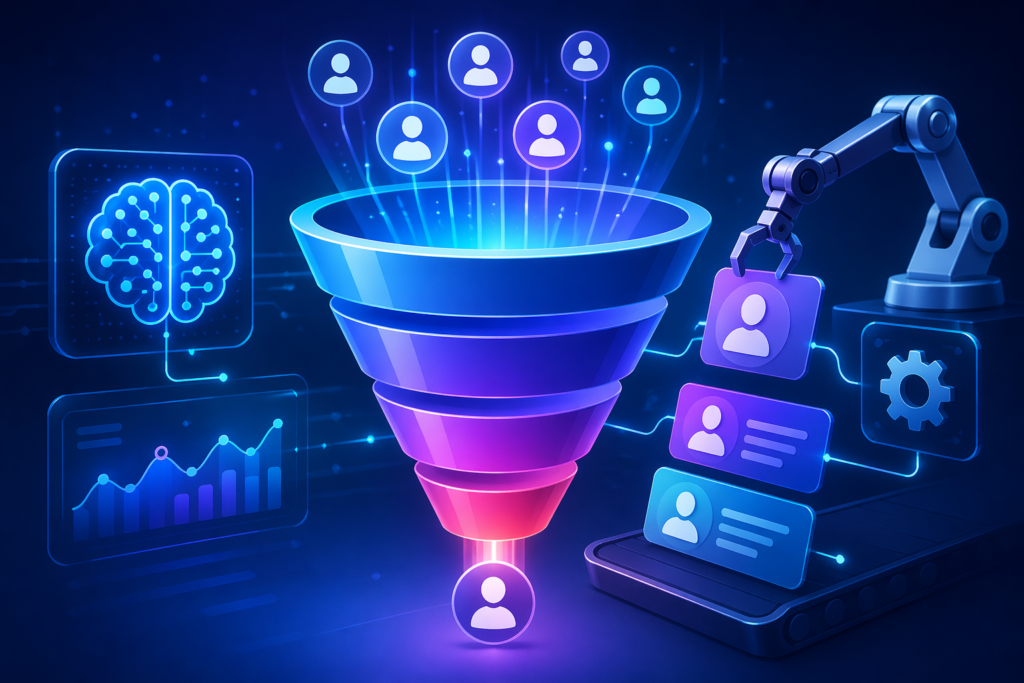
The future of sales funnels is being shaped by advancements in artificial intelligence, personalization, and automation. These technologies are transforming how businesses interact with customers and optimize their marketing strategies.
AI-powered tools can analyze vast amounts of data to predict user behavior and deliver personalized experiences. Chatbots, recommendation engines, and predictive analytics are becoming essential components of modern sales funnels. These technologies enhance user engagement and improve conversion rates.
Personalization is no longer optional—it’s a necessity. Users expect tailored experiences that address their specific needs and preferences. Automation further enhances efficiency by streamlining processes and reducing manual intervention. Businesses that embrace these trends will be better positioned to stay competitive and achieve long-term success.
Common Mistakes in Sales Funnels
One of the most common mistakes businesses make is focusing too much on traffic and not enough on conversions. Driving large volumes of traffic without a clear funnel strategy often leads to poor results. Another mistake is neglecting user experience, which can result in high bounce rates and lost opportunities.
Lack of personalization is another critical issue. Generic messaging fails to resonate with users, reducing engagement and conversions. Additionally, many businesses fail to track and analyze data, making it difficult to identify and fix problems.
Finally, consistency (lack of consistency) across funnel stages can confuse users and disrupt their journey. Ensuring a seamless and cohesive experience is essential for success.
Best Practices Summary
To build a high-converting sales funnel, businesses should focus on delivering value at every stage. This includes understanding the target audience, creating relevant content, and optimizing user experience. Consistent testing and data analysis are essential for continuous improvement.
Trust and credibility should be prioritized. This involves using social proof, transparent communication, and secure processes. Additionally, aligning your funnel with business goals ensures that every effort contributes to measurable outcomes.
Finally, embracing new technologies and trends can provide a competitive advantage. By staying up-to-date and continuously refining your strategies, you can achieve sustainable growth and long-term success.
FAQs
1. What is a sales funnel in simple terms?
A sales funnel is the step-by-step process that guides potential customers from discovering your brand to making a purchase.
2. Why is a sales funnel important?
It helps businesses organize their marketing efforts, improve conversions, and maximize revenue.
3. How long does it take to build a sales funnel?
It depends on complexity, but a basic funnel can be set up within a few days, while advanced funnels may take weeks.
4. What tools are needed for a sales funnel?
Common tools include CRM systems, email marketing platforms, analytics tools, and landing page builders.
5. How can I improve my sales funnel conversions?
Focus on user experience, personalization, and continuous testing to identify and fix issues.
6. What is the difference between a sales funnel and a marketing funnel?
A marketing funnel focuses on attracting and nurturing leads, while a sales funnel focuses on converting them into customers.
7. Can small businesses benefit from sales funnels?
Yes, sales funnels are essential for businesses of all sizes to streamline processes and improve efficiency.
8. How do I measure sales funnel success?
By tracking metrics such as conversion rate, CPA, and customer lifetime value.
Conclusion
A well-designed sales funnel is essential for driving consistent growth and maximizing conversions in today’s digital landscape. By understanding each stage of the funnel, leveraging the right tools, and continuously optimizing your strategies, you can create a system that delivers predictable and scalable results.
Success lies in combining data-driven insights with a deep understanding of customer behavior. Businesses that prioritize user experience, personalization, and value creation will stand out in a competitive market. With the right approach, your sales funnel can become a powerful engine for growth.
To accelerate your results and implement proven funnel strategies, explore expert solutions available at My Funnel Script and take your business to the next level.
Want to Implement This Easily?
Prompt:
You are an expert consultant. Based on the blog post titled “(Sales Funnel)”, provide a step-by-step, practical implementation guide. Include tools, best practices, common mistakes to avoid, and advanced tips. Assume the reader wants to implement everything discussed in this article effectively.
Call to Action:
Want our help implementing this? Just reach out to us via our website contact form:
https://buywith.thrivecart.com/full-sales-funnel-templates/