
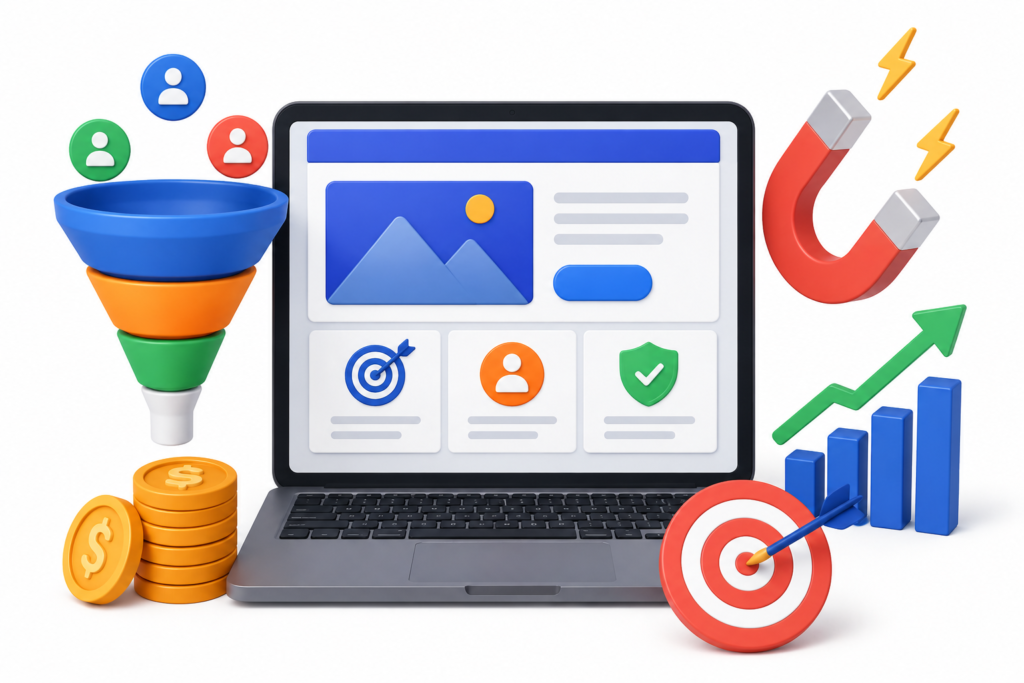
Learn how to create high-converting Sales Pages that attract qualified prospects, build trust, increase conversions, and maximize revenue using proven sales copywriting, user experience, and conversion optimization strategies.
Introduction
In today’s highly competitive digital marketplace, businesses need more than just a website to generate sales. They need strategically designed Sales Pages that guide visitors through a persuasive journey and motivate them to take action. Whether the goal is purchasing a product, booking a consultation, joining a membership, or enrolling in a program, a well-crafted sales page serves as one of the most powerful conversion tools available.
Many businesses invest heavily in advertising, search engine optimization, email marketing, and social media campaigns but struggle to convert traffic into customers. The problem often lies in weak messaging, unclear value propositions, poor page structure, or a lack of trust-building elements. An optimized sales page addresses these challenges by combining persuasive copywriting, strategic design, and customer psychology.
At My Funnel Script, effective sales pages are recognized as essential assets for sustainable online growth. When built correctly, they can significantly improve conversion rates, increase customer acquisition efficiency, and maximize marketing return on investment. This guide explores everything you need to know about creating high-performing sales pages that consistently drive business growth.
Understanding the Purpose of Sales Pages
Sales pages are dedicated web pages specifically designed to persuade visitors to complete a desired action. Unlike traditional website pages that often provide broad information, sales pages focus on a single conversion goal. This focused approach eliminates distractions and keeps users moving toward a specific outcome.
A successful sales page serves as a digital salesperson available around the clock. It communicates benefits, addresses objections, builds trust, demonstrates value, and encourages action. Every element on the page—from headlines and images to testimonials and calls to action—works together to influence decision-making.
Modern consumers conduct extensive research before making purchasing decisions. They seek information, proof, and reassurance. Effective sales pages satisfy these needs by presenting compelling solutions, real-world results, and clear reasons to choose a product or service. This strategic communication helps prospects feel confident about moving forward.
Why Sales Pages Matter for Business Growth
Businesses that prioritize sales page optimization often experience measurable improvements in lead generation and revenue growth. While traffic generation remains important, conversion optimization ultimately determines profitability. A sales page helps maximize the value of every visitor arriving through paid advertising, organic search, social media, or email campaigns.
Sales pages also improve marketing efficiency. Rather than sending visitors to generic homepage content, businesses can direct prospects to targeted pages tailored to specific offers and customer segments. This personalization creates stronger relevance and improves conversion rates significantly.
Additionally, sales pages provide valuable performance insights. By analyzing user behavior, click-through rates, and conversion metrics, organizations can continuously improve messaging and design. This data-driven approach supports long-term growth while reducing customer acquisition costs and increasing overall marketing effectiveness.
The Essential Components of a High-Converting Sales Page
Every successful sales page contains several foundational elements that work together to influence buying decisions. The headline serves as the first impression and must immediately capture attention while communicating a clear benefit. Visitors should instantly understand what is being offered and why it matters.
Supporting sections typically include compelling subheadings, benefit-driven content, social proof, visual demonstrations, and clear calls to action. These components create a logical flow that guides prospects through the decision-making process. Consistency between messaging and visitor expectations is critical for maintaining engagement.
Trust-building elements are equally important. Testimonials, reviews, case studies, certifications, guarantees, and transparent information help reduce uncertainty. According to creating helpful, reliable, people-first content, trustworthiness and user value remain critical factors for online success. High-converting sales pages prioritize both.
Crafting Powerful Headlines That Capture Attention
The headline is often the most important element on a sales page. Research consistently shows that visitors decide within seconds whether they will continue reading. A strong headline immediately communicates value, relevance, and a compelling reason to stay.
Effective headlines focus on outcomes rather than features. Instead of simply describing a product, they highlight the transformation customers can achieve. For example, “Increase Your Lead Generation by 300% with a Proven Sales Funnel Strategy” is significantly more persuasive than “Sales Funnel Software.”
Clarity should always take priority over creativity. Visitors should never need to guess what the offer entails. Strong headlines combine specificity, relevance, and emotional appeal while remaining easy to understand. Testing multiple headline variations through A/B testing can reveal significant conversion improvements over time.
Understanding Customer Psychology and Buying Behavior
Successful sales pages are built around customer psychology. Purchasing decisions are often influenced by emotions first and justified by logic later. Understanding motivations, fears, desires, and objections allows businesses to create more persuasive messaging.
Customers typically seek solutions to specific problems. Whether they want to save time, increase income, improve efficiency, reduce stress, or achieve personal goals, sales pages should focus on these desired outcomes. Demonstrating empathy helps visitors feel understood and creates stronger connections.
Behavioral triggers such as social proof, authority, scarcity, and reciprocity can also influence decision-making. When used ethically, these principles help prospects evaluate offers more confidently. The key is providing genuine value rather than relying on manipulation or exaggerated claims.
Creating a Clear and Compelling Value Proposition
A value proposition explains why a customer should choose a particular solution over competing alternatives. It represents the core promise of value delivered by a product or service. Without a clear value proposition, even well-designed sales pages struggle to convert visitors effectively.
Strong value propositions communicate specific benefits, unique differentiators, and meaningful outcomes. They answer critical questions prospects naturally ask: What does this offer do? How does it help me? Why is it different? Why should I trust it?
The most effective value propositions focus on customer outcomes rather than company achievements. Instead of emphasizing internal accomplishments, they highlight how users benefit directly. This customer-centric approach improves engagement and increases perceived value throughout the sales process.
Writing Persuasive Sales Copy That Converts
Sales copy plays a crucial role in turning interest into action. High-converting copy guides readers through a structured journey that identifies problems, presents solutions, demonstrates value, and encourages commitment. Every sentence should move prospects closer to a conversion decision.
Effective copywriting focuses on benefits before features. While features explain what a product does, benefits explain why those features matter. Prospects are more interested in outcomes and results than technical specifications alone. Clear explanations help bridge this gap.
Persuasive sales copy also addresses common objections proactively. Visitors often have concerns related to cost, complexity, risk, timing, or effectiveness. By acknowledging and resolving these concerns within the page, businesses can reduce friction and improve conversion performance significantly.
Using Storytelling to Build Emotional Connections
Storytelling has become one of the most effective tools in modern marketing because it creates emotional engagement and improves message retention. People naturally connect with stories more than facts alone. A compelling narrative helps prospects visualize success and understand how a solution fits into their lives.
Customer success stories are particularly valuable. Real-world examples demonstrate practical applications while providing evidence of results. Prospects often identify with similar challenges and can imagine achieving comparable outcomes.
Stories also humanize brands and build trust. Rather than relying solely on promotional language, businesses can share experiences, lessons learned, and transformation journeys. These narratives create authenticity while strengthening credibility throughout the sales process.
Designing Sales Pages for User Experience and Engagement
Design significantly influences how visitors interact with a sales page. Even the most persuasive copy can underperform if users struggle to navigate content or locate important information. Effective design enhances readability, comprehension, and overall user experience.
Visual hierarchy helps guide attention toward key messages and calls to action. Strategic use of headings, spacing, images, and formatting ensures visitors can quickly understand information. Clean layouts reduce cognitive overload and encourage continued engagement.
Mobile responsiveness is equally important. With increasing numbers of users accessing websites through smartphones and tablets, sales pages must function seamlessly across all devices. Following SEO Starter Guide recommendations for user experience and accessibility can support both engagement and search visibility.
Building Trust Through Social Proof and Credibility
Trust remains one of the strongest conversion factors in online marketing. Prospects are naturally cautious when evaluating unfamiliar products or services. Social proof helps reduce uncertainty by showing that others have already experienced positive results.
Testimonials provide direct evidence of customer satisfaction. Detailed testimonials that describe specific challenges and outcomes tend to be more persuasive than generic praise. Including names, photos, and professional details can further enhance credibility.
Case studies, industry recognition, certifications, expert endorsements, and customer success metrics also strengthen trust signals. These elements collectively reassure visitors that they are making informed decisions based on proven results rather than marketing promises alone.
Optimizing Calls-to-Action for Maximum Conversions
Calls-to-action (CTAs) are the conversion-driving elements of any sales page. Regardless of how persuasive the copy or attractive the design may be, visitors need clear direction regarding the next step they should take. A strong CTA removes confusion and encourages immediate action.
Effective CTAs use action-oriented language that communicates a specific benefit. Instead of generic phrases such as “Submit” or “Click Here,” high-performing CTAs often use phrases like “Start Growing Your Business Today,” “Get Instant Access,” or “Schedule Your Free Consultation.” These messages reinforce value while motivating engagement.
CTA placement also influences performance. Strategic placement throughout the sales page ensures visitors can act whenever they feel ready. Testing button text, colors, positioning, and surrounding content can reveal valuable insights into user preferences and conversion behavior.
Leveraging Data and Analytics for Continuous Improvement
The most successful sales pages are never truly finished. Continuous optimization based on real user data allows businesses to improve performance over time. Analytics provide valuable insights into visitor behavior, engagement patterns, and conversion bottlenecks.
Metrics such as bounce rate, average time on page, click-through rates, conversion rates, and scroll depth reveal how users interact with content. Identifying areas where visitors lose interest helps marketers prioritize improvements and refine page structure.
A/B testing plays a crucial role in optimization. Businesses can compare variations of headlines, images, CTAs, page layouts, and messaging to determine which versions perform best. Following guidance from Google Analytics enables organizations to make informed, data-driven decisions rather than relying on assumptions.
Sales Page SEO Strategies for Long-Term Visibility
While sales pages are often associated with paid advertising campaigns, search engine optimization can also drive highly qualified organic traffic. Optimizing sales pages for search visibility increases discoverability while supporting long-term lead generation.
Keyword research should focus on user intent rather than search volume alone. Understanding what prospects are searching for helps businesses create content that aligns with customer needs. Relevant primary, secondary, and semantic keywords should be incorporated naturally throughout the page.
Technical optimization is equally important. Proper heading structure, mobile responsiveness, page speed, metadata optimization, and crawlability all contribute to search performance. Businesses should also follow recommendations from technical SEO to ensure pages remain accessible and indexable by search engines.
Integrating Sales Pages with Marketing Funnels
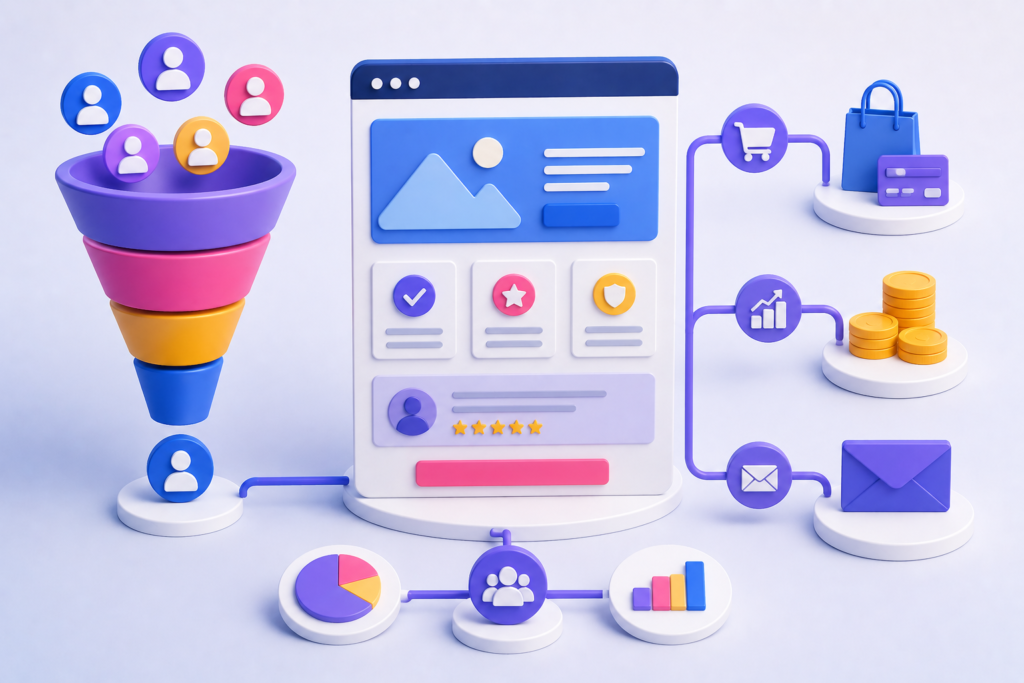
Sales pages achieve their greatest impact when integrated into a broader marketing funnel. Rather than functioning as isolated assets, they should support customer journeys from initial awareness through final conversion and beyond.
Top-of-funnel marketing activities such as content marketing, social media engagement, email campaigns, and paid advertising help attract potential customers. Sales pages then convert that interest into meaningful actions. Alignment between traffic sources and page messaging improves relevance and conversion rates.
Post-conversion experiences are equally important. Thank-you pages, onboarding sequences, follow-up emails, and customer support interactions contribute to long-term satisfaction and retention. Businesses that optimize the entire funnel often achieve stronger revenue growth than those focused solely on initial conversions.
Common Mistakes That Reduce Sales Page Performance
Many sales pages fail to achieve desired results because of avoidable mistakes. One common issue is focusing too heavily on product features while neglecting customer benefits. Prospects care primarily about outcomes and value rather than technical specifications alone.
Another frequent mistake involves overwhelming visitors with excessive information. While comprehensive content is important, cluttered layouts and unnecessary distractions can reduce engagement. Clear organization and logical flow improve readability and decision-making.
Lack of trust signals also harms conversion performance. Missing testimonials, unclear pricing, weak guarantees, and insufficient proof create uncertainty. Businesses should continually evaluate their sales pages from a customer’s perspective to identify friction points and areas requiring improvement.
Best Practices Summary for Long-Term Sales Page Success
Long-term success with sales pages requires a combination of strategic planning, customer understanding, persuasive communication, and ongoing optimization. Businesses that consistently focus on user needs typically outperform competitors relying solely on promotional tactics.
Successful sales pages begin with thorough audience research. Understanding customer goals, challenges, motivations, and objections allows marketers to create more relevant messaging. Strong headlines, compelling value propositions, persuasive copy, and trust-building elements then guide visitors toward conversion.
Continuous testing remains essential. Markets evolve, customer preferences change, and competitive landscapes shift over time. Organizations that regularly analyze performance data, refine messaging, and improve user experiences position themselves for sustainable growth and improved conversion outcomes.
Frequently Asked Questions
1. What is a sales page?
A sales page is a dedicated webpage designed to persuade visitors to take a specific action, such as purchasing a product, scheduling a consultation, registering for an event, or subscribing to a service. Unlike general website pages, sales pages focus on a single conversion goal.
2. How long should a sales page be?
The ideal length depends on the complexity of the offer and customer decision-making process. High-ticket products and services often require longer sales pages with detailed explanations, while simpler offers may perform well with shorter content. The goal is to provide enough information to support informed decisions.
3. What elements should every sales page include?
Every effective sales page should include a compelling headline, value proposition, persuasive copy, benefit-focused messaging, trust signals, testimonials, calls-to-action, and clear explanations of the offer. These elements work together to improve conversions.
4. Why are testimonials important on sales pages?
Testimonials provide social proof and help build trust. Prospective customers often look for evidence that others have achieved positive results before making purchasing decisions. Detailed testimonials reduce uncertainty and strengthen credibility.
5. How can I improve my sales page conversion rate?
Improving conversion rates involves testing headlines, refining messaging, optimizing calls-to-action, enhancing trust signals, improving page speed, simplifying navigation, and analyzing user behavior. Continuous optimization based on data often produces the best results.
6. Are sales pages important for SEO?
Yes. Sales pages can attract qualified organic traffic when optimized correctly. Keyword research, technical optimization, user-focused content, and proper page structure contribute to improved search visibility and lead generation opportunities.
7. What is the difference between a landing page and a sales page?
A landing page is often designed for lead generation or a specific campaign objective, while a sales page focuses more directly on persuading visitors to make a purchase or complete a conversion action. Both serve important roles within marketing funnels.
8. How often should sales pages be updated?
Sales pages should be reviewed regularly to ensure accuracy, relevance, and optimal performance. Updating testimonials, statistics, offers, and messaging while conducting periodic conversion testing helps maintain effectiveness over time.
Conclusion
Sales pages remain one of the most powerful tools available for converting website visitors into customers. By combining persuasive copywriting, strategic design, customer psychology, trust-building elements, and ongoing optimization, businesses can significantly improve marketing performance and revenue generation.
Organizations that invest in understanding their audience, communicating value clearly, and continuously improving their sales pages often experience stronger conversion rates and long-term growth. Success comes not from aggressive selling but from providing meaningful solutions that address customer needs and concerns.
At My Funnel Script, effective sales page development is recognized as a critical component of modern digital marketing success. Businesses that implement the strategies outlined in this guide can create high-performing sales pages that drive sustainable results while delivering exceptional value to their audiences.
Want to Implement This Easily?
Prompt Text:
You are an expert consultant. Based on the blog post titled “Sales Pages”, provide a step-by-step, practical implementation guide. Include tools, best practices, common mistakes to avoid, and advanced tips. Assume the reader wants to implement everything discussed in this article effectively.
Call to Action:
Want our help implementing this? Just reach out to us via our website contact form: