
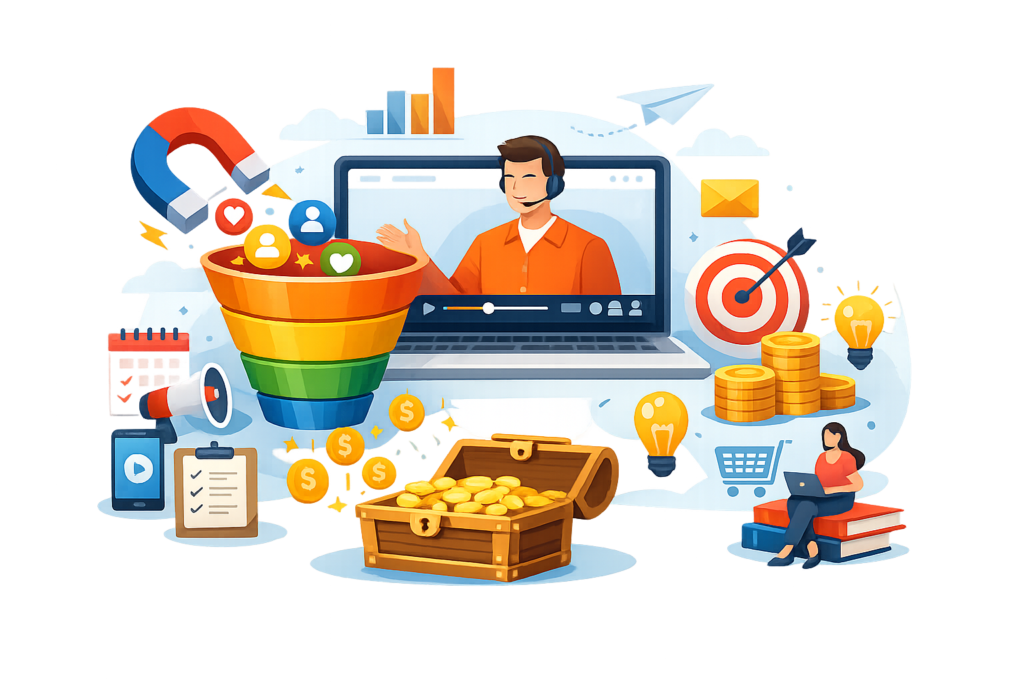
Learn how to build a high-converting Webinar Funnel that attracts qualified leads, nurtures prospects, and turns attendees into loyal customers. Discover proven strategies, best practices, optimization techniques, and expert insights to maximize webinar conversions and long-term business growth.
Introduction
In today’s competitive digital landscape, businesses need more than just website traffic to generate sustainable revenue. They need a systematic process that educates potential customers, builds trust, overcomes objections, and guides prospects toward making confident purchasing decisions. This is precisely where a Webinar Funnel becomes one of the most powerful marketing assets available.
Unlike traditional sales methods that rely on cold outreach or one-time advertising campaigns, a webinar funnel allows businesses to establish authority while creating meaningful relationships with potential customers. Through valuable educational content, live interaction, and strategic follow-up sequences, companies can transform interested visitors into highly qualified buyers. Whether you’re selling digital products, coaching programs, software solutions, consulting services, or premium memberships, webinars consistently remain among the highest-converting marketing channels.
At My Funnel Script, we understand that successful funnels are built with strategy rather than guesswork. A professionally designed webinar funnel combines persuasive messaging, optimized landing pages, automated email nurturing, and compelling offers into a seamless customer journey that delivers measurable business results. When every stage of the funnel works together, businesses experience higher conversion rates, stronger customer engagement, and improved return on marketing investment.
This comprehensive guide explains everything you need to know about webinar funnels—from understanding how they work to implementing advanced optimization strategies that increase registrations, attendance, engagement, and sales.
What Is a Webinar Funnel?
A Webinar Funnel is a structured marketing system designed to attract potential customers, encourage webinar registrations, deliver valuable educational content, and convert attendees into paying clients through strategic follow-up. Instead of relying on a single sales page or advertisement, the funnel creates multiple touchpoints that gradually build credibility and trust throughout the buyer’s journey.
Modern webinar funnels combine several digital marketing components into one seamless experience. Visitors typically discover the webinar through paid advertising, search engine optimization, email marketing, organic social media, referral partnerships, or content marketing campaigns. They are directed to a registration page where persuasive messaging, compelling benefits, and strong calls-to-action encourage sign-ups. After registration, automated reminder emails help maximize attendance while keeping prospects engaged before the event.
The webinar itself becomes the centerpiece of the funnel. Rather than immediately pushing products or services, successful webinars focus on educating the audience, solving meaningful problems, sharing practical insights, and demonstrating expertise. This educational approach significantly increases audience trust, making attendees far more receptive to product recommendations later in the presentation. Businesses that consistently deliver valuable educational experiences often see stronger customer relationships and higher long-term retention rates.
An effective webinar funnel continues working even after the live presentation ends. Automated follow-up emails, replay pages, limited-time offers, testimonials, frequently asked questions, and personalized nurturing sequences encourage prospects to revisit the offer and complete their purchase. This post-webinar automation ensures businesses continue generating revenue long after the live session concludes. Rather than treating the webinar as a one-time event, successful organizations leverage it as an ongoing lead generation and conversion system that supports sustainable business growth.
Why Webinar Funnels Are Essential for Modern Businesses
Consumer purchasing behavior has changed dramatically over the past decade. Buyers now spend considerable time researching products, comparing alternatives, reading reviews, and evaluating businesses before making purchasing decisions. As a result, companies must earn trust long before asking prospects to invest. Webinar funnels provide an ideal environment for building that trust through education and transparency.
Unlike short advertisements or promotional emails, webinars allow businesses to demonstrate genuine expertise while addressing customer challenges in depth. Participants gain practical knowledge, receive actionable advice, and experience the company’s teaching style firsthand. This educational approach positions the presenter as an authority rather than simply another salesperson. As credibility increases, purchasing resistance naturally decreases.
Another significant advantage is audience engagement. Webinar attendees actively participate by asking questions, responding to polls, downloading resources, and interacting throughout the presentation. These interactions provide valuable insights into customer concerns, allowing businesses to refine messaging, improve offers, and personalize future marketing campaigns. Greater engagement often translates directly into improved conversion rates because prospects feel heard and understood.
Webinar funnels also provide exceptional scalability. Once the registration system, reminder emails, webinar presentation, follow-up automation, and sales process have been optimized, businesses can generate qualified leads continuously with minimal manual effort. Evergreen webinar funnels, in particular, enable organizations to educate and convert prospects around the clock while maintaining a consistent customer acquisition process. This combination of automation, education, and relationship-building makes webinar funnels one of the most valuable long-term investments in digital marketing.
How a Webinar Funnel Works from Start to Finish
Every successful webinar funnel follows a carefully planned sequence designed to guide prospects through a logical buying journey. Although each business customizes its funnel based on its audience and objectives, the overall framework remains remarkably consistent across industries.
The process begins with traffic generation. Businesses attract visitors through search engine optimization, content marketing, paid advertising, referral partnerships, email campaigns, podcasts, video marketing, and social media promotion. Instead of directing prospects immediately to a sales page, traffic is sent to a webinar registration page focused entirely on encouraging sign-ups. This page clearly explains the webinar’s value, learning outcomes, presenter credibility, and event details while minimizing distractions that could reduce conversions.
After registration, automated email sequences play an essential role in maintaining engagement before the webinar begins. Confirmation emails reassure registrants that their seat is reserved, reminder emails increase attendance rates, and educational pre-event content builds anticipation. Some businesses also include downloadable worksheets or preparation guides to encourage greater participation during the live session.
The webinar presentation itself follows a structured flow that balances education with strategic selling. Presenters typically introduce themselves, establish credibility, explain common industry challenges, deliver actionable solutions, share success stories, and finally introduce a relevant product or service as the logical next step. Following the webinar, automated follow-up emails, replay access, testimonials, bonus offers, and urgency-driven promotions encourage attendees—and even non-attendees—to complete the purchasing process. This integrated customer journey maximizes every lead generated throughout the funnel.
Key Components of a High-Converting Webinar Funnel
Every profitable webinar funnel consists of several interconnected elements that work together to guide prospects from initial interest to final conversion. Weakness in any one component can significantly reduce overall performance, making it essential to optimize every stage of the customer journey.
The registration page serves as the gateway into the funnel. High-converting registration pages communicate a clear value proposition, highlight learning outcomes, establish presenter authority, and include compelling calls-to-action. Clean layouts, persuasive headlines, trust indicators, and minimal distractions encourage more visitors to register. Strong registration pages consistently improve lead acquisition while lowering advertising costs.
Email automation represents another critical component. Confirmation emails, reminder sequences, educational content, calendar invitations, and personalized follow-up messages keep registrants engaged before and after the webinar. Effective email campaigns reduce no-show rates while increasing sales opportunities throughout the customer journey. Segmentation based on attendee behavior allows businesses to deliver more relevant messaging, further improving engagement and conversions.
The webinar presentation itself must combine valuable educational content with strategic persuasion. Rather than focusing exclusively on selling, successful presentations prioritize solving audience problems, demonstrating expertise, sharing practical examples, and building genuine trust. Customer testimonials, case studies, live demonstrations, frequently asked questions, and compelling offers reinforce credibility while helping prospects overcome purchasing hesitation. Together, these interconnected components create a seamless experience that consistently generates qualified leads and long-term customers.
Benefits of Using a Webinar Funnel for Business Growth
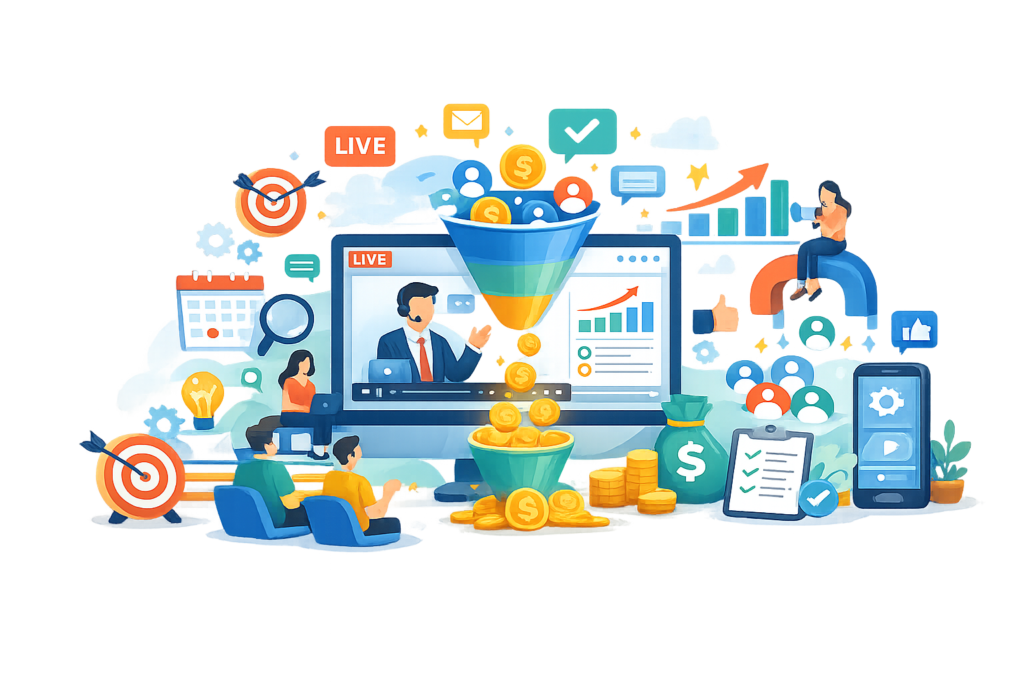
Businesses that invest in webinar funnels often experience improvements across multiple performance metrics rather than simply increasing sales. Because webinars educate prospects before presenting an offer, leads typically become more qualified, informed, and motivated throughout the purchasing journey. This results in higher conversion rates compared to many traditional marketing channels.
A major advantage is authority building. Teaching valuable concepts positions businesses as trusted advisors within their industries. Instead of competing primarily on price, organizations compete based on expertise, credibility, and proven results. This stronger positioning often supports premium pricing while reducing customer objections during the sales process.
Webinar funnels also improve marketing efficiency by combining education, relationship-building, and selling into one integrated system. Every webinar can generate valuable customer insights, reusable content, testimonials, frequently asked questions, and promotional assets that strengthen future campaigns. Recorded webinars may be repurposed into evergreen lead generation funnels, blog content, social media clips, email sequences, and downloadable resources, extending their value well beyond the original event.
Perhaps most importantly, webinar funnels create long-term customer relationships rather than one-time transactions. Prospects who receive meaningful educational experiences are more likely to trust future recommendations, purchase additional services, refer colleagues, and remain loyal customers. Over time, these stronger relationships significantly increase customer lifetime value while supporting sustainable business growth.
Choosing the Right Webinar Funnel Strategy
Not every webinar funnel follows the same structure, and selecting the right strategy depends on your business model, audience behavior, sales cycle, and long-term objectives. A webinar that performs exceptionally well for a software company may not produce the same results for a coaching business, consultant, agency, or eCommerce brand. Understanding the different webinar funnel approaches allows businesses to align their marketing efforts with customer expectations and buying behavior.
Live webinar funnels remain one of the most effective options for building authentic engagement. Because attendees participate in real time, presenters can answer questions, respond to objections, conduct live demonstrations, and create urgency through limited-time offers. Live interactions help establish credibility while making prospects feel personally connected to the presenter. Businesses launching new products, premium consulting services, or high-ticket programs often benefit significantly from live webinar experiences because trust plays a critical role in the purchasing decision.
Evergreen webinar funnels offer a different advantage by automating the customer acquisition process. Instead of hosting repeated live presentations, businesses use pre-recorded webinars that appear as scheduled events. Combined with automated registration systems, reminder emails, follow-up campaigns, and optimized sales pages, evergreen webinars generate leads and sales continuously without requiring ongoing manual effort. Hybrid webinar funnels combine elements of both live and evergreen approaches, allowing organizations to maximize efficiency while maintaining opportunities for audience interaction. Selecting the appropriate strategy ensures the webinar funnel supports long-term scalability, operational efficiency, and sustainable revenue growth.
Creating an Irresistible Webinar Registration Page
Your webinar registration page is one of the most important components of the entire funnel because it serves as the first major conversion point. No matter how valuable your webinar content is, it cannot generate leads or sales if visitors decide not to register. A high-converting registration page should immediately communicate the value attendees will receive, explain why the webinar matters, and encourage visitors to reserve their seat with confidence. Instead of overwhelming users with excessive information, focus on clarity, relevance, and persuasive messaging that addresses their biggest challenges.
An effective registration page begins with a compelling headline that clearly states the primary benefit of attending the webinar. Supporting copy should explain what attendees will learn, the problems they will solve, and the practical outcomes they can expect. Adding a concise agenda helps visitors understand the webinar’s structure while reinforcing its educational value. Trust elements such as presenter credentials, client success stories, testimonials, and relevant statistics further strengthen credibility. A simple registration form requesting only essential information reduces friction and increases conversion rates, while a prominent call-to-action encourages immediate action.
Optimizing the user experience is equally important. Fast-loading pages, responsive mobile design, intuitive layouts, and distraction-free navigation contribute significantly to higher registration rates. Testing different headlines, images, button colors, form lengths, and call-to-action messaging through A/B testing can reveal opportunities for continuous improvement. Businesses that consistently optimize their registration pages often experience higher lead quality, lower acquisition costs, and stronger webinar attendance rates.
Driving High-Quality Traffic to Your Webinar Funnel
Even the most professionally designed webinar funnel cannot succeed without a consistent flow of qualified traffic. The objective is not simply to attract more visitors but to reach individuals who genuinely need your solution and are likely to engage with your webinar content. A diversified traffic strategy reduces dependency on a single marketing channel while creating multiple opportunities for sustainable lead generation.
Organic search remains one of the most valuable long-term traffic sources. Publishing informative blog articles, optimizing website pages around relevant keywords, and creating educational content that answers user questions can attract highly targeted visitors actively searching for solutions. Supporting these efforts with video content, podcasts, downloadable resources, and social media posts expands your reach while reinforcing your authority. Businesses should also build strategic partnerships with complementary brands, influencers, and industry experts to increase webinar exposure among relevant audiences.
Paid advertising accelerates webinar registrations by targeting specific demographics, interests, behaviors, and search intent. Platforms such as Google Ads, LinkedIn Ads, Facebook Ads, and YouTube Ads enable businesses to promote webinars directly to ideal prospects. Successful advertising campaigns continuously monitor click-through rates, cost per registration, conversion rates, and return on investment to maximize performance. Combining organic marketing with paid acquisition creates a balanced strategy that supports both immediate lead generation and long-term business growth.
Webinar Presentation Best Practices That Increase Conversions
The webinar presentation is where trust is built, expertise is demonstrated, and buying decisions begin to take shape. A successful webinar should educate first and sell second. Attendees invest their time because they expect practical insights, not an extended sales pitch. Delivering genuine value throughout the presentation positions your business as a trusted advisor while naturally increasing interest in your products or services.
Start the webinar by introducing yourself, explaining your experience, and outlining what attendees will learn. Early engagement is important, so encourage participation through polls, chat discussions, or simple questions. The educational content should focus on solving real-world challenges using actionable strategies supported by examples, case studies, and measurable results. Breaking complex concepts into simple steps makes the presentation easier to follow while increasing audience retention.
The transition into your offer should feel natural rather than forced. After demonstrating the limitations of common solutions and explaining the benefits of your recommended approach, introduce your product or service as the logical next step. Reinforce your offer with customer testimonials, case studies, guarantees, bonuses, and limited-time incentives where appropriate. Allocate sufficient time for live questions and answers because addressing objections directly often increases buyer confidence. Businesses that prioritize education, authenticity, and audience interaction consistently achieve higher webinar conversion rates than those relying on aggressive sales tactics.
Email Automation and Follow-Up Strategies
A webinar does not end when the presentation concludes. In reality, some of the highest-converting opportunities occur during the follow-up phase. Many attendees require additional time to evaluate the offer, discuss purchasing decisions with colleagues, or revisit webinar content before committing. A structured email automation sequence ensures prospects continue receiving valuable information while remaining engaged with your brand.
The follow-up sequence should begin immediately after the webinar with a thank-you email that includes replay access and links to any promised resources. Over the following days, businesses can share answers to common questions, customer success stories, implementation guides, product demonstrations, and additional educational content. Each email should reinforce the webinar’s key lessons while gradually encouraging readers to take the next step without appearing overly promotional.
Segmentation dramatically improves follow-up performance. Attendees, non-attendees, partial viewers, and customers should each receive messaging tailored to their behavior. Personalized recommendations based on engagement levels create a more relevant experience while increasing click-through and conversion rates. Automation platforms also allow businesses to trigger emails based on specific actions such as replay views, link clicks, or abandoned checkout sessions. This intelligent nurturing process maximizes the value of every webinar registration while supporting stronger customer relationships over time.
Measuring Webinar Funnel Performance
A webinar funnel should never operate on assumptions alone. Consistent measurement and data analysis enable businesses to identify strengths, uncover weaknesses, and make informed optimization decisions. Monitoring the right performance indicators helps improve conversion rates while maximizing the return on marketing investment.
Registration rate is one of the first metrics to evaluate because it reflects the effectiveness of your landing page and promotional campaigns. Attendance rate measures how many registered users actually participate in the webinar, while audience engagement metrics—including watch time, chat activity, poll participation, and questions asked—indicate how effectively the presentation maintains interest. Conversion rate reveals how many attendees ultimately purchase your offer, making it one of the most valuable indicators of webinar success.
Additional metrics such as customer acquisition cost, average order value, customer lifetime value, revenue per attendee, email open rates, click-through rates, replay views, and overall return on investment provide deeper insights into funnel performance. Regularly reviewing these metrics allows businesses to optimize every stage of the customer journey. Small improvements across multiple funnel components often produce substantial increases in overall profitability and long-term business growth.
Common Webinar Funnel Mistakes to Avoid
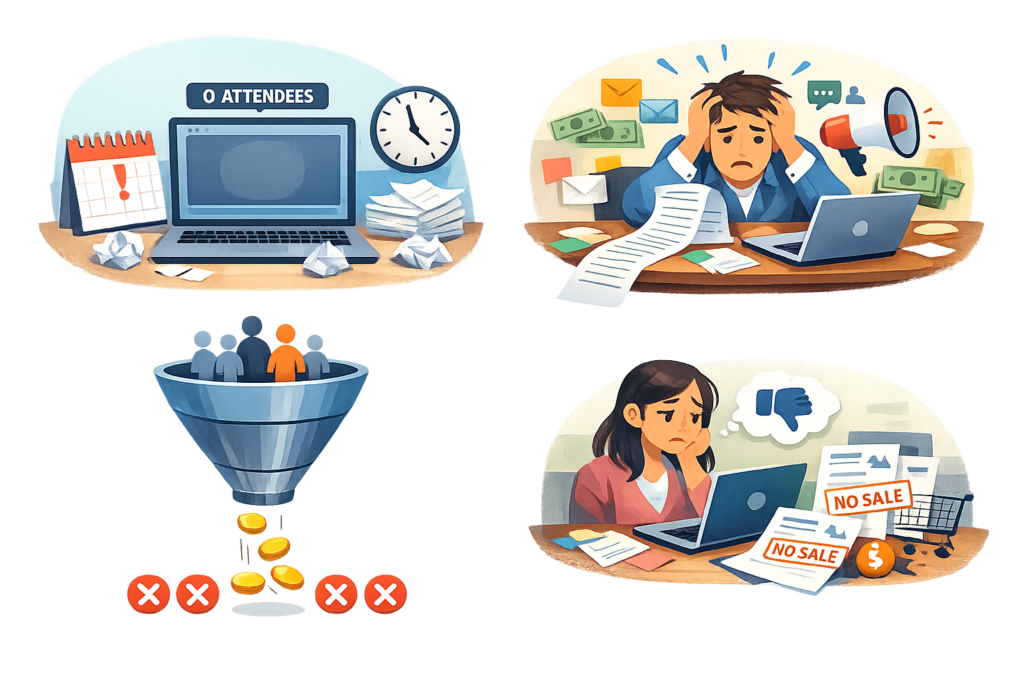
Many businesses invest considerable time and resources into webinars yet fail to achieve the desired results because of avoidable mistakes. Recognizing these challenges early helps improve performance while preventing unnecessary losses in time, budget, and opportunities.
One of the most common mistakes is focusing too heavily on selling instead of educating. Attendees join webinars to learn practical solutions, and overly promotional presentations often reduce trust and engagement. Another frequent issue is poor audience targeting. Promoting webinars to individuals who are not genuinely interested in the topic leads to lower attendance, reduced participation, and fewer conversions. Businesses should develop clear customer personas and align webinar messaging with audience needs before launching promotional campaigns.
Technical preparation is another critical factor. Audio problems, unstable internet connections, presentation errors, broken registration pages, and delayed follow-up emails can negatively impact the attendee experience. Failing to rehearse the presentation or neglecting audience questions also reduces credibility. Finally, many organizations overlook post-webinar optimization by failing to analyze performance data or improve future webinars based on attendee feedback. Continuous refinement is essential for maintaining long-term webinar success.
Best Practices Summary
Building a successful webinar funnel requires more than attractive landing pages or persuasive sales presentations. It demands a customer-focused strategy that delivers meaningful educational experiences while guiding prospects through a logical buying journey. Businesses that consistently prioritize value, transparency, and relationship-building establish stronger authority within their industries and generate higher-quality leads.
Successful webinar funnels begin with clearly defined objectives and a thorough understanding of the target audience. Every component—from traffic generation and registration pages to reminder emails, webinar content, follow-up sequences, and sales offers—should work together to provide a seamless customer experience. Regular testing, data analysis, and ongoing optimization ensure the funnel continues improving over time rather than remaining static.
The most effective webinar funnels also embrace automation without sacrificing personalization. Combining intelligent email segmentation, behavioral tracking, compelling educational content, and customer-focused messaging creates an efficient marketing system capable of generating sustainable business growth. Organizations that consistently refine their webinar strategies are better positioned to increase conversions, improve customer retention, and maximize long-term profitability.
Frequently Asked Questions
1. What is a Webinar Funnel?
A Webinar Funnel is a structured marketing process that attracts prospects, encourages webinar registrations, educates attendees through valuable presentations, and converts them into paying customers using strategic follow-up and sales automation.
2. How long should a webinar be?
Most successful webinars last between 45 and 90 minutes. This provides enough time to educate the audience, demonstrate expertise, answer questions, and present an offer without overwhelming attendees.
3. Are live webinars better than evergreen webinars?
Both have advantages. Live webinars offer real-time interaction and stronger engagement, while evergreen webinars provide scalability by generating leads and sales automatically around the clock.
4. What industries benefit from webinar funnels?
Webinar funnels work exceptionally well for SaaS companies, consultants, coaches, agencies, educators, healthcare providers, financial services, professional training organizations, and B2B businesses.
5. How do I increase webinar attendance?
Send multiple reminder emails, offer calendar invitations, provide valuable pre-webinar resources, clearly communicate the benefits of attending, and schedule webinars at convenient times for your audience.
6. How do I improve webinar conversion rates?
Focus on education before selling, demonstrate expertise, include real customer success stories, answer objections during the presentation, and implement personalized post-webinar follow-up sequences.
7. Can webinar funnels be fully automated?
Yes. Businesses can automate registrations, reminder emails, webinar delivery, replay access, follow-up campaigns, lead scoring, and sales sequences while maintaining a personalized customer experience.
8. How often should I optimize my webinar funnel?
Review performance after every webinar or monthly for evergreen funnels. Continuous testing and optimization help improve registration rates, attendance, engagement, and conversions over time.
Conclusion
A well-designed Webinar Funnel is far more than a marketing campaign—it is a comprehensive customer acquisition system that educates prospects, builds lasting trust, and consistently converts qualified leads into loyal customers. By combining valuable content, strategic automation, data-driven optimization, and customer-focused communication, businesses can create predictable and scalable revenue growth.
At My Funnel Script, we believe that every successful webinar funnel begins with a clear strategy and continuous improvement. Whether you are launching your first webinar or optimizing an existing funnel, investing in a professionally structured system will help you generate better leads, strengthen customer relationships, and achieve long-term business success.
Want to Implement This Easily?
Prompt
You are an expert consultant. Based on the blog post titled “Webinar Funnel”, provide a step-by-step, practical implementation guide. Include tools, best practices, common mistakes to avoid, and advanced tips. Assume the reader wants to implement everything discussed in this article effectively.
Call to Action
Want our help implementing this? Just reach out to us via our website contact form: