
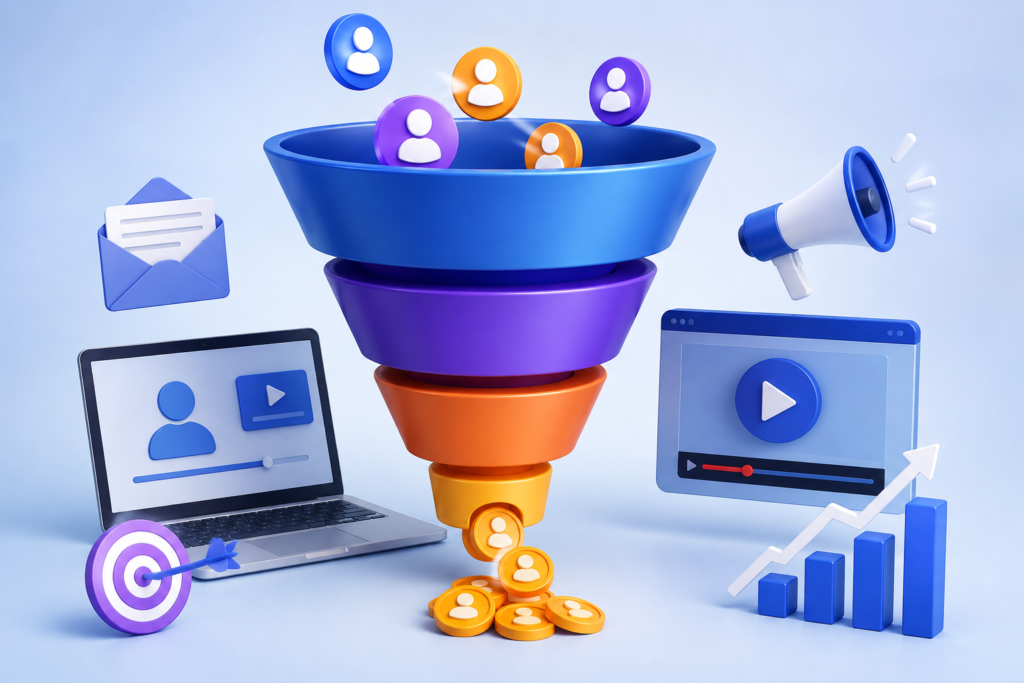
Learn how to build a high-converting Webinar Funnel that attracts qualified prospects, increases registrations, improves attendance rates, and converts viewers into loyal customers using proven marketing strategies and automation.
Introduction
In today’s competitive digital marketplace, businesses need more than traffic to generate sustainable growth—they need a proven system that educates, builds trust, and converts prospects into paying customers. A Webinar Funnel is one of the most effective marketing assets for accomplishing exactly that. Whether your goal is selling online courses, software subscriptions, consulting services, coaching programs, or high-ticket offers, webinars provide a structured way to demonstrate expertise while addressing customer objections in real time.
Unlike traditional advertising, webinar funnels focus on relationship building. Instead of asking visitors to purchase immediately, they guide prospects through a carefully planned journey that begins with awareness and ends with confident buying decisions. Every stage—from registration pages and confirmation emails to reminder sequences, webinar presentations, follow-up campaigns, and sales pages—works together to maximize conversions while creating a positive customer experience.
At My Funnel Script, we believe every successful webinar starts with a strategically designed funnel rather than simply presenting slides. By combining persuasive messaging, marketing automation, customer psychology, analytics, and continuous optimization, businesses can create webinar funnels that consistently generate qualified leads and scalable revenue. This guide explains every critical component required to build, optimize, and scale a high-performing webinar funnel using modern digital marketing best practices.
Understanding Webinar Funnels and Why They Matter
A Webinar Funnel is a structured marketing system designed to move potential customers from initial awareness to becoming paying clients through educational online presentations. Unlike standalone webinars, a webinar funnel integrates multiple marketing assets—including landing pages, email automation, audience segmentation, registration forms, presentation content, follow-up sequences, and sales offers—into one cohesive conversion process. Each component supports the next, creating a seamless customer journey that encourages trust and action rather than relying on one isolated event.
Modern buyers rarely make purchasing decisions after seeing a single advertisement. They research solutions, compare providers, read reviews, and seek evidence before committing their budget. Webinar funnels accommodate this buying behavior by providing valuable education before introducing a commercial offer. Instead of interrupting prospects with aggressive sales messaging, businesses position themselves as trusted advisors capable of solving real problems. This educational approach naturally improves credibility while reducing purchase hesitation.
Another major advantage is scalability. Live webinars allow businesses to connect personally with audiences, answer questions, and demonstrate expertise. Automated evergreen webinars extend these benefits around the clock by allowing prospects to register at their convenience. Combined with detailed analytics, segmentation, and marketing automation, webinar funnels become predictable lead-generation engines capable of producing consistent results while reducing manual workload.
Useful references:
The Core Components of a High-Converting Webinar Funnel
Every successful webinar funnel consists of several interconnected elements working together toward one objective: conversion. The first component is a compelling registration page. This page must clearly communicate the webinar’s value, explain the transformation attendees can expect, establish credibility, and include an easy-to-complete registration form. Headlines should focus on outcomes rather than features, while supporting content should remove uncertainty and encourage immediate registration.
Following registration, confirmation and reminder sequences become equally important. Many businesses lose significant attendance because they underestimate email nurturing. Effective reminder campaigns include confirmation emails, calendar invitations, educational previews, speaker introductions, SMS reminders when appropriate, and countdown notifications. These communications maintain excitement while reducing forgotten registrations.
The webinar presentation itself represents the centerpiece of the funnel. Successful presentations educate first and sell second. They follow a logical progression: identifying challenges, explaining root causes, presenting actionable solutions, demonstrating proof, addressing objections, and finally introducing an offer. Post-webinar follow-up emails, replay pages, testimonials, FAQs, limited-time incentives, and optimized sales pages complete the funnel, ensuring prospects receive multiple opportunities to convert.
Defining Your Ideal Webinar Audience Before Building the Funnel
One of the biggest reasons webinar funnels fail is poor audience targeting. Even the most persuasive presentation cannot convert visitors who are not genuinely interested in the topic. Before designing registration pages or creating presentation slides, businesses should invest time in understanding their ideal audience’s goals, frustrations, motivations, and buying behaviors.
Audience research begins by identifying customer personas. These profiles include demographics, professional roles, industries, experience levels, budget expectations, preferred communication channels, and common pain points. Beyond demographics, behavioral insights reveal why prospects seek solutions, what alternatives they currently use, and which factors influence purchasing decisions. Surveys, interviews, customer feedback, CRM data, and website analytics provide valuable information for developing accurate personas.
Effective segmentation allows marketers to personalize messaging throughout the webinar funnel. Different industries often require unique examples, different experience levels demand varying educational depth, and separate buyer stages respond to different calls to action. Tailored messaging improves engagement because prospects feel the webinar directly addresses their specific challenges rather than offering generic advice applicable to everyone.
Choosing the Right Webinar Topic That Attracts Qualified Buyers
An exceptional webinar funnel starts with a topic that aligns audience interest with business objectives. Many organizations mistakenly choose subjects that are either too broad or excessively promotional. The most successful webinar topics solve a specific, meaningful problem while naturally leading toward the products or services offered afterward.
Strong webinar topics focus on measurable outcomes. Rather than promising vague improvements, effective titles communicate tangible benefits such as increasing revenue, improving operational efficiency, reducing costs, streamlining workflows, or achieving professional growth. Outcome-oriented messaging immediately captures attention because prospects can visualize practical value before registering.
Keyword research also plays an essential role in selecting webinar topics. Analyzing search demand, customer questions, industry discussions, and competitor content helps identify subjects with genuine interest. Integrating primary keywords, secondary keywords, and semantically related phrases throughout registration pages improves search visibility while ensuring content aligns with audience intent. Ultimately, the best webinar topic balances educational value, search opportunity, and commercial relevance without appearing overly sales-focused.
Designing Landing Pages That Maximize Webinar Registrations
Landing pages determine whether advertising investments generate registrations or wasted clicks. Every design decision—from headline placement and imagery to typography, form length, and page speed—directly influences conversion rates. Effective landing pages prioritize clarity over complexity, helping visitors understand the webinar’s value within seconds of arrival.
High-performing webinar registration pages typically include an attention-grabbing headline, a concise value proposition, speaker credentials, learning outcomes, testimonials, frequently asked questions, trust indicators, and a prominent registration form above the fold. Rather than overwhelming visitors with unnecessary information, successful pages emphasize benefits while minimizing distractions. Removing excessive navigation links also keeps users focused on registration.
Performance optimization significantly impacts conversions. Fast-loading pages, responsive mobile layouts, accessible design, and intuitive user experiences reduce abandonment while improving satisfaction. Continuous A/B testing further refines landing pages by comparing headlines, imagery, form fields, call-to-action buttons, testimonials, and layouts. Incremental improvements often produce substantial increases in registration rates over time, making optimization an ongoing priority rather than a one-time activity.
Creating Registration Forms That Increase Conversion Rates
Registration forms serve as the gateway into the webinar funnel. Although seemingly simple, form design substantially affects conversion performance. Businesses frequently request excessive information during registration, inadvertently discouraging potential attendees. Collecting only essential details—typically name and email address—reduces friction while encouraging more registrations.
Trust also influences form completion rates. Visitors hesitate to share personal information if privacy expectations remain unclear. Transparent messaging regarding data protection, communication preferences, and unsubscribe options increases confidence while demonstrating professionalism. Including reassuring privacy statements near submission buttons further reduces anxiety without interrupting the registration process.
Progressive profiling offers an effective long-term strategy for balancing lead quality with user experience. Instead of requesting extensive details upfront, businesses gather additional information gradually through follow-up interactions, surveys, CRM enrichment, or subsequent offers. This approach maintains high conversion rates while still collecting meaningful customer insights for segmentation and personalized marketing.
Building Automated Email Sequences That Improve Attendance
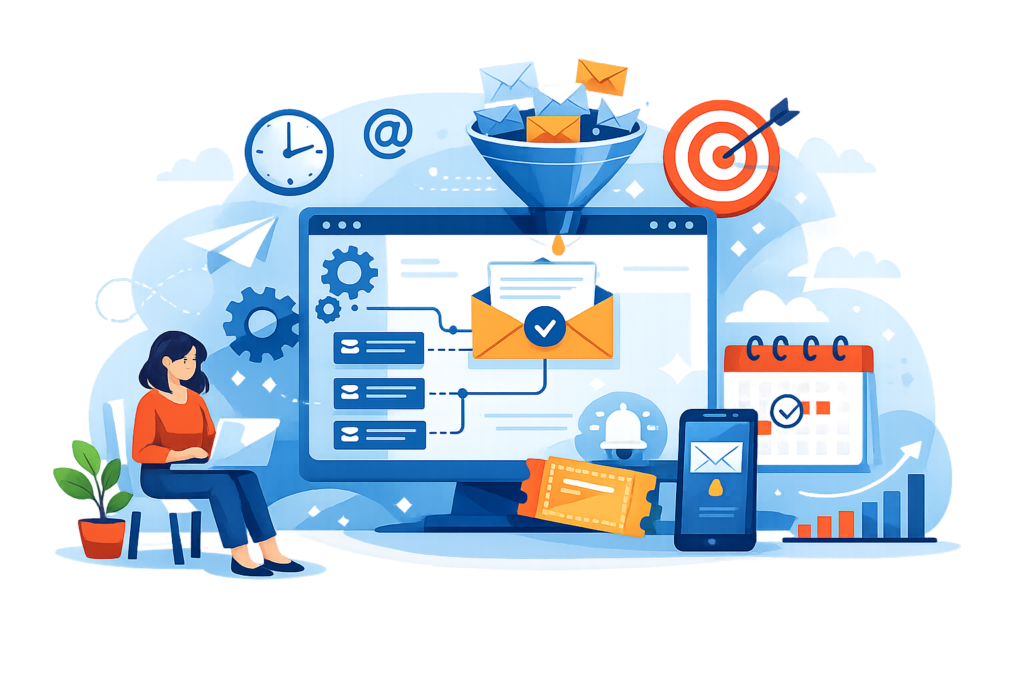
Email automation transforms webinar funnels from one-time events into consistent conversion systems. Registration alone does not guarantee attendance. Busy professionals often forget scheduled webinars, experience conflicts, or lose motivation without regular engagement. Strategic email sequences maintain momentum while reinforcing the webinar’s value before the event begins.
An effective reminder campaign begins immediately after registration with a confirmation email containing webinar details, calendar integration, access instructions, and expectations. Subsequent emails can introduce the presenter, preview valuable lessons, share relevant resources, answer common questions, and highlight testimonials from previous attendees. Each communication should reinforce why attending live provides unique value compared to watching a replay.
After the webinar concludes, follow-up automation becomes equally important. Personalized emails based on attendance behavior improve relevance and engagement. Live attendees may receive implementation resources, exclusive bonuses, and limited-time offers, while non-attendees receive replay access and encouragement to revisit key insights. Advanced automation platforms further personalize communications using behavioral triggers, ensuring prospects receive appropriate messaging based on their interactions throughout the funnel.
Optimizing Webinar Presentations for Maximum Engagement and Higher Conversions
A webinar presentation is the heart of every successful Webinar Funnel. While an attractive registration page and well-written email sequence can encourage sign-ups, the presentation itself determines whether attendees remain engaged, trust your expertise, and ultimately become customers. Every slide, transition, story, and demonstration should have a clear purpose within the customer journey. Rather than delivering an information-heavy lecture, successful webinars combine education, storytelling, and strategic persuasion that naturally guides attendees toward a solution.
An effective webinar follows a logical structure. Begin by welcoming attendees, introducing yourself, and clearly stating the outcome they can expect by the end of the session. Early engagement is critical because attention spans are limited during virtual presentations. Asking simple questions through polls or chat interactions encourages participation while making attendees feel involved. Sharing a personal story or real-world case study helps establish credibility and demonstrates practical experience instead of relying solely on theoretical knowledge. Throughout the educational portion, focus on solving meaningful problems using actionable advice rather than overwhelming viewers with excessive technical details.
As the webinar progresses, transition naturally from education to your offer. This transition should feel like the next logical step rather than an abrupt sales pitch. Demonstrate how your product or service simplifies implementation of the strategies discussed throughout the webinar. Use customer testimonials, measurable success stories, and practical demonstrations to reinforce trust. Clearly explain pricing, bonuses, guarantees, and expected outcomes while addressing common objections before they arise. Finish with a confident call to action that emphasizes the value of acting promptly without relying on manipulative urgency. The best webinar presentations educate first, inspire confidence second, and sell naturally as a result of the value already delivered.
Creating High-Converting Webinar Offers That Encourage Immediate Action
A webinar can attract thousands of attendees, but without a compelling offer, even the most engaging presentation may fail to generate meaningful revenue. Successful webinar offers solve a clearly defined problem and provide an obvious next step for attendees who want faster, easier, or more comprehensive results. Instead of focusing only on product features, position the offer around the transformation customers will experience after implementing the solution.
Every high-converting webinar offer should include a clear value proposition. Explain precisely what customers receive, why it matters, and how it solves the challenges discussed during the presentation. Break the offer into individual components such as training modules, templates, consultation sessions, software access, community support, implementation guides, or bonus resources. Demonstrating the combined value of these components helps attendees understand the return on their investment. Including case studies with measurable outcomes strengthens credibility and reinforces confidence in the solution.
Pricing should also be presented strategically. Rather than immediately displaying the final price, explain the business impact of solving the underlying problem first. Compare the investment against the potential cost of inaction, including lost revenue, wasted time, operational inefficiencies, or missed growth opportunities. Ethical incentives—such as limited-time bonuses, implementation support, or exclusive resources—can encourage timely decisions without creating misleading scarcity. When attendees understand both the value and practical benefits of the offer, conversion rates improve naturally because the purchase feels like a logical continuation of the educational experience.
Building Evergreen Webinar Funnels for Long-Term Lead Generation
Live webinars provide excellent opportunities for audience interaction, but they require continuous scheduling and manual effort. Evergreen webinar funnels solve this challenge by automating the webinar experience, allowing businesses to generate leads and sales around the clock. Instead of depending solely on live events, evergreen systems enable prospects to register, watch presentations, and receive personalized follow-up sequences whenever it suits their schedule.
Developing an evergreen webinar begins with recording a high-quality live presentation. The recording should maintain strong production quality, clear audio, professional visuals, and timeless educational content that remains relevant for an extended period. Once recorded, businesses can build automated registration pages, confirmation emails, reminder campaigns, replay pages, and sales sequences that closely replicate the live webinar experience. Intelligent automation can personalize messaging based on registration time, viewing behavior, and engagement, creating a customer journey that feels responsive rather than generic.
Despite their automation, evergreen webinar funnels require continuous optimization. Audience expectations evolve, industry trends change, and conversion performance naturally fluctuates over time. Regularly updating webinar content, refreshing case studies, improving presentation visuals, testing new headlines, refining calls to action, and revising follow-up emails keeps evergreen funnels relevant and competitive. Businesses that treat evergreen webinars as continuously improving marketing assets often achieve consistent lead generation while significantly reducing the operational demands associated with repeated live events.
Measuring Webinar Funnel Performance with Analytics and Key Performance Indicators
Without reliable measurement, businesses cannot determine whether a webinar funnel is achieving its objectives or identify opportunities for improvement. Tracking meaningful performance indicators enables marketers to make informed decisions based on evidence rather than assumptions. A comprehensive analytics strategy evaluates every stage of the customer journey, from initial traffic acquisition through final conversion and long-term customer retention.
Registration rate is typically the first major performance indicator. This metric measures how effectively landing pages convert visitors into registrants. Attendance rate follows, revealing how successfully reminder sequences encourage participation. During the webinar itself, engagement metrics such as watch time, poll participation, chat activity, question submissions, and drop-off points provide valuable insights into presentation effectiveness. Conversion rate measures how many attendees complete the desired action, while revenue per attendee helps evaluate overall profitability. Monitoring customer acquisition cost alongside lifetime customer value provides an even deeper understanding of marketing efficiency.
Continuous optimization depends on analyzing these metrics collectively rather than individually. A high registration rate combined with poor attendance may indicate weak reminder campaigns, while strong attendance but low conversions could suggest issues with presentation structure or offer positioning. Businesses should establish regular reporting schedules, compare historical performance, and conduct structured experiments through A/B testing to improve each stage of the webinar funnel. Data-driven optimization ensures long-term growth by replacing guesswork with measurable, repeatable improvements.
Scaling Webinar Funnels for Sustainable Business Growth
Scaling a Webinar Funnel successfully requires far more than increasing advertising budgets. Sustainable growth comes from continuously refining every stage of the funnel while maintaining a high-quality customer experience. Businesses that scale effectively focus on improving registration rates, attendance, engagement, conversion rates, and customer retention simultaneously rather than relying on a single performance metric. This balanced approach creates predictable revenue growth while protecting marketing return on investment (ROI).
One of the most effective scaling strategies is audience segmentation. Instead of promoting one webinar to every prospect, create specialized webinars tailored to different industries, customer personas, or stages of the buying journey. Personalized messaging increases relevance, improves engagement, and often produces significantly higher conversion rates. Combining audience segmentation with automated email nurturing ensures every lead receives communication that aligns with their interests and purchasing intent. Integrating analytics from Google Analytics allows marketers to identify the highest-performing audience segments and optimize campaigns based on real user behavior.
Businesses should also expand traffic sources strategically. While paid advertising can generate rapid growth, relying exclusively on one channel introduces unnecessary risk. A diversified acquisition strategy includes organic search, content marketing, email marketing, social media, strategic partnerships, affiliate marketing, podcast appearances, and referral campaigns. Landing pages should continuously be tested using A/B experiments, while website performance should be monitored using PageSpeed Insights and optimized according to Core Web Vitals recommendations. Businesses that continuously optimize every stage of the customer journey create webinar funnels capable of generating qualified leads and consistent sales for years rather than months.
Common Webinar Funnel Mistakes Businesses Should Avoid
Many webinar funnels underperform not because the product or service lacks quality but because avoidable mistakes reduce trust, engagement, and conversions. Understanding these common pitfalls helps businesses create a smoother customer experience while maximizing the effectiveness of every marketing effort.
One of the most frequent mistakes is choosing a webinar topic that is overly broad or excessively promotional. Prospects register because they expect valuable education, not a lengthy sales presentation. Another common issue is weak landing pages that fail to communicate clear benefits, contain unnecessary distractions, or require excessive information during registration. Slow-loading pages, poor mobile responsiveness, and confusing navigation also contribute to higher abandonment rates. Website performance should be evaluated regularly using PageSpeed Insights to ensure visitors experience fast and reliable access.
Email communication is another area where businesses often lose potential customers. Sending only one confirmation email dramatically reduces attendance rates. Instead, use automated reminder sequences, calendar invitations, educational previews, and follow-up campaigns to maintain engagement. During the webinar itself, avoid overwhelming attendees with excessive information or rushing directly into a sales pitch. Finally, many businesses neglect post-webinar optimization. Reviewing attendee feedback, analyzing conversion data in Google Analytics, and continuously improving webinar content are essential for achieving sustainable long-term success.
Future Webinar Funnel Trends and Emerging Opportunities
Digital marketing continues to evolve rapidly, and webinar funnels are becoming increasingly sophisticated. Businesses that embrace emerging technologies while maintaining a customer-focused approach will remain competitive in the years ahead. Artificial intelligence, predictive analytics, advanced personalization, and marketing automation are transforming how webinar funnels attract, nurture, and convert prospects.
Artificial intelligence now assists marketers in generating content ideas, personalizing email sequences, predicting attendee behavior, analyzing engagement metrics, and recommending optimization opportunities. Rather than replacing human expertise, AI enhances decision-making by identifying patterns that would otherwise remain hidden. Businesses can also use predictive analytics to identify high-intent leads, prioritize follow-up activities, and personalize offers based on customer behavior. Maintaining structured website data using Schema.org standards improves search engine understanding while supporting long-term visibility.
Privacy, accessibility, and trust will also become increasingly important. Businesses should implement secure registration processes using reCAPTCHA, maintain transparent privacy policies, and follow Google Search Essentials to ensure ethical marketing practices. Organizations that combine innovative technology with valuable educational content will continue building stronger customer relationships while achieving sustainable business growth through webinar funnels.
Best Practices Summary
Successful webinar funnels consistently share several characteristics:
- Define a specific target audience before creating webinar content.
- Select a webinar topic that solves a meaningful business problem.
- Build focused registration pages with clear value propositions.
- Keep registration forms simple and easy to complete.
- Send automated confirmation and reminder emails.
- Deliver educational content before presenting your offer.
- Support claims with customer success stories and measurable results.
- Personalize follow-up sequences based on attendee behavior.
- Continuously optimize landing pages through A/B testing.
- Track registrations, attendance, engagement, and conversions.
- Improve website speed following Core Web Vitals recommendations.
- Measure funnel performance using Google Analytics.
- Maintain search visibility by following Google Search Essentials.
- Review customer feedback regularly and refine webinar content.
- Treat webinar funnels as long-term business assets rather than one-time marketing campaigns.
Frequently Asked Questions
1. What is a Webinar Funnel?
A Webinar Funnel is a structured marketing system that guides prospects from registration to attendance, education, follow-up, and ultimately conversion into paying customers.
2. How long should a webinar be?
Most successful webinars last between 45 and 90 minutes, depending on the complexity of the topic and audience expectations.
3. Are evergreen webinars effective?
Yes. Evergreen webinars automate lead generation while allowing businesses to educate and convert prospects continuously with minimal manual effort.
4. Which metrics are most important?
Key performance indicators include registration rate, attendance rate, engagement rate, conversion rate, revenue per attendee, customer acquisition cost, and lifetime customer value.
5. How often should webinar funnels be optimized?
Businesses should review analytics monthly and perform A/B testing regularly to improve landing pages, presentations, emails, and offers.
6. Can small businesses benefit from webinar funnels?
Absolutely. Webinar funnels help small businesses establish authority, generate qualified leads, and compete effectively without requiring enterprise-level marketing budgets.
7. Which tools are commonly used?
Businesses commonly use webinar platforms, CRM systems, email automation software, landing page builders, and Google Analytics for performance tracking.
8. Why are webinar funnels effective for high-ticket sales?
Because they educate prospects, establish trust, answer objections, demonstrate expertise, and provide buyers with confidence before making significant purchasing decisions.
Conclusion
A well-designed Webinar Funnel is far more than a presentation—it is a complete customer acquisition system that attracts qualified prospects, nurtures trust, demonstrates expertise, and converts attendees into loyal customers. By combining strategic planning, persuasive messaging, marketing automation, performance analytics, and continuous optimization, businesses can create predictable revenue streams while delivering genuine value to their audiences.
At My Funnel Script, we believe the highest-performing webinar funnels are built on education, transparency, measurable results, and continuous improvement. Organizations that invest in customer-focused webinar strategies today will be well positioned to generate sustainable growth and stronger customer relationships for years to come.
Want to Implement This Easily?
Prompt
You are an expert consultant. Based on the blog post titled “Webinar Funnel”, provide a step-by-step, practical implementation guide. Include tools, best practices, common mistakes to avoid, and advanced tips. Assume the reader wants to implement everything discussed in this article effectively.
Call to Action
Want our help implementing this? Just reach out to us via our website contact form: