
As a tradesperson, you need to have a solid understanding of sales funnels if you want to increase your sales and grow your business.
A sales funnel is the journey that a potential customer takes from the moment they first hear about your business to the moment they make a purchase.
The sales funnel is divided into several stages, each of which has a specific goal.
The stages are:
1. Awareness – This is the stage where a potential customer becomes aware of your business. They may come across your website, see an advertisement, or hear about you from a friend.
2. Interest – Once a potential customer is aware of your business, the goal is to get them interested in what you have to offer. This could be through a blog post, a social media post, or an email.
3. Consideration – At this stage, the potential customer is considering whether or not to make a purchase. This is where you want to provide them with more information about your product or service and answer any questions they may have.
4. Decision – This is the stage where the potential customer decides to purchase your product or service.
5. Action – This is the final stage where the potential customer takes action and makes the purchase.
.png)
Understanding Sales Funnels
Understanding the sales funnel is important because it allows you to identify where potential customers are dropping off and make changes to improve the funnel.
For example, if you notice that potential customers are dropping off at the consideration stage, you may need to provide more information or answer more questions.
Sales funnels can also be used for lead generation. By offering a free resource or a discount in exchange for an email address, you can capture leads and move them through the funnel toward a purchase.
Upselling and cross-selling tactics can also be used in sales funnels to increase revenue.
For example, if a customer has already purchased a product, you can offer them a discount on a related product.
- Email marketing is another important aspect of sales funnels. By sending targeted emails to potential customers at each stage of the funnel, you can keep them engaged and move them toward a purchase.
- It’s important to track and analyze your sales funnel to identify areas for improvement.
- By testing different strategies and optimizing the funnel, you can increase sales and grow your business.
- By using sales funnel strategies such as lead generation, upselling and cross-selling, email marketing, and tracking and optimization, you can improve your funnel and increase your revenue.
Why Sales Funnels are Important for Tradespeople
Sales funnels are a crucial component of any successful marketing strategy. They are designed to lead potential customers through a series of steps that ultimately result in a sale.
For tradespeople, sales funnels are especially important because they help to streamline the sales process and increase revenue.
One of the main benefits of using a sales funnel is that it allows tradespeople to target their marketing efforts more effectively.
By breaking down the sales process into smaller steps, tradespeople can create customized marketing messages that speak directly to the needs and interests of their target audience. This makes it easier to attract qualified leads and convert them into paying customers.
B2B sales funnel strategies are particularly effective for tradespeople who rely on business-to-business transactions. These strategies focus on building relationships with other businesses and leveraging these relationships to generate new leads and sales.
B2B sales funnel
By using B2B sales funnel strategies, tradespeople can establish themselves as trusted partners in their industry and increase their chances of securing long-term business relationships.
E-commerce sales funnel optimization is another important consideration for tradespeople who sell their products or services online.
By optimizing their sales funnels for e-commerce, tradespeople can ensure that their websites are user-friendly and easy to navigate. This can help to reduce cart abandonment rates and encourage customers to complete their purchases.
Lead generation through sales funnels
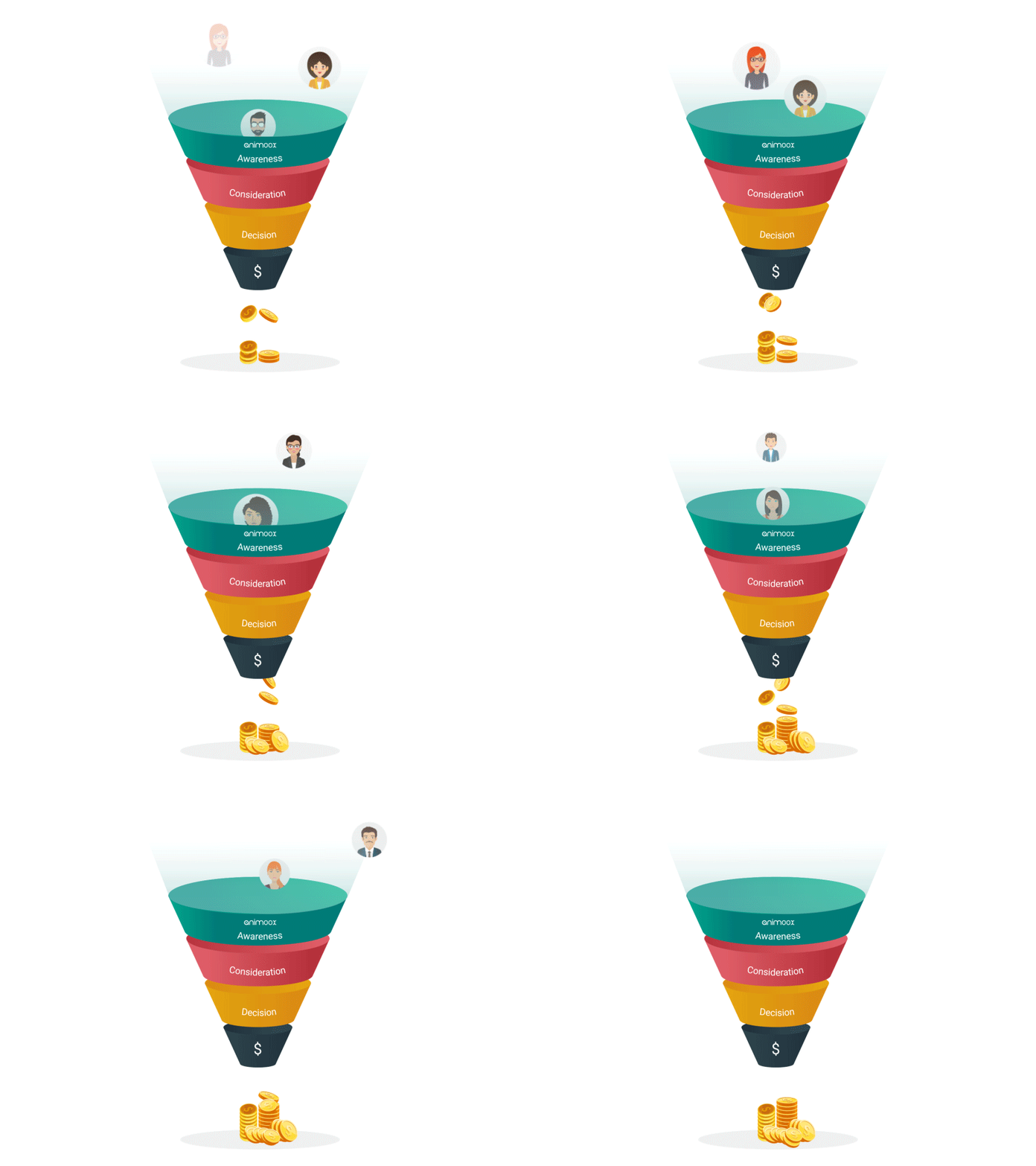
Lead generation through sales funnels is essential for tradespeople who want to grow their businesses.
- By using sales funnels to generate leads, tradespeople can identify potential customers and nurture them through the sales process. This can help to increase conversion rates and boost revenue.
- Upsell and cross-sell tactics in sales funnels are also important for tradespeople who want to maximize their revenue potential.
- By using these tactics, tradespeople can encourage customers to purchase additional products or services that complement their original purchase. This can help to increase the value of each sale and generate more revenue over time.
- Email marketing in sales funnels is another effective way to reach potential customers and nurture leads.
- By using targeted email campaigns, tradespeople can provide valuable information and updates to their subscribers, while also promoting their products and services.
- This can help to build trust and credibility with potential customers, and ultimately lead to more sales.
- Sales funnel copywriting and messaging are critical components of any successful sales funnel. By crafting compelling messages and calls to action, tradespeople can encourage potential customers to take action and make a purchase.
- Effective copywriting can also help to build trust and credibility with potential customers, which can lead to more sales over time.
Sales funnel analytics and tracking
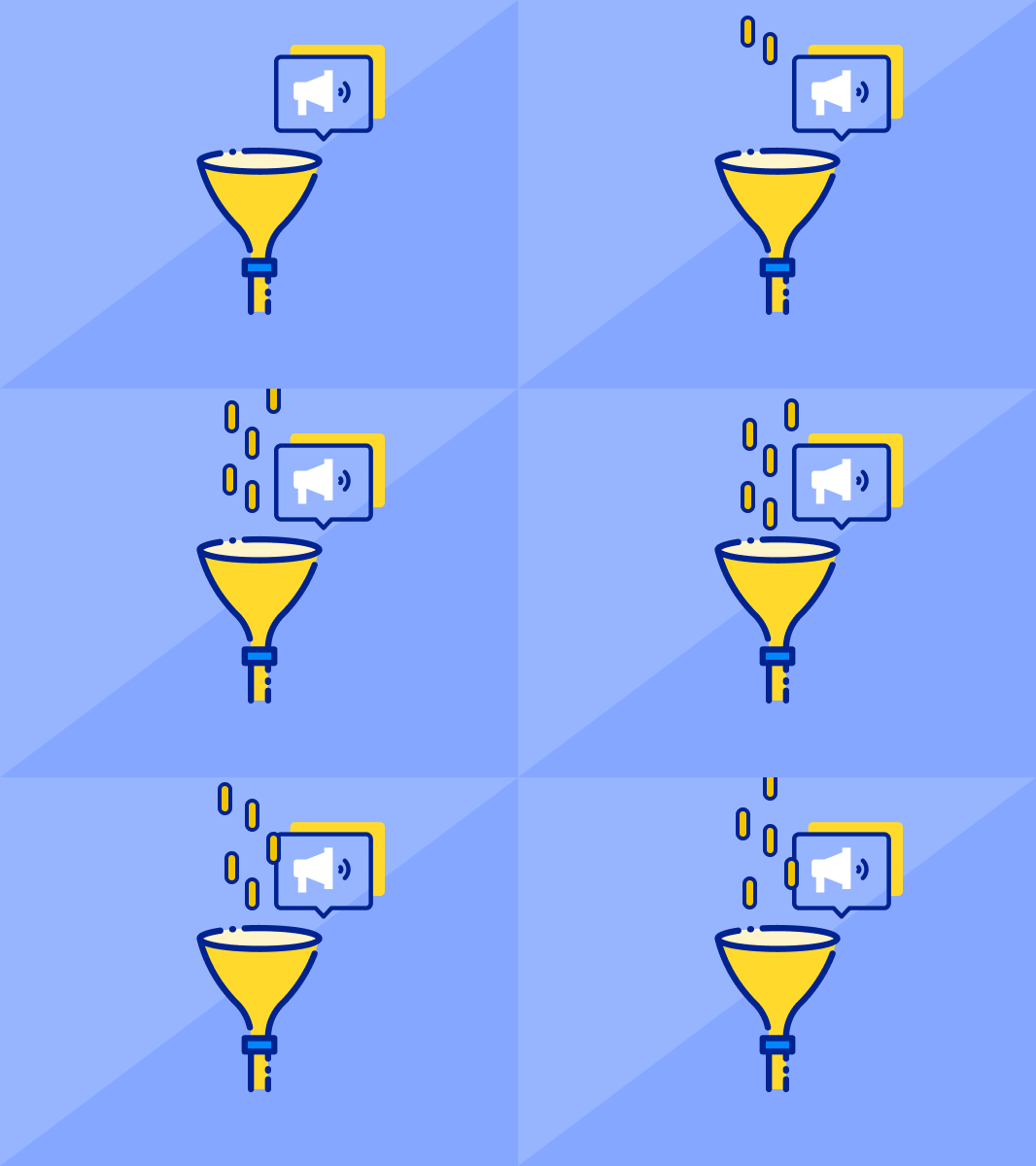
Sales funnel analytics and tracking are also essential for tradespeople who want to measure the effectiveness of their marketing efforts. By tracking key metrics such as conversion rates and customer acquisition costs, tradespeople can identify areas for improvement and make data-driven decisions to optimize their sales funnels.
Sales funnel testing and optimization are ongoing processes that can help tradespeople continually improve their marketing strategies. By testing different elements of the sales funnel and analyzing the results, tradespeople can identify what works best for their business and make changes accordingly.
Sales funnel design and user experience are also important considerations for tradespeople who want to create a seamless and enjoyable customer experience. By designing sales funnels that are easy to navigate and visually appealing, tradespeople can create a positive impression on potential customers and increase their chances of making a sale.
Increase Sales with Sales Funnels What is lead generation?
Lead generation is a crucial aspect of any business, and it refers to the process of attracting potential customers and converting them into actual customers.
In simple terms, lead generation is all about finding people who are interested in your product or service and nurturing them until they become paying customers.
For tradespeople, lead generation can be a daunting task, especially if you are not familiar with the various strategies and techniques that are available. However, with the right approach and the right tools, lead generation can be made easy and effective.
One of the most popular and effective ways to generate leads is through sales funnels. A sales funnel is a series of steps that a potential customer goes through before making a purchase.
- These steps may include lead capture pages, email marketing campaigns, and upsell and cross-sell tactics.
- By creating a sales funnel, tradespeople can attract potential customers and guide them through the buying process.
- This not only increases the chances of making a sale but also helps to build a relationship with the customer, which can lead to repeat business.
- B2B sales funnel strategies are also important for tradespeople who are looking to generate leads from other businesses. This may involve reaching out to potential clients through email, social media, or other channels, and nurturing them until they become paying customers.
- E-commerce sales funnel optimization is another important aspect of lead generation, particularly for tradespeople who sell products online.
- By optimizing your e-commerce sales funnel, you can increase the chances of converting website visitors into paying customers.
- Lead generation through sales funnels can be further enhanced through email marketing campaigns.
- By sending targeted emails to potential customers, you can increase engagement and build relationships that can lead to sales.
Sales funnel automation and integration, sales funnel copywriting and messaging, sales funnel analytics and tracking, sales funnel testing and optimization, and sales funnel design and user experience are all important factors to consider when creating an effective lead generation strategy.
How Sales Funnels Can Increase Sales
As a tradesperson, you understand that generating leads and closing sales is the lifeblood of your business. However, the traditional way of selling may not be enough to keep up with the competition and changing consumer behavior.
That’s where sales funnels come in. A sales funnel is a series of steps that guide potential customers toward a purchase. By creating a well-designed sales funnel, you can increase your chances of converting leads into paying customers.
Here are some ways that sales funnels can increase sales for your trade business:
1. B2B Sales Funnel Strategies
If you’re selling to other businesses, the sales process can be complex and involve multiple decision-makers. A well-designed B2B sales funnel can help you navigate this process and close more deals.
2. E-commerce Sales Funnel Optimization
If you’re selling products online, an e-commerce sales funnel can help you upsell and cross-sell products to increase your average order value. By optimizing your sales funnel, you can maximize your revenue and profitability.
3. Lead Generation through Sales Funnels
Lead generation is the first step in any sales funnel. By creating targeted lead magnets and landing pages, you can attract high-quality leads and move them toward a purchase.
4. Upsell and Cross-Sell Tactics in Sales Funnels
Upselling and cross-selling are powerful tactics that can increase your revenue per customer. By strategically offering complementary products or services, you can increase your customer lifetime value and build loyalty.
5. Email Marketing in Sales Funnels
Email marketing is a key component of any sales funnel. By creating targeted email campaigns, you can nurture leads and move them toward a purchase.
6. Sales Funnel Automation and Integration
Automation and integration can help streamline your sales process and improve efficiency. By automating repetitive tasks and integrating your sales funnel with other tools, you can focus on closing more deals.
7. Sales Funnel Copywriting and Messaging
The messaging and copywriting in your sales funnel can make or break your conversion rates. By crafting compelling messages and calls to action, you can persuade potential customers to take action.
8. Sales Funnel Analytics and Tracking
Analytics and tracking are essential for optimizing your sales funnel. By monitoring key metrics and making data-driven decisions, you can continuously improve your sales process.
9. Sales Funnel Testing and Optimization
Testing and optimization are critical for improving your sales funnel over time. By testing different elements of your funnel and optimizing for better performance, you can increase your conversion rates and revenue.
10. Sales Funnel Design and User Experience
The design and user experience of your sales funnel can impact your conversion rates and customer satisfaction. By creating a visually appealing and user-friendly funnel, you can enhance the customer experience and increase your chances of making a sale.
The Role of sales funnels in lead generation
The role of sales funnels in lead generation is critical to the success of any business. A sales funnel is a visual representation of the customer journey from the point of entry to the final purchase.
It is a step-by-step process that guides a potential customer toward making a purchase or converting into a lead. Sales funnels are an essential tool for tradespeople looking to increase sales and generate leads.
- B2B sales funnel strategies are an excellent way to target potential clients in the business-to-business market.
- These strategies are focused on building relationships with potential clients, nurturing them through the sales funnel, and ultimately converting them into paying customers.
- B2B sales funnels require a more personalized approach as they involve building long-term relationships with clients.
- E-commerce sales funnel optimization is a critical aspect of online selling.
- An optimized sales funnel can result in increased sales, higher conversion rates, and stronger customer loyalty.
- E-commerce sales funnels are designed to guide customers through the buying process, from the point of entry to the final purchase.
These funnels require a deep understanding of the customer journey, including their pain points, needs, and motivations.
Lead generation through sales funnels is an effective way to attract potential customers and convert them into leads.
Sales funnels are designed to capture leads by offering valuable content, lead magnets, and other incentives. Once a lead is captured, they are guided through the sales funnel, where they can be nurtured and eventually converted into paying customers.
Upsell and cross-sell tactics in sales funnels are essential for maximizing revenue and customer lifetime value. These tactics involve offering additional products or services to existing customers, based on their past behavior and preferences. Upselling and cross-selling can result in increased revenue, higher customer satisfaction, and stronger customer loyalty.
Email marketing in sales funnels

Email marketing in sales funnels is a powerful tool for nurturing leads and building relationships with customers. Email marketing can be used to deliver valuable content, promote products and services, and provide personalized recommendations.
A well-crafted email marketing campaign can result in increased engagement, higher conversion rates, and stronger customer loyalty.
Sales funnel automation and integration can streamline the lead generation and sales process, saving time and increasing efficiency.
Analytics can be used to track metrics such as conversion rates, customer acquisition costs, and customer lifetime value. Tracking can also be used to identify which parts of the sales funnel are working well and which need improvement.
Sales funnel testing and optimization are ongoing processes that involve testing different elements of the sales funnel and making adjustments based on the results.
Testing can be used to test different copywriting, messaging, and design elements, as well as different offers and incentives. Optimization can result in increased conversion rates, higher revenue, and stronger customer loyalty.
Sales funnel design and user experience are critical for creating a visually appealing and user-friendly sales funnel. A well-designed sales funnel can capture the customer’s attention, guide them through the process, and ultimately result in a conversion. The user experience should be intuitive, easy to navigate, and tailored to the customer’s needs and preferences.
B2B Sales Funnel Strategies
Business-to-business (B2B) sales are the transactions that occur between two businesses. In contrast to business-to-consumer (B2C) sales, where companies sell their products or services directly to consumers, B2B sales involve selling products or services to other businesses.
B2B sales are often more complex than B2C sales, as they involve longer sales cycles, larger transactions, and multiple decision-makers.
B2B sales often require a more consultative approach, as businesses seek solutions to their specific needs and challenges.
To succeed in B2B sales, it is essential to understand the buying process of the businesses you are targeting. This involves identifying the decision-makers and influencers within the organization, understanding their pain points and challenges, and tailoring your message and solution to address their specific needs.
Understanding B2B sales
B2B sales funnels are a powerful tool for lead generation and conversion. Sales funnels are a step-by-step process that guides potential customers through the buying journey, from awareness to consideration to decision.
By optimizing your B2B sales funnel, you can increase your chances of converting leads into paying customers.
To optimize your B2B sales funnel, you need to understand the different stages of the funnel and the strategies that work best at each stage. At the top of the funnel, you need to focus on lead generation and attracting potential customers.
This can involve a range of tactics, from content marketing and social media to paid advertising and targeted outreach.
In the middle of the funnel, you need to focus on nurturing leads and building relationships. This can involve providing educational content, hosting webinars or events, and engaging with potential customers on social media or via email.
At the bottom of the funnel, you need to focus on converting leads into paying customers. This can involve offering free trials, demos, or consultations, providing case studies or testimonials, and addressing any objections or concerns the potential customer may have.
B2B sales funnels can also be optimized for upselling and cross-selling opportunities. By understanding the needs and challenges of your existing customers, you can offer additional products or services that can help them achieve their goals.
Email marketing is another powerful tool for B2B sales funnels. By segmenting your email list and tailoring your messaging to different stages of the funnel, you can increase engagement and conversion rates.
Finally, it is essential to track and analyze your B2B sales funnel to identify areas for improvement. By testing different strategies and measuring their effectiveness, you can optimize your funnel and increase your ROI.
The B2B sales funnel
The B2B sales funnel is a critical component of any business that wants to increase sales and revenue. Unlike B2C sales funnels, which are relatively straightforward, B2B sales funnels are more complex and require a more strategic approach.
At its core, a B2B sales funnel is a series of steps that a prospect goes through before becoming a customer. These steps typically include awareness, interest, consideration, and decision. The purpose of the sales funnel is to guide prospects through each of these stages, ultimately leading them to make a purchase.
To create a successful B2B sales funnel, it’s important to understand your target audience and their needs. This will help you develop a messaging and content strategy that speaks directly to their pain points and challenges.
One effective B2B sales funnel strategy is to focus on lead generation. This involves creating content and offering resources that are valuable to your target audience in exchange for their contact information.
Once you have their contact information, you can begin nurturing those leads through email marketing and other communication channels.
Another important aspect of the B2B sales funnel is upselling and cross-selling. This involves offering additional products or services to existing customers, increasing the lifetime value of each customer.
Effective B2B sales funnels also incorporate sales funnel automation and integration to streamline the sales process and increase efficiency. This can include using marketing automation software to send personalized emails and track customer behavior.
Strategies for Optimizing B2B Sales Funnels
In the world of B2B sales, creating effective sales funnels can be a game-changer. While many businesses are still relying on traditional methods of sales, those who adapt to the changing landscape of digital marketing and lead generation are the ones who will come out on top.
In this blog, we will explore some strategies for optimizing B2B sales funnels. Whether you’re looking to increase sales with sales funnels, or you’re interested in e-commerce sales funnel optimization, these tips will help you get the most out of your sales funnel.
1. Start with Lead Generation
The first step in optimizing your B2B sales funnel is to focus on lead generation. Without a steady stream of leads, your funnel will be empty. There are many ways to generate leads, from content marketing and SEO to social media and paid advertising. The key is to find the channels that work best for your business and focus on them.
2. Map Out Your Sales Funnel
Once you have a steady stream of leads, it’s time to map out your sales funnel. This involves breaking down the different stages of the funnel, from lead capture to conversion. By mapping out your funnel, you’ll be able to identify areas that need improvement and optimize your funnel accordingly.
3. Use Upsell and Cross-Sell Tactics
One of the easiest ways to increase revenue is to use upsell and cross-sell tactics in your sales funnel. This involves offering additional products or services to customers who have already made a purchase. By doing so, you can increase the average order value and boost your bottom line.
4. Leverage Email Marketing
Email marketing is a powerful tool for B2B sales funnels. By sending targeted emails to your leads and customers, you can nurture relationships and move them closer to a sale. Make sure to segment your email list and personalize your messages for maximum impact.
5. Automate Your Sales Funnel
Automation is key to optimizing your B2B sales funnel. By automating tasks like lead capture, lead nurturing and follow-up, you can free up time and resources. This will allow you to focus on the most important aspects of your business, like closing deals and growing your customer base.
6. Test and Optimize Your Funnel
Finally, it’s important to test and optimize your sales funnel on an ongoing basis. This involves tracking metrics like conversion rates, bounce rates, and time on the page. By analyzing this data, you can identify areas for improvement and make changes accordingly.
E-commerce Sales Funnel Optimization
E-commerce has revolutionized the way people shop, and it has also transformed the way businesses sell their products.
The traditional methods of selling products involved setting up a physical store, advertising through newspapers and flyers, and hoping that customers would come in and buy what they needed. However, with the advent of e-commerce, businesses can now reach a wider audience with just a few clicks of a button.
But with so many businesses competing for the same customers in the online space, it can be challenging to stand out and make sales. This is where sales funnels come in.
Sales funnels are a series of steps that guide a potential customer from being aware of your product to making a purchase. It is a process that helps businesses to automate their sales process and maximize their returns.
One of the key benefits of sales funnels in e-commerce is that it helps businesses to generate leads. A lead is a potential customer who has shown interest in your product or service. With sales funnels, you can capture leads through various channels such as social media, email, and landing pages.
Once you have captured a lead, you can then nurture them through the funnel until they are ready to make a purchase.
Another benefit of sales funnels in e-commerce is that it helps with upselling and cross-selling. Upselling is the practice of encouraging a customer to buy a more expensive version of the product they are interested in, while cross-selling is the practice of suggesting complementary products that go well with the customer’s purchase.
Sales funnels make it easy to implement upselling and cross-selling tactics by guiding customers toward the products that are relevant to them.
Sales funnels also help businesses to optimize their email marketing campaigns. Email marketing is a powerful tool for e-commerce businesses, but it can be challenging to get the right message to the right customer at the right time. Sales funnels make it easy to segment your email list, create targeted messages, and automate the delivery of those messages.
E-commerce sales funnel optimization strategies
E-commerce sales funnel optimization strategies are critical for businesses that want to boost their online sales. An e-commerce sales funnel is the process that potential customers go through before making a purchase. The funnel is made up of different stages, from awareness to conversion, and optimization is all about improving the effectiveness of each stage.
The following are some e-commerce sales funnel optimization strategies that can help you increase your online sales:
1. Optimize Your Website: Your website is the first point of contact with potential customers. It must be optimized for speed, ease of navigation, and mobile responsiveness. These factors can improve the user experience and lead to higher conversions.
2. Use High-Quality Images: High-quality images are essential for e-commerce sales. They can attract potential customers and help them visualize the product better. Ensure that your images are clear, well-lit, and showcase the product from different angles.
3. Implement a Shopping Cart Abandonment Strategy: Shopping cart abandonment is a common problem in e-commerce. Customers may add items to their cart but not complete the purchase. To reduce cart abandonment, you can implement exit-intent popups, cart abandonment emails, and retargeting ads.
4. Create a Sense of Urgency: Creating a sense of urgency can encourage potential customers to make a purchase. You can use limited-time offers, countdown timers, and social proof to create urgency and encourage customers to act quickly.
5. Optimize Your Checkout Process: The checkout process is the final stage of the e-commerce sales funnel. It must be optimized for speed, simplicity, and security. A complicated checkout process can lead to cart abandonment, so ensure that the process is easy to follow.
Best Practices for E-commerce Sales Funnels
E-commerce sales funnels are a crucial aspect of any online business looking to increase its sales. With more and more people shopping online, it is essential to create a seamless and efficient sales funnel to convert potential customers into buyers. In this subchapter, we will discuss the best practices for e-commerce sales funnels that can help you optimize your sales process and increase your revenue.
1. Understand your customer:
The first and most crucial step in creating an effective sales funnel is to understand your customer. You need to identify their needs, interests, and preferences to create a customized shopping experience that resonates with them. Use customer data and analytics to gain insights into their behavior and preferences and tailor your sales funnel accordingly.
2. Simplify your checkout process:
A complicated checkout process can lead to cart abandonment and lost sales. Ensure that your checkout process is simple, easy to navigate, and requires minimal steps. You can also offer guest checkout options to make the process even more streamlined.
3. Offer to upsell and cross-sell options:
Upselling and cross-selling are great tactics to increase your average order value. Offer complementary products or services during the checkout process to entice customers to buy more.
4. Use email marketing:
Email marketing is a powerful tool that can help you nurture your leads and convert them into customers. Use automated email campaigns to follow up with potential customers, offer personalized recommendations, and drive more sales.
5. Optimize your website for mobile:
With more and more people shopping on their mobile devices, it is crucial to optimize your website for mobile. Ensure that your website is mobile-friendly, loads quickly, and is easy to navigate on a small screen.
6. Test and optimize your sales funnel:
The key to a successful sales funnel is continuous testing and optimization. Analyze your data, identify areas that need improvement, and make changes to improve your conversion rates and increase your revenue.
7. Provide excellent customer service:
Finally, providing excellent customer service is critical to the success of your e-commerce sales funnel. Respond promptly to customer inquiries, offer helpful support, and go above and beyond to exceed their expectations.
Lead Generation through Sales Funnels
Lead generation is the process of identifying potential customers for your business and nurturing them into becoming paying customers. In today’s competitive business landscape, lead generation is a critical component of any successful marketing strategy.
For tradespeople, lead generation can help boost sales, increase revenue, and grow your business.
- But how exactly does lead generation work?
- And how can you create an effective lead-generation strategy?
First, it’s important to understand that lead generation is not a one-size-fits-all approach. Your strategy will depend on your specific business goals, target audience, and industry.
However, there are a few key components that are essential to any successful lead-generation strategy:
1. Know your target audience:
Before you can effectively generate leads, you need to understand who your ideal customer is. This includes demographic information, pain points, and buying behaviors.
2. Offer valuable content:
To attract potential customers, you need to offer something of value in exchange for their contact information. This could be a free guide, e-book, or webinar that addresses their pain points or offers a solution to their problem.
3. Use multiple channels:
A successful lead generation strategy should utilize a variety of channels, including social media, email marketing, and paid advertising. This ensures that you reach potential customers wherever they are online.
4. Nurture leads with targeted messaging:
Once you have captured a lead’s contact information, it’s important to continue to nurture them with targeted messaging and offers that speak to their specific needs and interests.
5. Measure and optimize:
To continually improve your lead generation strategy, you need to track your results and optimize your approach based on what’s working and what’s not.
By understanding the basics of lead generation and implementing these key components into your marketing strategy, you can effectively generate leads and grow your business.
How sales funnels can generate leads

Sales funnels are a powerful tool for generating leads and increasing sales for tradespeople.
A sales funnel is a step-by-step process that guides potential customers toward a specific action, such as making a purchase or booking a consultation.
By using a sales funnel, tradespeople can guide their prospects toward the desired outcome and make the most of every lead that comes their way.
One of the key benefits of using a sales funnel is that it allows tradespeople to capture leads at different stages of the buying process.
For example, some prospects may be ready to make a purchase immediately, while others may need more nurturing before they are ready to commit.
- By using a sales funnel, tradespeople can create targeted messaging and content that speaks to each prospect’s unique needs and interests, and guide them towards the next step in the sales process.
- There are several different strategies that tradespeople can use to generate leads through sales funnels. One effective approach is to create lead magnets, such as free guides, ebooks, or webinars, that offer valuable information to prospects in exchange for their contact information.
Once the prospect has provided their information, tradespeople can use automated email sequences and other tactics to nurture the lead and guide them toward a purchase.
An effective strategy for generating leads through sales funnels
Another effective strategy for generating leads through sales funnels is to use upsell and cross-sell tactics.
- By offering relevant products or services to customers who have already made a purchase, tradespeople can increase their average order value and generate more revenue from each customer.
- Email marketing is also a powerful tool for generating leads through sales funnels. By sending targeted and personalized emails to prospects at different stages of the sales process, tradespeople can build trust and credibility, and guide the prospect towards a purchase.
Finally, it’s important to track and analyze the performance of your sales funnel over time. By using analytics tools to monitor key metrics such as conversion rates and customer lifetime value, tradespeople can identify areas for improvement and optimize their sales funnel for greater success.
Strategies for optimizing sales funnels for lead generation

Sales funnels are one of the most effective ways to generate leads and increase sales for tradespeople. However, not all sales funnels are created equal. To optimize your sales funnel for lead generation, you need to use a combination of strategies that address each stage of the funnel.
B2B Sales Funnel Strategies
B2B sales funnels require a different approach than B2C funnels. In B2B sales, the focus is on building relationships and trust with potential clients. To optimize your B2B sales funnel, you need to focus on providing value to your prospects at each stage of the funnel. This can be achieved through personalized messaging, case studies, and testimonials.
E-commerce Sales Funnel Optimization
E-commerce sales funnels are all about making the purchase process as easy and seamless as possible. To optimize your e-commerce sales funnel, you need to focus on reducing friction in the checkout process, providing clear and concise product descriptions, and offering multiple payment options.
Lead Generation through Sales Funnels
Lead generation is the primary goal of any sales funnel. To optimize your sales funnel for lead generation, you need to focus on creating compelling lead magnets, using effective lead capture forms, and providing valuable content throughout the funnel.
Upsell and Cross-sell Tactics in Sales Funnels
Upselling and cross-selling can significantly increase your revenue per customer. To optimize your sales funnel for upselling and cross-selling, you need to focus on providing relevant product recommendations, creating bundle offers, and using personalized messaging.
Email Marketing in Sales Funnels
Email marketing is a crucial component of any sales funnel. To optimize your email marketing in the funnel, you need to focus on creating engaging subject lines, using personalized messaging, and segmenting your email list based on behavior and interest.
Sales Funnel Automation and Integration
Sales funnel automation and integration can significantly streamline your sales process and improve your conversion rates. To optimize your sales funnel for automation and integration, you need to focus on using tools such as CRM, marketing automation, and lead scoring.
Sales Funnel Copywriting and Messaging
Effective copywriting and messaging are crucial for any sales funnel. To optimize your sales funnel for copywriting and messaging, you need to focus on creating compelling headlines and subheadings, using persuasive language, and addressing your prospect’s pain points.
Sales Funnel Analytics and Tracking
Analytics and tracking are essential for optimizing your sales funnel. To optimize your sales funnel for tracking and analytics, you need to focus on using tools such as Google Analytics and A/B testing to measure your funnel’s performance and identify areas for improvement.
Sales Funnel Testing and Optimization
Testing and optimization are the keys to a successful sales funnel. To optimize your sales funnel for testing and optimization, you need to focus on using A/B testing, user testing, and heat mapping to identify areas for improvement and make data-driven decisions.
Sales Funnel Design and User Experience
Design and user experience are critical for any sales funnel. To optimize your sales funnel for design and user experience, you need to focus on creating a visually appealing and easy-to-use funnel, using clear and concise messaging, and providing excellent customer support.
Upsell and Cross-Sell Tactics in Sales Funnels
Upselling and cross-selling are two essential tactics in sales funnels that can help tradespeople increase their revenue and enhance their customer experience. Understanding these strategies and how to implement them can make a significant difference in your business’s success.
Upselling is the act of offering a higher-priced product or service to a customer who is already making a purchase.
For instance, if a customer is buying a lawn mower, an upsell would be to offer them a more advanced model with additional features. Cross-selling, on the other hand, is offering complementary products or services to the customer.
For example, if a customer is buying a lawn mower, cross-selling would be offering them a package of lawn care products like fertilizers, weed killers, and gardening tools.
Upselling and cross-selling are advantageous in sales funnels as they can increase the average order value and customer lifetime value. They can also improve customer satisfaction and loyalty by offering them personalized recommendations and solutions that meet their needs.
Understanding upselling and cross-selling
To implement upselling and cross-selling tactics, you need to understand your customers’ buying behaviors and preferences. You can use data analytics to identify the products or services that customers frequently purchase together or look for when shopping for a specific item.
This information can help you develop personalized upsell and cross-sell offers that are relevant to each customer.
When upselling and cross-selling, it is essential to ensure that the offer adds value to the customer and is not perceived as a pushy sales tactic. You should also be transparent about the price and benefits of the offer and avoid making false promises.
Email marketing is an effective tool for upselling and cross-selling as it allows you to reach out to customers with personalized offers and recommendations. You can also use automation and integration tools to create targeted campaigns that are triggered by specific customer actions or behaviors.
Finally, it is crucial to track and analyze the performance of your upsell and cross-sell tactics to identify areas for improvement and optimization.
You can use tools like Google Analytics to monitor the conversion rates, revenue, and customer feedback of your offers and make data-driven decisions to enhance your sales funnel.
How sales funnels can facilitate upselling and cross-selling
As a tradesperson, you have probably heard of sales funnels and how they can help you increase your sales and grow your business.
But did you know that sales funnels can also facilitate upselling and cross-selling?
- Upselling and cross-selling are two powerful tactics that can help you boost your revenue and profits.
- Upselling involves offering your customers a higher-end version of the product or service they are already buying, while cross-selling involves suggesting complementary products or services that can enhance their purchase.
Sales funnels can help you facilitate these tactics by guiding your customers through a series of steps that lead them to a higher level of engagement with your brand and products.
Here are some ways sales funnels can help you upsell and cross-sell:
1. Segment your audience:
By dividing your audience into different groups based on their interests, behaviors, and preferences, you can create targeted offers that are more likely to resonate with them. For example, if you sell home improvement services, you can create separate funnels for customers who are interested in kitchen remodeling, bathroom renovations, or outdoor landscaping.
2. Offer relevant upgrades:
Once you have segmented your audience, you can offer them relevant upgrades that make sense for their specific needs and goals. For example, if a customer is buying a basic kitchen remodeling package, you can offer them an upgrade to a premium package that includes high-end appliances, custom cabinets, and luxury finishes.
3. Suggest complementary products:
In addition to upgrades, you can also suggest complementary products or services that can enhance your customers’ purchases. For example, if a customer is buying a new HVAC system, you can suggest a maintenance plan or a smart thermostat that can help them save energy and money.
4. Use email marketing:
Email marketing is a powerful tool for upselling and cross-selling, as it allows you to stay in touch with your customers and offer them relevant promotions and deals. By sending personalized emails based on their purchase history and preferences, you can encourage them to come back and buy more.
5. Track your results:
Finally, it’s important to track your results and optimize your sales funnels based on the data you collect. By analyzing your conversion rates, revenue per customer, and other key metrics, you can identify areas for improvement and test different approaches to see what works best.
Overall, sales funnels can be a powerful tool for facilitating upselling and cross-selling, as they allow you to create targeted offers, suggest complementary products, and stay in touch with your customers over time.
By using these tactics effectively, you can increase your revenue and profits while building strong relationships with your customers.
Strategies for optimizing sales funnels for upselling and cross-selling
As a tradesperson, you understand the importance of generating leads and closing sales. However, even after you’ve mastered the art of lead generation and sales closing, there’s still room for improvement. Upselling and cross-selling can be incredibly effective strategies for increasing revenue, but they require a bit of finesse.
1. Segment Your Audience
One of the most important aspects of successful upselling and cross-selling is knowing your audience. Segmenting your audience based on their needs and behaviors can help you create targeted offers that are more likely to convert.
For example, if you sell power tools and you notice that a customer has recently purchased a drill, you might offer them a set of drill bits or a complementary power tool accessory.
2. Use Personalization
Personalization is key to effective upselling and cross-selling. Use data you’ve collected about your customers to create personalized offers.
For example, if you know that a customer frequently purchases certain products, you might offer them a discount on those items or suggest complementary products.
3. Make Recommendations
Recommendations are a great way to introduce customers to products they might not have otherwise considered. Use data you’ve collected about your customers to make relevant recommendations.
For example, if a customer frequently purchases gardening tools, you might recommend a new product that’s just been released in that category.
4. Create Bundles
Bundles are a great way to incentivize customers to purchase multiple products at once. You might create a bundle that includes a power tool, a set of accessories, and a carrying case.
For example, Bundles make it easy for customers to purchase everything they need in one go, and they often save money in the process.
5. Use Urgency and Scarcity
Urgency and scarcity are powerful motivators in sales. Use these tactics to encourage customers to take action quickly.
For example, you might offer a limited-time discount on a product or create a bundle that’s only available for a short period.
By implementing these strategies, you can optimize your sales funnels for upselling and cross-selling. Remember to always prioritize your customers’ needs and preferences, and use data to create targeted and personalized offers.
With a bit of finesse, you can increase your revenue and build stronger relationships with your customers.
Email Marketing in Sales Funnels
Email marketing is a powerful tool that can help tradespeople increase their sales and conversion rates. It is an essential part of any successful sales funnel strategy and can help businesses to nurture leads, build relationships, and drive sales.
The role of email marketing in sales funnels is to provide valuable content and information to potential customers at each stage of the buying process.
By delivering targeted messages to specific segments of your audience, you can increase engagement, build trust, and encourage customers to take action.
One of the key benefits of email marketing in sales funnels is its ability to automate the process of lead nurturing. By setting up automated email sequences, you can deliver timely and relevant content to your audience, based on their interests and behaviors. This can help to keep your brand top of mind and encourage customers to make a purchase.
Another important aspect of email marketing in sales funnels is its ability to upsell and cross-sell products and services. By sending targeted offers and promotions to existing customers, you can increase their lifetime value and generate additional revenue for your business.
The Role of email marketing in sales funnels
To make the most of email marketing in your sales funnel, it is important to develop a strong email marketing strategy.
- This may involve creating a lead magnet to encourage sign-ups, segmenting your audience based on their interests and behavior, and crafting engaging and persuasive email copy.
- It is also important to track and analyze your email marketing campaigns to identify what is working and what can be improved.
- This may involve tracking open rates, click-through rates, and conversion rates, as well as conducting A/B testing to optimize your email content and messaging.
-
Overall, email marketing plays a critical role in sales funnels for tradespeople. By delivering targeted and relevant content to your audience, you can build relationships, nurture leads, and drive sales, ultimately helping your business to grow and thrive.
Strategies for using email marketing in sales funnels
Email marketing is a powerful tool that can be used in sales funnels to generate leads and increase sales. However, it’s important to have a clear strategy in place to ensure you’re getting the most out of your email campaigns.
Here are some strategies for using email marketing in sales funnels:
1. Segment your email list: Not all subscribers are the same, so it’s important to segment your email list based on factors such as interests, behavior, and previous purchases. This allows you to send targeted emails that are more likely to resonate with each recipient.
2. Use automation: Email automation can be a game-changer for your sales funnel. Automating email campaigns allows you to send relevant messages at the right time, without having to manually send each one. For example, you can set up an email sequence that sends a welcome message, followed by a series of educational emails, and then a sales pitch.
3. Personalize your emails: Personalizing your emails can increase open rates and engagement. Use the recipient’s name in the subject line or opening sentence, and tailor the content to their interests and needs.
4. Test and optimize: Testing different elements of your email campaigns, such as subject lines, calls to action, and content, can help you identify what works best for your audience. Use analytics to track the performance of each email campaign and make adjustments as needed.
5. Use upsell and cross-sell tactics: Email marketing can be a great way to upsell and cross-sell to existing customers. Use data on their past purchases to recommend complementary products or services.
6. Focus on user experience: Make sure your emails are easy to read and navigate, with clear calls to action. Use responsive design to ensure they look good on any device.
By incorporating these strategies into your email marketing efforts, you can create a more effective sales funnel that generates leads and increases sales. Don’t be afraid to experiment and try new things – the key is to keep testing and optimizing until you find what works best for your audience.
Best practices for email marketing in sales funnels
Email marketing is a crucial component of any successful sales funnel. It is a cost-effective way to reach out to potential customers and nurture existing ones. However, like any other marketing strategy, email marketing in sales funnels requires careful planning and execution. Here are some best practices for email marketing in sales funnels.
Segmentation
Segmenting your email list is crucial for effective email marketing. You can segment your list based on various factors like demographics, past purchases, interests, and behavior. This allows you to send targeted and personalized emails that are more likely to convert.
Automated Email Sequences
Automated email sequences allow you to send a series of emails to your subscribers at predetermined intervals. This helps you stay top-of-mind and nurture leads without having to manually send emails. You can set up automated email sequences for various stages of your sales funnel like welcome emails, follow-up emails, and abandoned cart emails.
Personalization
Personalization is key to successful email marketing. Use your subscriber’s name, location, and past behavior to personalize your emails. This makes your emails more relevant and engaging, increasing the chances of conversion.
Clear Call-to-Action
Your emails should have a clear call-to-action (CTA) that encourages subscribers to take action. Whether it is to make a purchase, sign up for a free trial, or book a consultation, your CTA should be clear, concise, and compelling.
Testing and Optimization
Testing and optimization are critical to improving the effectiveness of your email marketing campaigns. Test different subject lines, email content, and CTAs to see what works best for your audience. Use analytics tools to track open rates, click-through rates, and conversion rates. Use this data to optimize your email marketing strategy.
Sales Funnel Automation and Integration
Sales funnel automation is the process of using technology to manage and streamline the sales process so that it is more efficient and effective.
This can involve using software to automate tasks such as lead generation, lead nurturing, and lead scoring. It can also involve using technology to automate follow-up emails, upsells, and cross-sells.
- One of the main benefits of sales funnel automation is that it can save time and money.
- By automating repetitive tasks, sales teams can focus on more important tasks such as closing deals and building relationships with customers.
- Automation can also improve the customer experience by providing personalized and timely communication.
- There are several tools available to automate different aspects of the sales funnel.
- Another important tool for sales funnel automation is CRM software.
- For example, it can automatically send follow-up emails after a customer makes a purchase or complete a form on the website.
Understanding Sales Funnel Automation
Sales funnel automation can also be used to improve the sales process itself.
For example, the software can be used to track the progress of each lead through the sales funnel. This can help sales teams identify areas where they need to improve their processes and adjust their strategy accordingly.
Overall, sales funnel automation is an essential tool for any business looking to improve its sales process. By using technology to streamline and automate tasks, businesses can save time and money while improving the customer experience.
The benefits of integrating sales funnels with other tools
As a tradesperson, you know how important it is to have a steady stream of leads and sales. That’s where sales funnels come in. A sales funnel is a marketing strategy that guides potential customers through a series of steps to ultimately make a purchase.
But did you know that integrating your sales funnels with other tools can help you get even more out of your marketing efforts?
Here are some of the key benefits of integrating sales funnels with other tools:
1. Better targeting
Integrating your sales funnels with other tools like email marketing software or social media platforms can help you better target your audience. By collecting data on your leads and customers, you can create more personalized and effective marketing messages that are tailored to their specific needs and interests.
2. Increased efficiency
Automation is a key component of successful sales funnels. By integrating your sales funnel with other tools like CRM software or payment processors, you can automate many of the tasks involved in the sales process. This can save you time and resources, allowing you to focus on other aspects of your business.
3. Improved tracking and analytics
Integrating your sales funnel with analytics tools like Google Analytics or Hotjar can give you valuable insights into how your funnel is performing. By tracking metrics like conversion rates and bounce rates, you can identify areas where your funnel may need improvement and make data-driven decisions to optimize it.
4. Enhanced user experience
Integrating your sales funnel with other tools like landing page builders or website builders can help you create a seamless user experience for your customers. By ensuring that your funnel is easy to navigate and visually appealing, you can increase the chances that your leads will convert into customers.
5. Increased revenue
Ultimately, the goal of any sales funnel is to increase revenue. By integrating your funnel with other tools like upsell and cross-sell software or retargeting tools, you can increase the average value of each sale and generate more revenue for your business.
Strategies for automating and integrating sales funnels
Automation and integration are critical components of an effective sales funnel. They can help you streamline your sales process, improve your customer experience, and increase your revenue.
Sales funnel automation involves using technology to automate repetitive tasks, such as lead capture, lead nurturing, and follow-up. Automation can help you save time, reduce errors, and improve your sales process.
Here are some ways you can automate your sales funnel:
1. Use a CRM: A CRM (customer relationship management) system can help you capture and manage leads, track customer interactions, and automate follow-up tasks. Many CRMs also integrate with other sales and marketing tools, such as email marketing software and social media platforms.
2. Use Marketing Automation Software: Marketing automation software allows you to automate your lead nurturing process by sending targeted emails, creating personalized landing pages, and tracking customer behavior. This can help you move leads through your sales funnel more efficiently and effectively.
3. Use Chatbots: Chatbots can help you automate your customer service and support processes by answering common questions and providing instant support. This can help you improve customer satisfaction and reduce your workload.
We hope this guide has helped provide you with the knowledge and strategies you need to get started. Good luck and happy selling!
We offer a range of services to give your business an online presence, allowing you to focus your time and energy on the rest of your company, contact us at MyFunnelScrip t.com