

Discover how Webinar Promos can help businesses attract qualified attendees, increase engagement, and generate more sales. Learn proven webinar marketing strategies, promotional frameworks, optimization tactics, and conversion best practices.
Introduction
Webinars have evolved from simple online presentations into one of the most effective customer acquisition and nurturing channels available to modern businesses. Whether organizations are selling software, consulting services, coaching programs, educational products, or high-ticket solutions, webinar promotions can significantly improve lead generation efforts and shorten sales cycles.
Businesses that execute strategic webinar campaigns often experience higher engagement rates because webinars provide an opportunity to educate, demonstrate expertise, answer objections in real time, and establish trust with prospects. Unlike static landing pages or email campaigns, webinars create interactive experiences that encourage participation and foster stronger relationships.
At MyFunnelScript, we recognize that webinar promotions require much more than sending a few emails before an event. Successful campaigns involve audience research, compelling messaging, optimized registration funnels, targeted advertising, effective follow-up sequences, and ongoing performance analysis. This guide explores the complete process of creating webinar promotions that consistently attract qualified registrants and generate measurable business growth.
Why Webinar Promotions Matter in Modern Digital Marketing
Webinars continue to be one of the most powerful tools for businesses seeking meaningful engagement with potential customers. While traditional advertising methods often struggle to maintain attention spans, webinars provide an immersive educational environment that encourages longer interactions.
One major advantage of webinar promotions is their ability to qualify prospects naturally. People who register and attend webinars usually demonstrate higher purchase intent compared to casual website visitors. These attendees invest time learning about solutions, which positions businesses to move prospects deeper into the customer journey.
Another significant benefit involves scalability. Companies can host a single webinar for dozens, hundreds, or even thousands of participants simultaneously. This allows brands to communicate expertise efficiently while reducing sales costs. Well-promoted webinars also create evergreen assets that can be repurposed into videos, articles, social media content, and lead magnets, extending their value long after the live presentation ends.
Understanding the Webinar Marketing Funnel
Successful webinar promotions operate within a structured marketing funnel designed to guide prospects from awareness to conversion. Understanding this framework helps marketers identify opportunities for optimization and improve campaign effectiveness.
The first stage focuses on attracting potential attendees. Businesses typically use content marketing, paid advertising, email campaigns, strategic partnerships, and social media outreach to generate awareness. Messaging during this phase emphasizes educational value, practical insights, and audience benefits.
The second stage centers on registration. High-converting webinar registration pages communicate clear outcomes, speaker credibility, event details, and compelling calls-to-action. Minimizing form fields often improves conversion rates, while persuasive testimonials can strengthen trust.
The final phase involves nurturing registrants into customers. Reminder emails, attendance incentives, webinar engagement techniques, and personalized follow-ups ensure prospects remain connected after the event. Businesses that optimize each stage generally achieve stronger attendance and higher revenue generation.
Identifying and Researching Your Ideal Webinar Audience
Understanding the audience is one of the most critical components of webinar promotion success. Without clear audience insights, even well-designed campaigns may struggle to attract relevant attendees.
Marketers should begin by analyzing existing customer data to identify demographic patterns, professional roles, challenges, and buying behaviors. Customer interviews, surveys, and sales team feedback can provide valuable information about common objections and decision-making factors.
Audience segmentation also improves promotional efficiency. Different segments may require distinct messaging approaches. For example, executives often respond to strategic outcomes and return on investment discussions, while operational teams may prioritize implementation guidance and process improvements.
Researching competitors’ webinar topics and industry discussions can uncover emerging interests. Social listening platforms, professional communities, and industry publications frequently reveal trends that influence webinar attendance decisions. Businesses that align topics with audience pain points typically generate stronger registration performance.
Choosing Webinar Topics That Generate Registrations
Selecting the right topic often determines whether webinar promotions succeed or fail. Audiences register for webinars because they expect actionable insights that help solve pressing challenges.
Educational topics consistently perform well because they provide immediate value. Examples include improving conversion rates, increasing operational efficiency, reducing customer acquisition costs, or implementing emerging technologies.
Problem-solving webinar titles frequently attract larger audiences. Titles such as:
- How to Double Qualified Leads Without Increasing Advertising Spend
- Five Conversion Optimization Strategies for Growing SaaS Businesses
- Building Automated Sales Systems That Scale Revenue
can create curiosity while emphasizing measurable benefits.
Businesses should avoid overly promotional topics. Webinar attendees generally prefer learning opportunities rather than direct sales presentations. Incorporating case studies, practical frameworks, and industry benchmarks increases perceived value and encourages registration.
Testing multiple title variations through advertisements or email campaigns can also reveal which messaging resonates most effectively with target audiences.
Building High-Converting Webinar Registration Pages
Registration pages play a crucial role in webinar promotions because they directly influence conversion rates. Even substantial traffic volumes may produce disappointing results if landing pages fail to communicate value effectively.
Strong registration pages typically include:
- Clear headlines
- Benefit-focused subheadings
- Speaker credentials
- Webinar date and time
- Key learning objectives
- Testimonials
- Frequently asked questions
- Prominent registration forms
Visitors should immediately understand what they will gain by attending the webinar. Rather than emphasizing features, marketers should highlight outcomes.
For guidance on improving page experience and usability, marketers can review Google’s recommendations through Core Web Vitals.
Visual hierarchy is equally important. Strategic spacing, concise copy, and contrasting call-to-action buttons help direct attention toward registration.
Reducing distractions, such as unnecessary navigation menus, often improves conversion performance. Many businesses achieve better results by creating dedicated webinar landing pages rather than using general website pages.
Developing an Effective Webinar Promotion Timeline
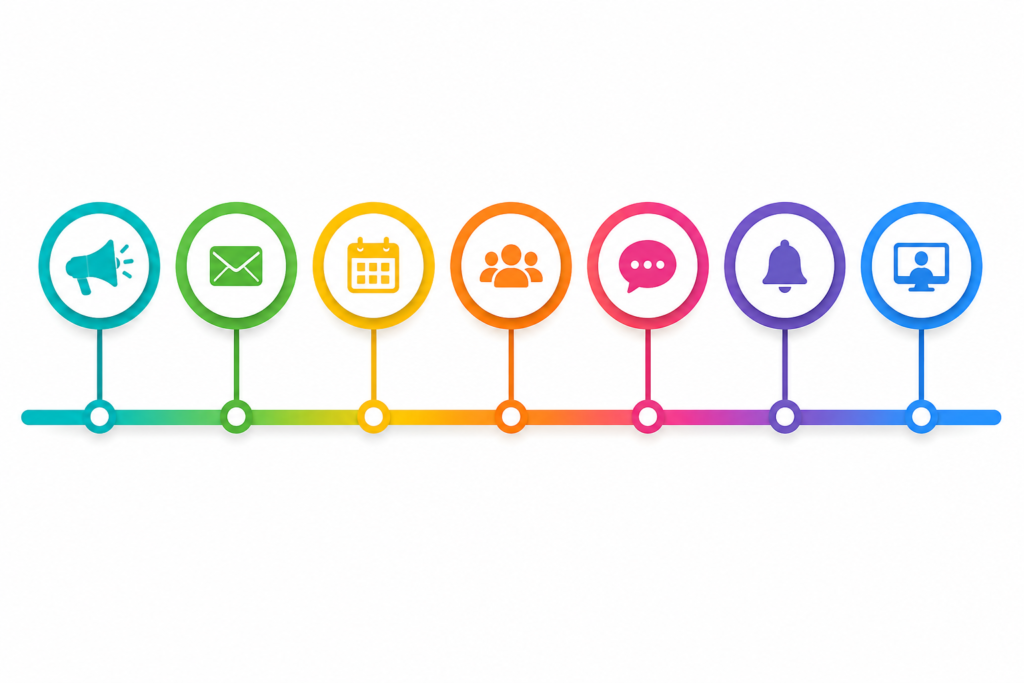
Timing significantly influences webinar attendance rates. Businesses that begin promotional activities too late often struggle to generate sufficient registrations.
An effective webinar timeline usually starts four to six weeks before the event. Initial promotional efforts focus on awareness campaigns and early registrations.
Three weeks before the webinar, marketers often increase promotional intensity through paid advertisements, email campaigns, and social media outreach. Partnerships with influencers, affiliates, or industry organizations may expand audience reach during this stage.
Reminder communications become increasingly important as the event approaches. Sending notifications one week, three days, one day, and one hour before the webinar helps maximize attendance. Automated workflows ensure registrants receive timely updates without requiring manual intervention.
Post-event promotion is equally valuable. Webinar recordings can continue generating leads through evergreen campaigns, nurturing sequences, and gated content offers.
Leveraging Email Marketing for Webinar Promotions
Email marketing remains one of the highest-performing webinar promotion channels because it allows businesses to communicate directly with interested audiences.
Successful webinar email sequences often include several components:
Announcement Email
Introduces the webinar topic and highlights key benefits.
Educational Email
Addresses audience pain points while demonstrating webinar relevance.
Social Proof Email
Shares testimonials, success stories, or previous webinar results.
Urgency Email
Encourages registrations before deadlines.
Reminder Emails
Increase attendance by maintaining awareness.
Personalization can significantly improve open and click-through rates. Including subscriber names, segment-specific messaging, and tailored recommendations often increases engagement.
Businesses should continuously test subject lines, sending times, and content formats to identify optimization opportunities. Monitoring metrics such as registrations, attendance rates, and post-webinar conversions enables marketers to refine future campaigns.
Using Paid Advertising to Accelerate Webinar Registrations
Paid advertising offers businesses the ability to rapidly increase webinar registrations and reach highly targeted audiences. Strategic advertising campaigns can complement organic promotional efforts and provide predictable lead generation opportunities.
Search advertising is particularly effective for webinars targeting prospects actively researching solutions. Platforms allow marketers to bid on high-intent keywords that align with webinar topics and audience interests.
Social media advertising provides extensive targeting capabilities based on demographics, professional attributes, behaviors, and interests. Businesses can create campaigns designed specifically for awareness, registrations, or retargeting website visitors who previously engaged with promotional content.
Retargeting campaigns often deliver strong returns because they focus on prospects already familiar with a brand. Showing reminder advertisements to visitors who abandoned registration pages can recover potential attendees and improve campaign efficiency.
Advertisers should closely monitor cost-per-registration metrics and continuously optimize creative assets, audience segments, and bidding strategies to maximize return on investment.
Creating Social Media Campaigns That Increase Webinar Attendance
Social media platforms provide businesses with a cost-effective way to amplify webinar promotions and engage audiences before, during, and after an event. A well-planned social strategy can generate awareness, encourage registrations, and increase attendee participation. Simply posting a webinar link once is rarely enough to produce meaningful results. Instead, businesses should build anticipation through a structured content calendar.
Educational teaser posts often perform exceptionally well because they demonstrate value before asking users to register. Sharing quick tips, industry statistics, expert insights, or short video clips related to webinar topics creates curiosity and positions presenters as knowledgeable authorities. Countdown graphics and behind-the-scenes content can also help maintain momentum leading up to the event date.
Repurposing webinar content across multiple formats maximizes visibility. Businesses can create short videos, carousel posts, infographics, polls, and question-based posts that encourage interaction. Consistency across channels improves brand recognition while helping prospects encounter promotional messages multiple times before making a registration decision.
Partnering With Influencers and Industry Experts
Strategic partnerships can significantly expand webinar reach by introducing promotions to highly relevant audiences. Collaborating with respected industry professionals adds credibility while leveraging their existing communities to attract attendees who may not otherwise discover the webinar.
Guest speakers are among the most effective partnership opportunities. When recognized experts participate in a webinar, they often share promotional materials with their own audiences. This not only increases registrations but also enhances perceived value among prospects evaluating whether to attend.
Affiliate relationships and joint ventures provide additional promotional opportunities. Businesses can incentivize partners through revenue sharing, lead exchanges, or reciprocal exposure. Professional associations, online communities, and niche publications may also be willing to promote educational webinars if the content aligns with their members’ interests.
To maximize partnership success, businesses should provide ready-to-use promotional assets, including email templates, social graphics, suggested captions, and tracking links. Simplifying the process makes it easier for partners to support promotional efforts consistently and effectively.
Increasing Engagement During the Webinar
Generating registrations is only part of a successful webinar strategy. Maintaining audience engagement during the presentation directly influences attendee satisfaction, retention rates, and eventual conversions. Participants who remain engaged are more likely to trust presenters and take desired actions after the event.
Interactive elements can dramatically improve engagement levels. Polls, surveys, live chats, question-and-answer sessions, and audience participation exercises encourage attendees to remain actively involved. Asking questions throughout the presentation keeps attention focused while helping presenters understand audience needs in real time.
Presentation design also impacts engagement. Slides should emphasize clarity, visual appeal, and concise messaging rather than overwhelming participants with excessive text. Incorporating storytelling techniques, customer examples, practical demonstrations, and real-world applications helps attendees connect concepts with their own business challenges.
Providing downloadable resources such as worksheets, checklists, templates, or implementation guides can further enhance attendee experiences. These materials extend webinar value beyond the live session and reinforce expertise while encouraging participants to continue interacting with the brand.
Webinar Follow-Up Strategies That Drive Conversions
Many businesses lose potential customers because they underestimate the importance of webinar follow-up. The days immediately after a webinar represent a critical opportunity to nurture attendees and non-attendees toward purchasing decisions.
The first follow-up email should thank participants for attending and provide access to the webinar recording. Including presentation slides, bonus resources, and implementation guides increases perceived value and encourages continued engagement. Sending this communication within 24 hours helps maintain momentum while webinar content remains fresh in attendees’ minds.
Segmentation improves follow-up effectiveness. Attendees who remained for the entire webinar may receive offers for consultations, demonstrations, or premium programs. Participants who left early might benefit from condensed summaries or invitations to future events. Registrants who never attended should still receive recordings and educational materials.
Businesses should develop multi-touch follow-up sequences that gradually move prospects toward conversion. Educational emails, customer success stories, personalized outreach, and limited-time incentives often help maintain interest while addressing common objections that may delay purchase decisions.
Measuring Webinar Promotion Performance
Tracking webinar performance metrics allows businesses to identify strengths, uncover weaknesses, and optimize future campaigns. Data-driven decision-making is essential for improving return on investment and maximizing long-term webinar success.
Several key performance indicators should be monitored consistently:
- Registration rate
- Cost per registration
- Attendance percentage
- Average viewing duration
- Audience engagement metrics
- Conversion rate
- Revenue generated
- Customer acquisition cost
Comparing results across multiple webinars can reveal patterns that inform future strategies. For example, marketers may discover that certain topics consistently generate stronger attendance rates or that specific advertising channels deliver higher-quality leads.
Analyzing attendee feedback also provides valuable insights. Surveys distributed after webinars can uncover content preferences, identify unanswered questions, and highlight areas for improvement. Businesses that regularly review performance data are better equipped to refine promotional strategies and increase campaign effectiveness over time.
Emerging Trends Shaping Webinar Promotions
The webinar landscape continues to evolve as technology advances and audience expectations change. Businesses that stay informed about emerging trends can gain competitive advantages while delivering more engaging experiences.
Artificial intelligence is increasingly influencing webinar marketing. AI-powered tools can assist with audience segmentation, personalized messaging, automated follow-ups, content recommendations, and predictive analytics. These capabilities enable businesses to create highly tailored experiences while reducing manual workload.
On-demand and hybrid webinar formats are also gaining popularity. Many professionals prefer flexible learning opportunities that allow them to consume content at convenient times. Offering recordings alongside live sessions accommodates different schedules while extending campaign longevity.
Interactive technologies, including virtual networking spaces, gamification features, and dynamic content experiences, may become more common as organizations seek innovative ways to maintain audience attention. Businesses that experiment with new approaches while remaining focused on delivering genuine educational value are likely to achieve stronger results.
Building a Sustainable Webinar Promotion Strategy
Long-term webinar success requires consistency rather than isolated campaigns. Businesses that establish repeatable promotional frameworks often experience compounding benefits as audiences become familiar with recurring educational events.
Developing standard operating procedures simplifies campaign execution. Templates for registration pages, email sequences, advertisements, social media assets, and follow-up workflows reduce preparation time while maintaining quality standards. Documentation also allows teams to collaborate more efficiently and scale webinar initiatives.
Content repurposing contributes significantly to sustainability. A single webinar can generate blog articles, social posts, podcasts, short-form videos, downloadable guides, and email newsletters. Leveraging webinar content across multiple channels maximizes return on investment and increases visibility among different audience segments.
Organizations that prioritize audience education, continuous optimization, and relationship building are more likely to transform webinars into reliable lead generation and revenue growth channels.
Common Mistakes Businesses Make With Webinar Promotions

Businesses frequently encounter avoidable challenges that limit webinar performance. Recognizing these mistakes helps marketers improve campaign outcomes.
Common webinar promotion mistakes include:
- Starting promotional efforts too late.
- Choosing topics that focus excessively on selling rather than educating.
- Sending insufficient reminder emails.
- Ignoring audience segmentation.
- Overloading presentations with excessive information.
- Failing to encourage attendee interaction.
- Neglecting post-webinar follow-up campaigns.
- Not measuring performance metrics.
- Using generic messaging that does not address specific audience pain points.
- Failing to test registration pages, advertisements, and email subject lines.
Avoiding these issues can significantly improve registration numbers, attendance rates, engagement levels, and overall conversions.
Best Practices Summary
Businesses seeking sustainable webinar success should implement the following best practices:
- Research audiences thoroughly before selecting webinar topics.
- Create compelling, benefit-driven webinar titles.
- Design focused registration pages with clear calls to action.
- Begin promotions at least four to six weeks before events.
- Use multiple marketing channels for audience acquisition.
- Develop structured email reminder sequences.
- Encourage interaction throughout presentations.
- Segment follow-up communications based on attendee behavior.
- Monitor key metrics regularly.
- Repurpose webinar content into long-term marketing assets.
Consistently applying these practices helps businesses improve webinar effectiveness while establishing authority within their industries.
Frequently Asked Questions
1. How far in advance should webinar promotions begin?
Most successful campaigns start promotional activities four to six weeks before the event. This timeline provides enough opportunity to build awareness, optimize campaigns, and increase registrations.
2. What is the ideal webinar length?
Webinars lasting between 45 and 60 minutes generally perform well. This timeframe allows presenters to deliver valuable insights while maintaining audience attention.
3. Are paid advertisements necessary for webinar success?
No. Paid advertising can accelerate growth, but businesses can also generate strong attendance through email marketing, partnerships, content marketing, and social media efforts.
4. What attendance rate should businesses expect?
Attendance rates vary by industry, but many organizations achieve live attendance percentages ranging between 30% and 50% of total registrants.
5. Should webinars always include sales offers?
Not necessarily. Educational webinars focused on building trust and authority can still generate leads and future business opportunities without direct sales pitches.
6. Can webinar recordings continue generating leads?
Yes. Evergreen webinar campaigns often perform exceptionally well because they provide flexible viewing experiences and continue attracting prospects long after live presentations conclude.
7. Which metrics are most important?
Registration rate, attendance percentage, engagement levels, conversion rate, and cost per registration are among the most valuable performance indicators.
8. How often should businesses host webinars?
The ideal frequency depends on resources and audience demand. Many companies find success hosting webinars monthly or quarterly to maintain engagement while ensuring content quality.
Conclusion
Webinar promotions remain one of the most effective methods for educating prospects, nurturing relationships, and generating high-quality leads. Businesses that invest in audience research, strategic messaging, optimized registration experiences, engaging presentations, and comprehensive follow-up campaigns are often rewarded with stronger conversions and sustainable growth.
At MyFunnelScript, businesses can leverage professionally developed funnel strategies and promotional frameworks to create webinar campaigns that not only attract attendees but also convert participants into loyal customers. By consistently refining promotional efforts, measuring results, and adapting to emerging trends, organizations can transform webinars into long-term revenue-generating assets.
Want to Implement This Easily?
Prompt Text:
You are an expert consultant. Based on the blog post titled “Webinar Promos”, provide a step-by-step, practical implementation guide. Include tools, best practices, common mistakes to avoid, and advanced tips. Assume the reader wants to implement everything discussed in this article effectively.
Call to Action:
Want our help implementing this? Just reach out to us via our website contact form: https://buywith.thrivecart.com/full-sales-funnel-templates/