
Discover the ultimate guide to Facebook™ Ads in 2026. Learn advanced targeting, campaign optimization, retargeting strategies, conversion tracking, creative testing, and scalable advertising methods to increase leads, sales, and ROI.
Introduction
In today’s competitive digital marketplace, businesses that understand Facebook™ Ads gain a major advantage in customer acquisition, brand visibility, and online sales growth. Advertising across Meta platforms allows brands to connect with highly targeted audiences using sophisticated behavioral data, conversion tracking, and AI-powered campaign optimization. Whether you run an eCommerce brand, local business, SaaS platform, coaching program, or online agency, Facebook advertising remains one of the most powerful tools for scalable growth.
As privacy regulations evolve and advertising algorithms become smarter, marketers must adapt to new optimization models, first-party data strategies, and creative-focused campaigns. Success no longer comes from simply boosting posts or targeting broad demographics. Instead, profitable campaigns require strategic funnel design, compelling messaging, strong creative assets, advanced retargeting, and conversion-driven optimization techniques.
At My Funnel Script, businesses are increasingly focusing on full-funnel marketing systems that integrate paid traffic, persuasive copywriting, landing page optimization, and automated customer journeys. This guide explores every critical component needed to build profitable Facebook™ Ads campaigns in 2026 while aligning with modern digital marketing standards and long-term business growth strategies.
Understanding the Modern Facebook™ Ads Ecosystem
Facebook™ Ads have evolved far beyond simple social media promotions. Today’s advertising ecosystem combines machine learning, audience intelligence, behavioral targeting, and automation to help businesses generate measurable results across multiple stages of the customer journey. Meta’s advertising platform includes Facebook, Instagram, Messenger, Audience Network, and increasingly integrated AI-driven campaign systems that optimize delivery automatically.
The modern platform prioritizes user experience, relevance, and engagement quality. Advertisers who focus solely on aggressive sales messaging often experience rising costs and reduced performance. Instead, campaigns that deliver educational value, emotional connection, and authentic brand storytelling typically outperform low-quality promotional ads. This shift aligns closely with Google’s emphasis on user-focused content quality and trustworthy experiences.
Businesses must also understand how campaign objectives impact optimization. Traffic campaigns differ significantly from lead generation campaigns, and conversion-focused campaigns rely heavily on quality tracking systems. Meta’s machine learning analyzes user interactions continuously, making data accuracy more important than ever. Implementing conversion tracking using Meta Pixel and server-side tracking frameworks helps advertisers maintain performance stability despite browser privacy changes.
Another critical shift is the rise of AI-powered creative optimization. Meta now evaluates text, images, videos, user interactions, and engagement patterns dynamically. Brands that test multiple creative formats typically outperform advertisers relying on a single static ad. High-performing campaigns increasingly combine short-form videos, carousels, testimonials, user-generated content, and educational assets into integrated advertising systems.
Understanding these platform dynamics is essential for sustainable advertising success. Businesses that adapt to automation while maintaining strong strategic oversight position themselves for long-term profitability rather than short-lived campaign spikes.
Why Facebook™ Ads Still Dominate Digital Advertising
Despite growing competition from other advertising platforms, Facebook™ Ads continue to dominate because of their unmatched targeting capabilities, enormous audience reach, and scalable campaign infrastructure. Billions of users interact daily across Meta-owned platforms, creating one of the richest advertising ecosystems available to marketers today.
One major advantage is behavioral targeting. Unlike traditional advertising platforms that rely heavily on search intent, Facebook™ Ads allow businesses to target users based on interests, engagement patterns, online behavior, purchasing signals, demographics, and lifestyle characteristics. This creates opportunities for businesses to introduce products before customers actively search for them.
Another strength lies in cost efficiency. Compared to many competitive advertising channels, Facebook advertising often delivers lower customer acquisition costs when campaigns are structured correctly. Small businesses can start with modest budgets while larger brands can scale to significant advertising spend using sophisticated optimization frameworks. This flexibility makes the platform attractive for startups, agencies, coaches, eCommerce stores, and enterprise organizations alike.
Visual storytelling also plays a major role in Facebook advertising success. Video ads, interactive carousels, short-form reels, and educational content allow brands to communicate emotional value quickly. Modern consumers respond strongly to authenticity and relatability, making social advertising more effective for relationship-building compared to purely transactional marketing methods.
The platform’s integration with advanced analytics systems further strengthens its position. Businesses can track conversions, user journeys, audience behavior, and revenue attribution using tools like Meta Events Manager and Google Analytics. These tools help advertisers refine targeting, optimize creatives, and improve return on ad spend over time.
Most importantly, Facebook™ Ads support full-funnel marketing strategies. Businesses can attract cold audiences, nurture interested prospects, retarget website visitors, and convert loyal customers within one integrated ecosystem. This ability to manage the complete customer journey continues to make Facebook advertising a cornerstone of modern digital marketing strategies.
Building a Strong Facebook™ Ads Strategy
A successful advertising campaign starts with strategy, not ad creation. Many businesses fail because they launch campaigns without clear goals, customer research, or funnel planning. Effective Facebook™ Ads strategies require alignment between audience intent, messaging, offer positioning, and conversion objectives.
The first step involves identifying the primary campaign goal. Businesses may seek brand awareness, lead generation, webinar registrations, product purchases, app downloads, or consultation bookings. Each objective requires different optimization settings, creatives, and funnel structures. Choosing the wrong objective often leads to wasted ad spend and poor performance.
Audience research is equally important. Advertisers must understand customer pain points, motivations, buying triggers, objections, and behavioral patterns. Successful campaigns speak directly to audience desires rather than using generic marketing language. Detailed customer personas help improve ad copy, visual direction, and targeting efficiency.
Campaign architecture also matters significantly. Instead of combining all audiences and creatives into one campaign, experienced marketers separate campaigns based on funnel stages and audience intent. Cold traffic campaigns focus on education and awareness, while retargeting campaigns emphasize trust-building and conversion-focused messaging. This segmentation improves optimization accuracy and reduces audience fatigue.
Landing page alignment is another essential factor. A strong Facebook ad cannot compensate for a weak landing page experience. Ad messaging, visuals, and offers should match the landing page seamlessly to maintain user trust and increase conversion rates. Businesses should also prioritize fast-loading pages, mobile responsiveness, and simplified conversion forms to improve campaign performance.
Data collection and optimization complete the strategic foundation. Implementing accurate event tracking through Meta Business Tools enables advertisers to analyze campaign effectiveness, identify profitable audience segments, and refine advertising decisions continuously. Strategic advertising is ultimately a process of ongoing testing, learning, and improvement rather than one-time campaign setup.
Audience Targeting Techniques That Increase ROI
Audience targeting remains one of the most powerful aspects of Facebook™ Ads. However, many advertisers rely on outdated methods that reduce campaign effectiveness. Modern targeting strategies combine broad audience testing, behavioral analysis, first-party data, and algorithm-driven optimization.
Interest targeting still plays an important role, especially for niche industries. Businesses can target users based on hobbies, purchasing behaviors, industries, entertainment preferences, and online activities. However, excessive targeting restrictions can limit Meta’s optimization capabilities. Many advertisers now achieve better results using broader audience groups combined with strong conversion data.
Custom audiences provide another major advantage. Businesses can retarget website visitors, email subscribers, video viewers, social media engagers, and previous customers. These audiences typically convert at higher rates because users already recognize the brand. Retargeting campaigns often deliver some of the highest returns within Facebook advertising ecosystems.
Lookalike audiences also remain highly effective when built from quality data sources. By uploading customer lists or conversion data, advertisers allow Meta to identify users with similar behavioral characteristics. High-value customer lookalikes frequently outperform interest-based targeting because they rely on real customer patterns rather than generalized interests.
First-party data has become increasingly valuable due to evolving privacy standards. Businesses that collect email addresses, CRM data, purchase history, and customer engagement metrics gain stronger targeting capabilities over time. Integrating platforms with Meta Conversions API improves data reliability and optimization performance.
Creative targeting is another emerging trend. Meta’s AI increasingly identifies ideal audiences based on ad engagement patterns rather than manual targeting alone. This means advertisers should focus heavily on high-quality creative assets, persuasive messaging, and user engagement signals. In many cases, creative quality now influences targeting success as much as audience settings themselves.
Ultimately, profitable targeting strategies combine data intelligence, audience testing, and continuous optimization rather than relying on rigid demographic assumptions.
Creating High-Converting Facebook™ Ad Copy
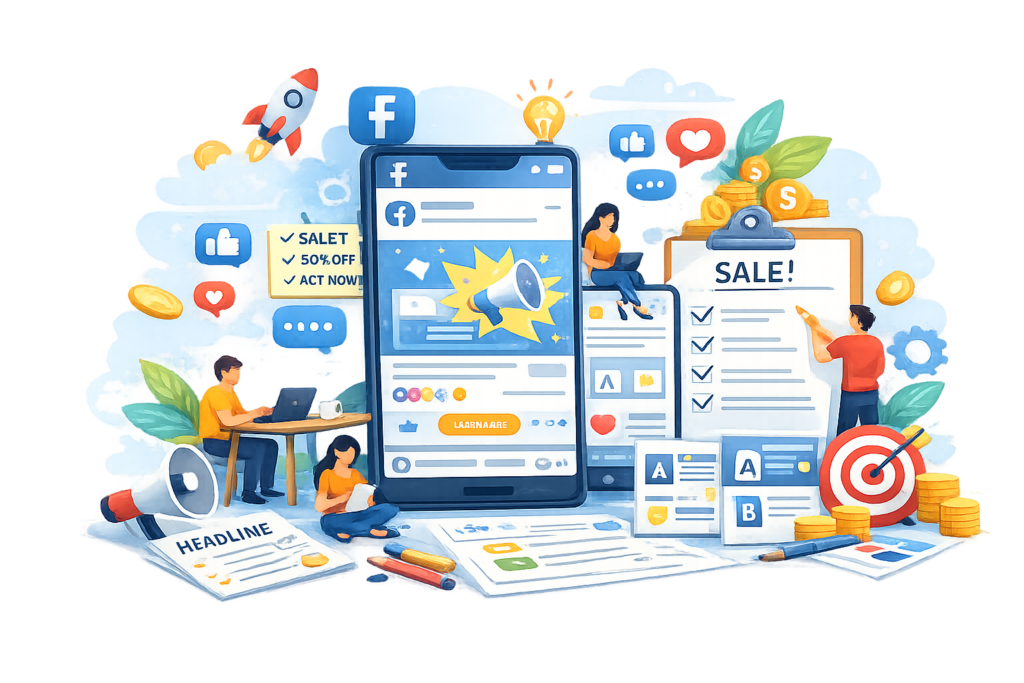
Ad copy is often the deciding factor between a profitable campaign and wasted advertising spend. Strong Facebook™ Ads copy captures attention quickly, communicates value clearly, and motivates users to take action without sounding overly promotional or manipulative.
The first few words of an ad are especially important because users scroll rapidly through social feeds. Effective hooks create curiosity, identify a pain point, or present a compelling opportunity. Questions, surprising statistics, emotional triggers, and bold statements frequently increase engagement when used naturally and authentically.
Persuasive copy focuses on benefits rather than features. Instead of listing technical details, successful advertisers explain how a product or service improves the customer’s life, saves time, reduces frustration, increases revenue, or solves meaningful problems. Emotional relevance often drives stronger conversions than purely informational messaging.
Social proof also enhances ad credibility significantly. Testimonials, reviews, case studies, client results, and user-generated content help reduce skepticism and increase trust. Consumers are more likely to engage with brands that demonstrate real-world success and authentic customer experiences.
Clarity is another essential principle. Confusing messaging reduces engagement and conversion rates. Advertisers should communicate the offer, benefit, and next step as clearly as possible. Short paragraphs, readable formatting, and direct calls-to-action improve user comprehension across mobile devices.
Modern Facebook advertising also benefits from conversational language. Overly corporate or robotic messaging often underperforms compared to natural communication styles. Brands that sound relatable and human typically build stronger audience connections and higher engagement levels.
Finally, copywriters should continuously test variations. Small adjustments in headlines, emotional framing, CTA wording, or benefit positioning can dramatically impact performance. Split testing allows advertisers to identify winning messages while improving overall campaign profitability over time.
Designing Creative Assets That Stop the Scroll
In the crowded social media environment, visual creativity determines whether users pause to engage or continue scrolling. Effective Facebook™ Ads creative combines attention-grabbing visuals with strategic messaging that aligns with audience psychology and campaign objectives.
Video content continues to dominate engagement metrics across Meta platforms. Short-form vertical videos, educational clips, behind-the-scenes footage, and testimonial videos frequently outperform static images. Users increasingly prefer authentic, mobile-friendly content over highly polished corporate advertisements.
Strong creative design begins with audience understanding. Different customer groups respond to different visual styles, emotional triggers, and communication approaches. A luxury audience may prefer sophisticated branding and minimalist visuals, while younger audiences often engage more with dynamic, relatable, and fast-paced creative formats.
Color psychology also influences performance. Contrasting colors, clear focal points, and visually organized layouts help ads stand out within crowded feeds. However, creativity should support the message rather than distract from it. Simplicity often performs better than overly complex visual designs.
User-generated content has become especially valuable in modern advertising. Consumers trust authentic experiences more than traditional promotional materials. Brands that incorporate customer testimonials, product demonstrations, unboxing videos, or real-life usage scenarios often achieve stronger engagement and conversion rates.
Consistency between creative assets and landing pages is equally important. When users click an ad, the landing page should reinforce the same messaging, visuals, and value proposition. Misalignment creates confusion and reduces trust, leading to lower conversion rates and higher advertising costs.
Advertisers should also continuously refresh creatives to avoid ad fatigue. Repeated exposure to identical visuals reduces engagement over time. Successful campaigns often rotate multiple creatives regularly while testing new formats, messaging angles, and storytelling approaches to maintain audience interest and campaign performance.
Retargeting Strategies That Recover Lost Conversions
Most website visitors do not convert during their first interaction with a brand. This is why retargeting remains one of the highest-performing Facebook™ Ads strategies available. Retargeting campaigns reconnect businesses with users who have already demonstrated interest through website visits, video engagement, social interactions, or previous purchases.
A successful retargeting strategy starts with audience segmentation. Businesses should avoid placing all visitors into one generic audience category. Instead, campaigns should separate users based on behavior and intent. For example, someone who viewed a product page should receive different messaging compared to someone who abandoned a checkout page. This approach improves relevance and increases conversion probability.
Dynamic retargeting has become especially powerful for eCommerce businesses. Using Meta Catalog Ads, brands can automatically display products users previously viewed or added to their carts. Personalized product recommendations often generate significantly higher return on ad spend because they align directly with user intent and browsing behavior.
Educational retargeting also performs extremely well in competitive markets. Instead of immediately pushing a hard sale, businesses can deliver value-driven content such as tutorials, case studies, comparison guides, webinars, or testimonials. This approach builds trust gradually and reduces buyer resistance. Users who engage with educational assets often convert more effectively later in the funnel.
Frequency management is equally important. Overexposing users to repetitive ads can create annoyance and negative brand perception. Successful advertisers rotate creatives regularly, vary messaging, and implement reasonable frequency caps to maintain positive engagement. Combining urgency with value-based messaging often produces the strongest results in retargeting campaigns.
Retargeting becomes even more powerful when integrated with email marketing, CRM systems, and automated customer journeys. Businesses that synchronize advertising with broader marketing ecosystems create consistent customer experiences that improve both trust and conversion performance over time.
Conversion Tracking and Data Analytics for Better Performance
Without accurate data tracking, even well-designed Facebook™ Ads campaigns can fail. Modern digital advertising depends heavily on analytics, attribution modeling, and conversion measurement. Businesses that understand campaign data gain the ability to optimize spending, improve targeting, and maximize profitability.
The foundation of effective tracking begins with the Meta Pixel. This tracking technology monitors user actions such as page views, purchases, form submissions, add-to-cart events, and checkout initiations. Proper installation allows Meta’s algorithm to optimize campaigns toward users most likely to complete valuable actions.
However, browser privacy updates and tracking limitations have made server-side tracking increasingly important. The Conversions API helps businesses send data directly from servers rather than relying solely on browser cookies. This improves data accuracy and helps maintain optimization quality despite privacy restrictions.
Businesses should also integrate advertising data with broader analytics platforms. Tools like Google Analytics 4 provide deeper insights into user behavior, bounce rates, engagement quality, and conversion paths. Understanding how users interact after clicking ads helps identify friction points and optimization opportunities throughout the funnel.
Attribution modeling is another essential concept. Many businesses incorrectly assume a single ad caused a conversion when multiple touchpoints influenced the customer journey. Consumers often interact with several ads, emails, search results, and social posts before purchasing. Multi-touch attribution analysis provides a more accurate understanding of marketing effectiveness.
Advertisers should focus on meaningful metrics rather than vanity numbers. High click-through rates may appear impressive, but profitability depends on conversion quality, customer lifetime value, and return on ad spend. Data-driven decision-making allows businesses to allocate budgets intelligently while reducing wasteful spending on underperforming campaigns.
Ultimately, accurate analytics transform Facebook advertising from guesswork into a scalable, measurable growth system.
Budget Optimization and Smart Ad Spending
One of the most common challenges businesses face with Facebook™ Ads is managing budgets effectively. Some advertisers overspend too quickly without enough data, while others underinvest and limit campaign potential. Smart budget optimization requires balancing testing, scalability, and profitability.
The first principle is controlled testing. New campaigns should begin with moderate budgets that allow Meta’s algorithm to collect sufficient data. Launching with extremely high budgets often creates unstable delivery patterns, especially when audience signals are still limited. Gradual budget increases usually produce more sustainable scaling outcomes.
Campaign Budget Optimization (CBO) has become a central feature within Meta advertising systems. Instead of assigning fixed budgets to each ad set manually, CBO automatically distributes spending toward the highest-performing audience segments. This machine learning approach often improves efficiency when campaigns are structured properly.
Businesses should also understand customer acquisition costs relative to lifetime value. A campaign may appear unprofitable initially if only immediate purchases are measured. However, customers who generate repeat purchases, subscriptions, or upsells may justify higher acquisition costs. Long-term profitability analysis is critical for scaling effectively.
Seasonality and market conditions also impact advertising performance. Costs often rise during holidays, major shopping events, and highly competitive periods. Experienced advertisers plan budgets strategically around these fluctuations rather than reacting emotionally to short-term changes in metrics.
Creative testing plays a major role in budget efficiency as well. Poor-performing ads waste money regardless of audience quality. Continuous split testing helps identify top-performing creatives before scaling budgets aggressively. Many successful advertisers allocate dedicated budgets specifically for creative experimentation and audience testing.
Finally, businesses should monitor frequency, engagement quality, and relevance scores regularly. Rising costs often indicate audience fatigue or declining creative performance. Budget optimization is not simply about spending more money — it involves maximizing efficiency through data analysis, strategic testing, and ongoing campaign refinement.
Scaling Facebook™ Ads Without Destroying ROI
Scaling advertising campaigns is where many businesses encounter difficulties. A campaign that performs well at low budgets may become unstable or unprofitable when spending increases rapidly. Sustainable scaling requires careful strategy, data analysis, and operational readiness.
Vertical scaling involves increasing budgets on existing campaigns gradually. Most experienced advertisers avoid aggressive budget jumps because Meta’s algorithm may re-enter learning phases and destabilize performance. Incremental increases often preserve optimization stability while allowing campaigns to grow consistently.
Horizontal scaling focuses on expanding through new audiences, creatives, and campaign variations. This method reduces dependency on a single audience segment or ad creative. Businesses that diversify campaign structures typically achieve more stable long-term growth and reduced advertising volatility.
Creative diversification becomes increasingly important during scaling. Ad fatigue occurs when audiences repeatedly see identical content, leading to declining engagement and rising costs. Successful brands continuously introduce fresh videos, testimonials, educational assets, hooks, and messaging angles to maintain audience interest.
Landing page optimization also becomes critical during scale. Increased traffic exposes weaknesses in page speed, mobile usability, checkout processes, and conversion flow. Businesses should regularly evaluate landing page performance using tools like Google PageSpeed Insights to improve user experience and reduce conversion friction.
Operational fulfillment must support scaling efforts as well. Businesses that generate large volumes of leads or sales without adequate customer support, inventory management, or delivery systems risk damaging brand reputation. Sustainable growth requires alignment between advertising, operations, and customer experience.
Many successful advertisers also integrate omnichannel marketing during scaling phases. Combining Facebook™ Ads with email marketing, SEO, YouTube content, influencer collaborations, and retargeting ecosystems creates stronger brand visibility and customer trust. Multi-channel integration reduces reliance on any single traffic source while improving long-term business resilience.
Common Facebook™ Ads Mistakes Businesses Must Avoid
Many businesses fail with Facebook™ Ads not because the platform is ineffective, but because they repeat avoidable strategic and operational mistakes. Understanding these common issues can save significant time, money, and frustration.
One of the biggest mistakes is targeting audiences too narrowly. Overly restrictive audience settings limit Meta’s optimization capabilities and increase advertising costs. Modern algorithms perform better when given enough flexibility to identify qualified users dynamically. Businesses should focus more on strong creative and conversion data rather than excessive manual targeting restrictions.
Another major error is ignoring creative quality. Poor visuals, weak messaging, or generic ad copy drastically reduce engagement rates. Users are exposed to massive amounts of content daily, meaning ads must communicate value quickly and authentically. Businesses that fail to invest in compelling creative assets often experience declining campaign performance regardless of targeting quality.
Many advertisers also make the mistake of scaling too aggressively. Rapid budget increases frequently destabilize campaigns and trigger performance drops. Sustainable growth requires gradual scaling combined with continuous optimization and testing. Patience is often more profitable than aggressive expansion.
Weak landing pages are another widespread issue. Even highly effective ads cannot compensate for slow-loading pages, confusing layouts, or poor mobile experiences. Conversion optimization should extend beyond the ad itself and include every stage of the user journey.
Tracking misconfigurations also create serious problems. Inaccurate conversion data leads Meta’s algorithm to optimize toward the wrong actions. Businesses should regularly verify event tracking, attribution settings, and server-side integrations to maintain data reliability.
Finally, many brands focus excessively on short-term metrics while ignoring long-term customer relationships. Sustainable advertising success depends on trust-building, retention, and lifetime customer value. Businesses that prioritize authentic customer experiences typically outperform competitors focused solely on immediate conversions.
AI and Automation in Facebook™ Advertising
Artificial intelligence is reshaping the future of Facebook™ Ads at an unprecedented pace. Meta increasingly relies on machine learning systems to automate audience targeting, budget distribution, placement optimization, and creative delivery. Businesses that understand how to work with AI systems gain significant competitive advantages.
Automated campaign structures such as Advantage+ Shopping Campaigns allow Meta’s algorithms to identify high-converting users with minimal manual input. Rather than micromanaging every targeting detail, advertisers now focus more heavily on creative quality, conversion tracking, and customer experience optimization.
AI-powered creative testing has also become a major trend. Meta dynamically evaluates combinations of headlines, images, videos, primary text, and calls-to-action to identify top-performing variations. This automation helps businesses optimize campaigns faster while reducing manual workload.
Predictive analytics further enhance campaign performance. Machine learning models analyze behavioral signals, engagement patterns, and conversion data to predict which users are most likely to purchase. Businesses that provide strong first-party data and accurate event tracking improve these predictive capabilities significantly.
However, automation does not eliminate the need for strategic oversight. Human creativity, market understanding, and customer psychology remain essential for successful advertising. AI systems optimize based on available data, but businesses must still develop compelling offers, persuasive messaging, and high-quality customer experiences.
Content personalization is another growing advantage of AI-driven advertising. Dynamic creatives can adapt messaging and visuals based on audience behavior, interests, and funnel stage. Personalized advertising often improves relevance and increases conversion rates substantially.
As automation continues evolving, businesses should focus on collaboration between human expertise and machine intelligence rather than resisting platform changes. The future of Facebook advertising will likely depend on strategic creativity supported by increasingly advanced AI optimization systems.
Facebook™ Ads Policies, Compliance, and Brand Trust
Compliance with advertising policies is essential for maintaining account stability and long-term campaign success. Businesses that ignore platform guidelines risk ad disapprovals, restricted accounts, or permanent bans that can severely impact marketing operations.
Meta’s advertising policies focus heavily on user safety, transparency, and ethical marketing practices. Advertisers should avoid misleading claims, exaggerated promises, discriminatory targeting, and manipulative tactics. Industries such as health, finance, housing, and employment face especially strict compliance requirements.
Transparency builds both compliance and customer trust. Brands that clearly communicate pricing, terms, guarantees, and product expectations generally achieve stronger long-term results. Misleading advertisements may generate short-term clicks but often lead to refund requests, poor reviews, and damaged reputation.
Landing page quality also influences compliance outcomes. Pages should contain accurate business information, privacy policies, clear contact details, and consistent messaging aligned with ad content. Poor-quality landing experiences can trigger policy violations even if the ads themselves appear compliant.
Data privacy regulations are becoming increasingly important as well. Businesses collecting customer information must follow applicable laws and best practices related to consent, data handling, and user protection. Resources such as Google Search Central Guidelines and Meta Advertising Standards provide valuable guidance for maintaining ethical digital marketing practices.
Building trust ultimately improves both advertising performance and business sustainability. Consumers are more likely to engage with brands that demonstrate honesty, professionalism, and customer-focused communication. Ethical advertising is no longer optional — it is a critical competitive advantage in modern digital marketing.
Advanced Funnel Strategies for Facebook™ Ads Success
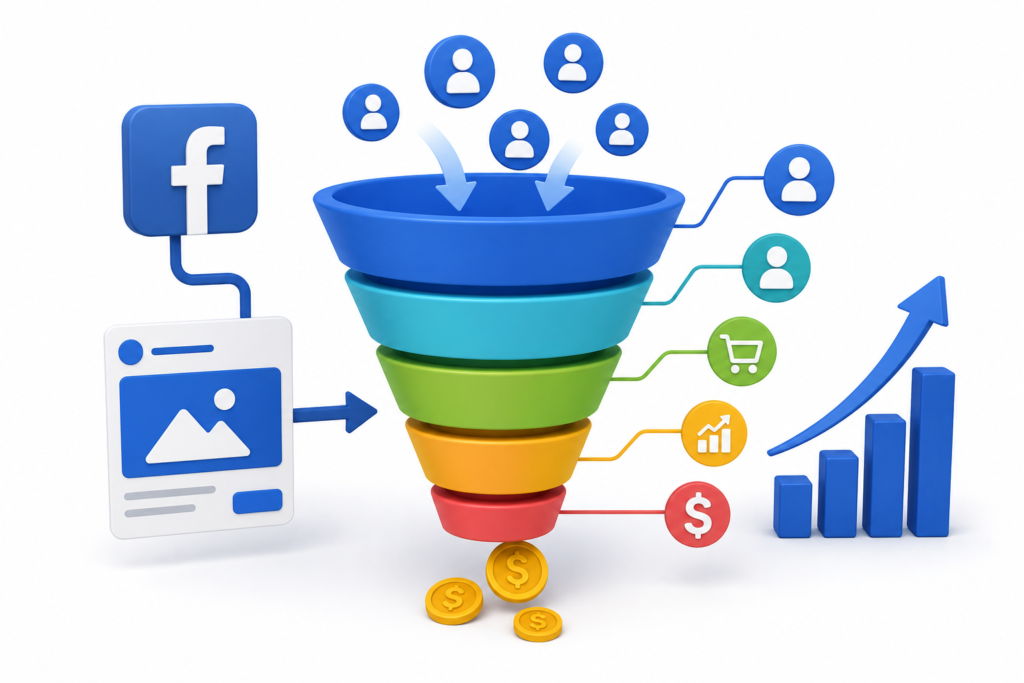
Modern Facebook™ Ads campaigns perform best when integrated into complete marketing funnels rather than isolated advertisements. A funnel-based approach guides users through awareness, consideration, trust-building, and conversion stages systematically.
Top-of-funnel campaigns focus primarily on attention and education. These campaigns introduce audiences to problems, opportunities, or brand stories without immediate pressure to purchase. Video content, educational posts, and engaging storytelling often perform extremely well during this stage.
Middle-of-funnel campaigns nurture interested users through social proof, case studies, testimonials, webinars, and comparison content. At this stage, audiences are evaluating credibility and determining whether a brand can solve their problems effectively. Consistent value delivery increases trust and buying intent significantly.
Bottom-of-funnel campaigns emphasize urgency, offers, guarantees, and conversion optimization. These campaigns target warm audiences who have already engaged with previous content or visited important website pages. Personalized messaging frequently produces strong conversion results during this phase.
Post-purchase funnels are equally important yet often overlooked. Businesses that continue engaging customers after purchases increase retention, upsells, referrals, and lifetime value. Customer onboarding, loyalty programs, educational resources, and follow-up campaigns help maximize long-term profitability.
Automation tools can strengthen funnel performance substantially. CRM integrations, email sequences, chatbot systems, and remarketing workflows create consistent customer journeys while reducing manual workload. Businesses that combine automation with authentic communication typically achieve higher scalability and stronger customer relationships.
Ultimately, successful Facebook advertising is not just about generating clicks — it is about building integrated systems that guide users toward meaningful long-term engagement and business growth.
FAQs
What are Facebook™ Ads?
Facebook™ Ads are paid advertisements displayed across Meta platforms including Facebook, Instagram, Messenger, and Audience Network. Businesses use them to generate leads, sales, traffic, engagement, and brand awareness through highly targeted advertising campaigns.
Are Facebook™ Ads still effective in 2026?
Yes. Facebook™ Ads remain highly effective because of advanced audience targeting, AI optimization, visual storytelling capabilities, and scalable advertising infrastructure. Businesses across multiple industries continue achieving strong ROI through strategic campaigns.
How much should beginners spend on Facebook™ Ads?
Beginners should start with controlled budgets focused on testing. Many businesses begin with small daily budgets to gather performance data before scaling. The ideal budget depends on competition, audience size, and campaign objectives.
What type of Facebook™ Ads perform best?
Video ads, testimonial content, educational creatives, user-generated content, and dynamic product ads often perform exceptionally well. However, effectiveness depends heavily on audience relevance, messaging quality, and campaign structure.
Why are my Facebook™ Ads not converting?
Low conversions may result from weak targeting, poor ad copy, slow landing pages, weak offers, inaccurate tracking, or audience fatigue. Businesses should analyze the complete customer journey rather than focusing only on the ads themselves.
What is retargeting in Facebook™ Ads?
Retargeting involves showing ads to users who previously interacted with your brand through website visits, video engagement, social interactions, or email lists. These audiences often convert at higher rates because they already recognize the business.
How important is the Meta Pixel?
The Meta Pixel is essential for conversion tracking, audience building, optimization, and campaign measurement. Without accurate tracking, Meta’s algorithm cannot optimize effectively toward valuable business outcomes.
Can small businesses succeed with Facebook™ Ads?
Absolutely. Small businesses often achieve excellent results by targeting niche audiences, creating authentic content, and focusing on strategic funnel development rather than competing solely on large advertising budgets.
Best Practices Summary
Successful Facebook™ Ads campaigns require far more than basic ad setup. Businesses that consistently generate profitable results typically follow several key principles:
- Focus on audience understanding before launching campaigns
- Prioritize authentic, high-quality creative assets
- Use accurate conversion tracking and analytics systems
- Build structured funnels instead of isolated campaigns
- Continuously test headlines, creatives, audiences, and offers
- Optimize landing page experiences for mobile users
- Scale gradually using data-driven decision-making
- Combine automation with strategic human oversight
- Follow platform compliance guidelines carefully
- Prioritize long-term customer trust and lifetime value
Modern advertising success depends on adaptability, creativity, data analysis, and customer-focused communication. Brands that embrace continuous learning and optimization position themselves for sustainable growth in increasingly competitive digital environments.
Conclusion
Facebook™ Ads continue to be one of the most powerful digital marketing tools for businesses seeking scalable online growth, lead generation, customer acquisition, and revenue expansion. While the advertising landscape has evolved significantly with AI automation, privacy updates, and changing consumer behavior, the core principles of successful advertising remain centered around value, trust, strategy, and user experience.
Businesses that succeed with Facebook advertising understand the importance of audience psychology, compelling creatives, accurate tracking, conversion-focused funnels, and ongoing optimization. Rather than relying on shortcuts or manipulative tactics, sustainable growth comes from building authentic customer relationships and delivering meaningful solutions.
At My Funnel Script, businesses increasingly recognize the importance of combining advertising strategies with persuasive funnel systems, optimized customer journeys, and scalable marketing automation. As competition grows in digital advertising, brands that focus on quality, trustworthiness, and strategic execution will continue outperforming those relying solely on aggressive promotion.
The future of Facebook™ Ads belongs to businesses willing to adapt, innovate, and prioritize long-term customer value over short-term vanity metrics.
Want to Implement This Easily?
Prompt Text:
You are an expert consultant. Based on the blog post titled “Facebook™ Ads”, provide a step-by-step, practical implementation guide. Include tools, best practices, common mistakes to avoid, and advanced tips. Assume the reader wants to implement everything discussed in this article effectively.
Call to Action
Want our help implementing this? Just reach out to us via our website contact form: