
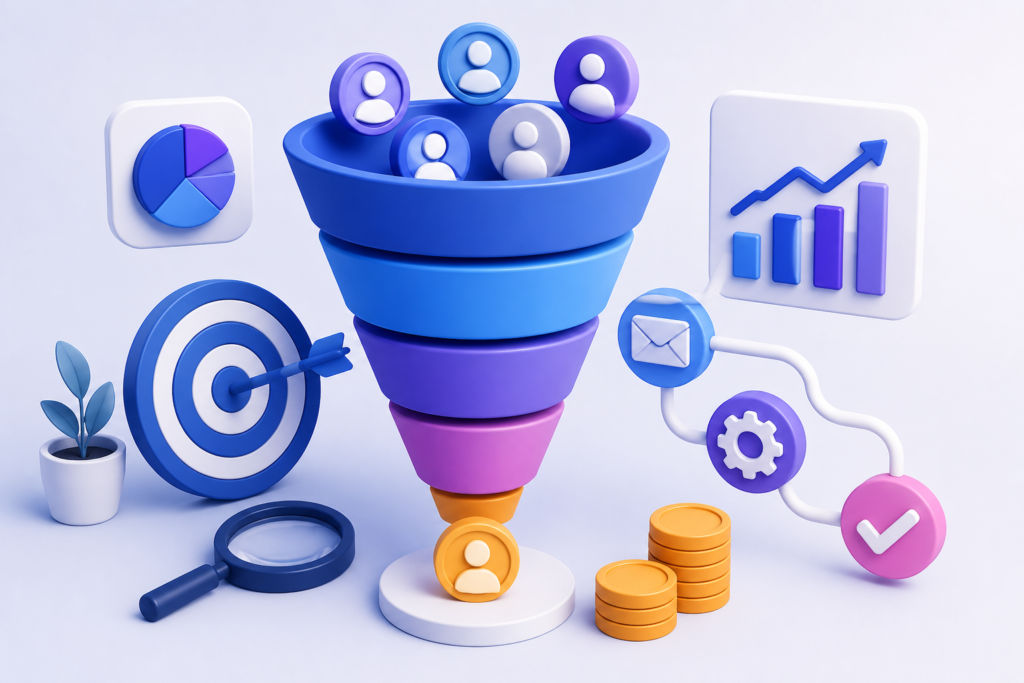
Discover how to build, optimize, and scale a high-converting sales funnel that generates qualified leads, increases customer acquisition, and maximizes revenue growth through proven strategies, automation, and data-driven decision-making.
Introduction
Businesses no longer compete solely on products, pricing, or advertising budgets. Instead, organizations that consistently grow and scale understand the importance of guiding potential customers through a carefully structured buying journey. A well-designed sales funnel helps businesses nurture prospects, address objections, build trust, and convert interest into measurable revenue.
At My Funnel Script, we recognize that successful funnels are not simply landing pages connected to email sequences. They are strategic systems designed around customer behavior, intent, psychology, and continuous optimization. Companies that invest in funnel strategy often experience higher customer retention, improved conversion rates, and greater marketing efficiency.
This comprehensive guide explores every stage of creating an effective sales funnel. You’ll learn how funnels work, why they matter, which funnel types perform best, and how to optimize each stage to support sustainable business growth.
Understanding What a Sales Funnel Really Is
A sales funnel represents the journey prospects take from becoming aware of a business to making a purchase and eventually becoming loyal customers. The funnel metaphor illustrates how large groups of visitors gradually narrow down into smaller groups of paying customers.
At the top of the funnel, businesses attract attention through content marketing, paid advertising, search engine optimization, webinars, social media campaigns, and referral programs. These visitors often have limited knowledge about the products or services being offered. Their primary objective is usually education rather than immediate purchasing.
As prospects move deeper into the funnel, they engage with lead magnets, subscribe to newsletters, attend demonstrations, request consultations, or download educational resources. This engagement enables businesses to establish credibility while gathering insights about customer preferences and purchase intent.
Modern funnels are increasingly dynamic rather than linear. Buyers frequently revisit multiple touchpoints before making decisions. Understanding these behaviors allows organizations to design personalized experiences that increase conversions while reducing customer acquisition costs.
Why Sales Funnels Matter in Today’s Digital Economy
The digital marketplace is crowded with competitors fighting for consumer attention. Businesses that fail to nurture prospects effectively often lose opportunities to competitors that maintain stronger customer relationships.
Sales funnels help companies organize their marketing and sales efforts into structured processes. Rather than relying on isolated campaigns, organizations can create predictable pathways that consistently move prospects toward purchasing decisions.
One significant advantage of funnel implementation is improved resource allocation. Businesses gain visibility into where leads drop off, which campaigns perform best, and what messaging resonates most with target audiences. These insights support better budget decisions and stronger return on investment.
Funnels also improve customer experiences. Prospects receive information tailored to their needs, questions, and stage in the buying process. This personalization builds trust and reduces friction, making it easier for buyers to progress naturally through the decision-making journey.
The Core Stages of a High-Converting Sales Funnel
Every successful funnel consists of several interconnected stages that guide prospects from initial discovery to long-term advocacy.
Awareness Stage
The awareness stage introduces prospects to your brand. Potential customers may discover your business through blog articles, videos, podcasts, social platforms, organic search results, industry events, or advertising campaigns.
At this stage, educational content generally performs better than aggressive sales messaging. Businesses should focus on solving problems, answering questions, and establishing expertise within their industries.
Interest Stage
Once awareness is established, prospects begin evaluating whether your solutions align with their needs. They may download guides, register for webinars, watch demonstrations, or join mailing lists.
The objective here is relationship building. Organizations should provide valuable insights that help prospects understand available options and potential outcomes.
Decision Stage
Decision-stage prospects actively compare solutions. Testimonials, case studies, pricing pages, product walkthroughs, and personalized consultations become highly influential.
Businesses that effectively address objections and showcase measurable benefits often experience higher conversion rates.
Action Stage
The final stage encourages prospects to purchase, subscribe, schedule appointments, or complete other desired actions.
Clear calls-to-action, simplified checkout experiences, and trust indicators significantly influence final conversion performance.
Identifying Your Ideal Customer Before Building a Funnel
Many businesses invest substantial resources into funnel creation before understanding who they want to attract. This often results in poor lead quality and disappointing conversion metrics.
Customer research should precede funnel development. Organizations need to identify demographic characteristics, professional backgrounds, purchasing motivations, challenges, goals, and behavioral patterns.
Conducting interviews with existing customers provides valuable qualitative insights. Surveys, website analytics, social media engagement data, and customer service interactions also reveal common pain points and buying triggers.
Creating detailed buyer personas helps marketing teams align messaging across multiple channels. Rather than targeting broad audiences, businesses can develop highly personalized campaigns that resonate with specific segments.
Understanding customer intent is equally important. Someone researching educational materials behaves differently from an individual requesting pricing information. Segmenting prospects based on intent allows businesses to deliver more relevant experiences throughout the funnel.
Effective audience research reduces advertising waste, improves lead quality, and supports long-term customer relationships.
Choosing the Right Type of Sales Funnel
Not every business requires the same funnel structure. Different industries, price points, and customer journeys demand customized approaches.
Lead Generation Funnels
Lead generation funnels focus on collecting prospect information through downloadable resources, assessments, templates, or webinars.
Businesses operating in consulting, software, healthcare, and professional services frequently use this approach.
Webinar Funnels
Webinars provide opportunities to educate audiences while demonstrating expertise.
These funnels usually include registration pages, reminder sequences, live presentations, follow-up emails, and sales offers.
Webinars often perform exceptionally well for high-ticket products because they allow businesses to establish authority and answer objections in real time.
Application Funnels
Application funnels qualify leads before direct sales interactions occur.
Potential customers submit detailed applications that help businesses determine suitability and prioritize high-value opportunities.
Service providers and coaching organizations commonly leverage these funnels.
E-Commerce Funnels
Online retailers typically emphasize product discovery, abandoned cart recovery, upselling opportunities, and post-purchase nurturing.
Optimized e-commerce funnels increase average order values while encouraging repeat purchases.
Selecting the appropriate funnel type depends on customer behavior, average transaction size, sales cycle complexity, and organizational objectives.
Crafting Offers That Prospects Cannot Ignore
Even beautifully designed funnels struggle when underlying offers lack compelling value propositions.
Businesses must clearly communicate what customers receive, why it matters, and how it solves meaningful problems.
Strong offers usually combine several components:
- Tangible outcomes
- Time-saving advantages
- Reduced risk
- Exclusive bonuses
- Limited-time incentives
- Personalized support
Rather than emphasizing product features, organizations should focus on transformation.
Customers rarely purchase software because they enjoy dashboards. They invest because they want efficiency, revenue growth, cost savings, or competitive advantages.
Understanding customer aspirations allows businesses to frame offers around desired future states.
Risk reduction mechanisms further strengthen offers.
Examples include:
- Satisfaction guarantees
- Trial periods
- Flexible contracts
- Transparent pricing
- Demonstrations
- Customer testimonials
When prospects perceive greater value than cost, conversions naturally improve.
Designing Landing Pages That Convert Visitors into Leads
Landing pages often determine whether marketing investments generate measurable returns.
High-performing landing pages prioritize clarity, simplicity, and persuasive communication.
Several elements consistently contribute to stronger conversion rates.
Compelling Headlines
Headlines should immediately communicate benefits while addressing audience pain points.
Visitors should understand within seconds what problem is being solved.
Persuasive Supporting Copy
Effective copy explains outcomes rather than technical specifications.
Businesses should emphasize customer success stories, quantifiable improvements, and unique differentiators.
Trust Signals
Trust indicators reduce uncertainty.
Examples include:
- Customer reviews
- Industry certifications
- Media mentions
- Security badges
- Partner logos
- Case studies
Optimized Forms
Long forms often discourage submissions.
Collecting only essential information usually increases completion rates.
Testing different form lengths enables businesses to identify optimal balance between lead quality and conversion volume.
Landing pages should also be mobile-responsive, fast-loading, and visually aligned with advertising campaigns to maintain message consistency.
Leveraging Lead Magnets to Accelerate Funnel Growth
Lead magnets remain among the most effective methods for attracting qualified prospects.
A lead magnet is a resource exchanged for contact information.
However, successful lead magnets provide immediate value rather than generic information readily available elsewhere.
Examples include:
- Industry reports
- Checklists
- Templates
- Calculators
- Swipe files
- Mini-courses
- Toolkits
- Assessment quizzes
The most effective lead magnets solve specific problems quickly.
For example, a marketing agency targeting small businesses might offer a conversion optimization checklist that identifies overlooked revenue opportunities.
Delivery speed also matters.
Prospects expect instant access after submission.
Delayed fulfillment can negatively affect trust and engagement.
Businesses should continuously evaluate lead magnet performance by monitoring metrics such as:
- Opt-in rates
- Download percentages
- Email open rates
- Subsequent conversions
- Customer acquisition costs
Lead magnets that consistently generate highly engaged subscribers become powerful assets for long-term funnel scalability.
Building Effective Email Nurture Sequences That Increase Conversions
Email nurturing remains one of the most profitable components of a modern sales funnel. While paid advertisements and social campaigns may capture attention, email sequences often determine whether leads become paying customers. Prospects rarely purchase immediately after their first interaction, making ongoing communication essential for relationship development.
Successful nurture campaigns begin with segmentation. Businesses should divide subscribers based on demographics, behaviors, engagement levels, interests, and purchase intent. A subscriber who downloads an introductory guide requires different messaging than someone who requests pricing information. Personalized communication consistently outperforms generic email broadcasts because it addresses specific challenges and expectations.
An effective nurture sequence typically includes educational emails, customer success stories, objection-handling content, limited-time offers, and strategic calls-to-action. Businesses should focus on helping subscribers solve problems rather than constantly promoting products. Consistent value delivery strengthens trust, increases open rates, and positions organizations as reliable partners. Monitoring click-through rates, unsubscribe percentages, and conversion metrics helps marketers refine campaigns and improve long-term funnel performance.
Using Marketing Automation to Scale Funnel Performance
Marketing automation allows businesses to maintain personalized customer experiences while managing larger audiences efficiently. Without automation, scaling lead nurturing efforts becomes increasingly difficult and resource-intensive.
Automation workflows can trigger actions based on user behavior. Examples include sending welcome emails after newsletter subscriptions, reminding prospects about abandoned carts, scheduling follow-up messages after webinar registrations, and recommending relevant resources based on browsing activity. These automated interactions ensure that prospects receive timely and meaningful communication.
Behavioral tracking is particularly valuable. Businesses can monitor page visits, email engagement, video consumption, and purchase history to better understand prospect interests. This information supports highly targeted campaigns that improve conversion opportunities.
Automation should not replace authentic communication. Instead, it should enhance consistency while allowing sales and marketing teams to focus on strategic initiatives. Businesses that balance automation with personalization often achieve stronger customer relationships, reduced operational costs, and more predictable revenue generation.
Optimizing Funnel Conversion Rates Through Continuous Testing
Even well-designed funnels require ongoing optimization. Customer preferences evolve, advertising platforms change, and competitive landscapes shift. Businesses that continuously test funnel components generally outperform those relying on assumptions.
Conversion rate optimization begins with identifying bottlenecks. Analytics platforms can reveal where prospects abandon the funnel, hesitate during checkout, or disengage from communication sequences. Understanding these friction points allows organizations to prioritize improvements.
Elements commonly tested include:
- Headlines
- Call-to-action buttons
- Images
- Pricing structures
- Form lengths
- Testimonials
- Video placements
- Email subject lines
Small adjustments can generate meaningful gains. A revised headline that better addresses customer pain points may significantly increase lead submissions. Similarly, simplifying checkout processes can reduce cart abandonment.
Testing should follow a structured methodology. Businesses need clear hypotheses, measurable objectives, and statistically significant sample sizes. Decisions based on data rather than intuition typically lead to more sustainable growth and improved return on investment.
Leveraging Data Analytics to Understand Funnel Performance
Data-driven decision-making enables organizations to maximize marketing efficiency and allocate budgets more effectively. Without analytics, businesses often struggle to identify which campaigns contribute to revenue generation.
Key performance indicators vary depending on funnel objectives, but several metrics remain universally important:
- Traffic sources
- Lead acquisition costs
- Conversion percentages
- Customer lifetime value
- Average order values
- Sales cycle duration
- Email engagement rates
- Revenue attribution
Attribution modeling helps organizations determine which touchpoints influence purchasing decisions. Prospects frequently interact with multiple channels before converting, including search engines, social media, webinars, and email campaigns.
Analyzing these interactions provides insights into customer behavior patterns. Businesses can identify high-performing campaigns, discontinue ineffective initiatives, and invest resources where they deliver the greatest impact.
Reporting dashboards further simplify decision-making. Real-time access to performance metrics supports faster adjustments and enables teams to respond proactively to changing market conditions.
Aligning Sales and Marketing Teams for Funnel Success
One of the most overlooked factors affecting funnel performance is poor alignment between sales and marketing departments. Miscommunication frequently results in inconsistent messaging, lost opportunities, and reduced conversion efficiency.
Marketing teams often focus on lead generation, while sales professionals prioritize closing deals. However, these objectives should complement one another rather than operate independently.
Organizations can strengthen collaboration by establishing shared definitions for qualified leads. Agreement on lead scoring criteria ensures that sales representatives engage prospects who demonstrate genuine purchase intent.
Regular meetings also improve communication. Teams can review campaign performance, discuss customer feedback, and identify recurring objections. Insights gathered during sales conversations often help marketers create more relevant content and stronger nurture campaigns.
Technology integrations further enhance alignment. Customer relationship management platforms provide centralized access to prospect information, enabling seamless handoffs between departments.
Businesses that foster collaboration between sales and marketing teams frequently experience improved lead quality, shorter sales cycles, and increased revenue consistency.
Scaling a Sales Funnel for Sustainable Business Growth
A funnel that performs effectively for a small audience may encounter challenges as traffic volumes increase. Scaling requires careful planning, infrastructure improvements, and operational readiness.
Businesses should begin by evaluating current funnel performance. Increasing advertising budgets before optimizing conversion rates often leads to inefficient spending. Establishing strong foundations ensures that growth initiatives produce better outcomes.
Scalability also depends on technology selection. Customer relationship management systems, automation tools, analytics platforms, and payment processors must accommodate increasing demand without compromising user experiences.
Expanding acquisition channels represents another growth opportunity. Organizations can diversify traffic sources through content marketing, partnerships, affiliate programs, search engine optimization, podcast appearances, and community engagement initiatives.
Retention strategies become increasingly important during scaling efforts. Acquiring new customers is generally more expensive than maintaining existing relationships. Loyalty programs, personalized recommendations, and exceptional customer support encourage repeat purchases and strengthen lifetime customer value.
Long-term success depends on balancing acquisition, conversion optimization, and customer retention initiatives.
Future Trends Shaping the Evolution of Sales Funnels
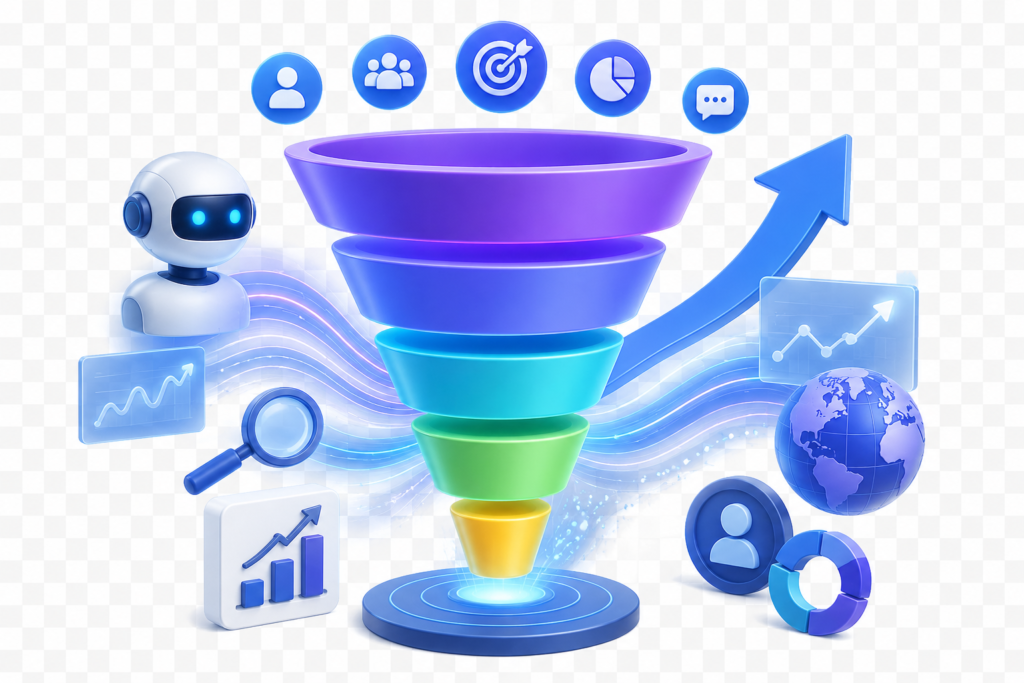
Consumer expectations continue evolving, requiring businesses to adapt funnel strategies accordingly. Emerging technologies and changing buying behaviors are influencing how organizations attract and convert customers.
Artificial intelligence is expected to play a significant role in personalization. Businesses can leverage predictive analytics to anticipate customer needs, recommend products, and optimize communication timing.
Interactive experiences are also gaining popularity. Quizzes, assessments, calculators, and conversational interfaces encourage engagement while collecting valuable prospect information.
Privacy considerations will likely impact data collection practices. Organizations must remain transparent about how customer information is gathered, stored, and utilized. Building trust through ethical practices can become a competitive advantage.
Video content is another growing trend. Personalized video messages, product demonstrations, and educational tutorials help businesses communicate complex concepts while strengthening audience connections.
Companies that remain adaptable and customer-focused are more likely to maintain competitive advantages as digital ecosystems evolve.
Common Sales Funnel Mistakes Businesses Should Avoid
Many organizations invest heavily in funnel development but fail to achieve expected results due to avoidable mistakes.
One frequent issue involves targeting broad audiences without conducting sufficient customer research. Poor audience targeting often generates low-quality leads and higher acquisition costs.
Another common mistake is offering weak lead magnets that provide little practical value. Prospects are unlikely to exchange contact information for resources they perceive as generic or outdated.
Businesses also frequently overwhelm visitors with excessive information. Complicated landing pages, lengthy forms, and unclear calls-to-action increase friction and reduce conversions.
Neglecting follow-up communication represents another major challenge. Leads often require multiple interactions before making purchasing decisions. Failing to nurture relationships results in missed revenue opportunities.
Finally, many organizations launch funnels and rarely revisit them. Continuous testing, analysis, and optimization remain essential for maintaining strong performance.
Frequently Asked Questions
1. How long does it take to build a sales funnel?
The timeline varies depending on complexity. Simple lead generation funnels may take several days, while sophisticated automated funnels with multiple segmentation paths can require several weeks.
2. Are sales funnels suitable for small businesses?
Yes. Small businesses often benefit significantly from funnels because they improve marketing efficiency, reduce wasted advertising spend, and create predictable lead-generation systems.
3. Which metrics are most important for evaluating funnel success?
Key metrics include conversion rates, lead acquisition costs, customer lifetime value, email engagement percentages, average order value, and revenue attribution.
4. Do all businesses need marketing automation?
Not necessarily. Smaller organizations with limited lead volumes may manage communication manually. However, automation becomes increasingly valuable as businesses grow.
5. What is considered a good funnel conversion rate?
Conversion rates vary by industry, offer type, and traffic quality. Rather than comparing benchmarks alone, businesses should focus on continuous improvement and profitability.
6. How often should funnels be optimized?
Monthly reviews are recommended, with major audits conducted quarterly. High-traffic funnels may require more frequent testing.
7. What role does content marketing play in a sales funnel?
Content marketing attracts prospects, educates audiences, addresses objections, and nurtures relationships throughout the customer journey.
8. Can businesses operate multiple funnels simultaneously?
Yes. Organizations often use separate funnels for different customer segments, products, pricing tiers, or acquisition channels.
Best Practices Summary for Long-Term Sales Funnel Success
Successful sales funnels are built on customer understanding, strategic planning, and continuous optimization.
Businesses should prioritize audience research before developing campaigns. Offers must address meaningful challenges while clearly communicating outcomes. Landing pages should remain focused, persuasive, and easy to navigate.
Segmentation and personalization significantly improve nurture campaigns. Automation supports scalability but should complement authentic communication rather than replace it entirely.
Testing should become an ongoing process rather than a one-time initiative. Organizations that consistently analyze data and refine funnel experiences generally outperform competitors relying on static strategies.
Strong alignment between sales and marketing teams further contributes to sustainable growth by ensuring prospects receive consistent messaging and timely support.
Ultimately, effective sales funnels are living systems that evolve alongside customer expectations and technological advancements.
Conclusion
A high-performing sales funnel is far more than a sequence of pages connected by automated emails. It is a strategic framework designed to guide prospects through meaningful experiences that build trust, address objections, and encourage confident purchasing decisions.
Businesses that invest in understanding customer behavior, optimizing funnel stages, leveraging automation, and measuring performance can establish reliable revenue systems capable of supporting long-term growth. Whether attracting new audiences, improving conversion rates, or scaling operations, a thoughtfully designed funnel provides a measurable competitive advantage.
At My Funnel Script, businesses can leverage proven funnel strategies and persuasive messaging frameworks to create customer journeys that maximize lead generation, strengthen engagement, and drive sustainable revenue growth.
Want to Implement This Easily?
Prompt Text:
You are an expert consultant. Based on the blog post titled “Sales Funnel”, provide a step-by-step, practical implementation guide. Include tools, best practices, common mistakes to avoid, and advanced tips. Assume the reader wants to implement everything discussed in this article effectively.
Call to Action:
Want our help implementing this? Just reach out to us via our website contact form: