
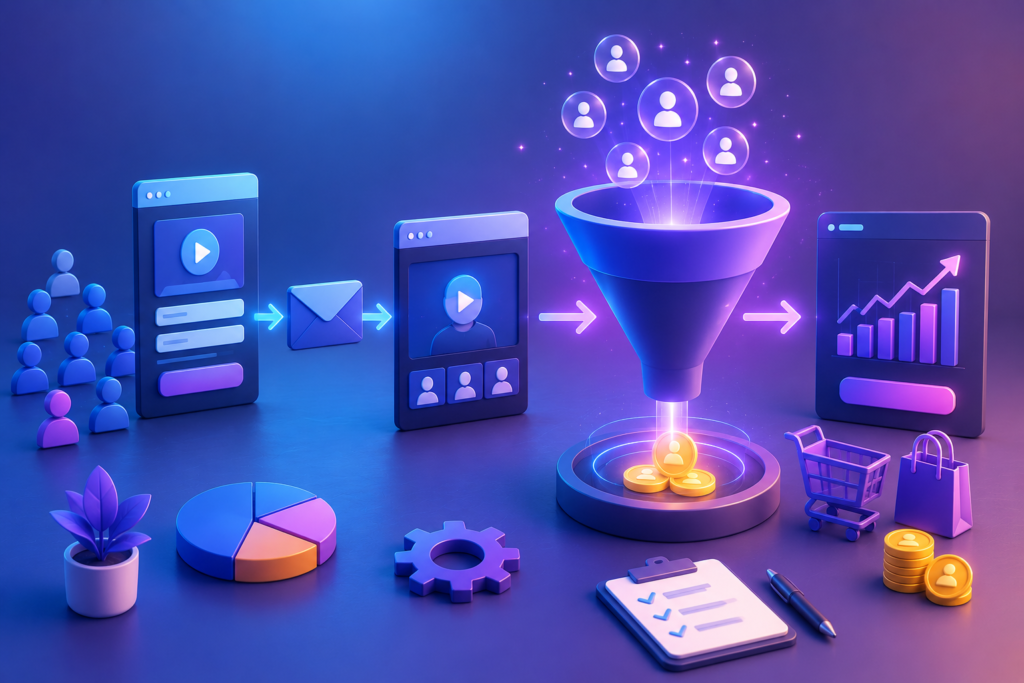
Learn how to build a high-converting Webinar Funnel that consistently generates qualified leads, increases attendance, nurtures prospects, and maximizes sales. Discover proven strategies, automation techniques, optimization tips, and best practices aligned with Google’s quality guidelines.
Introduction
Businesses today compete in an increasingly crowded digital marketplace where simply attracting website visitors is no longer enough. The real challenge lies in converting interested prospects into loyal customers through meaningful interactions. One of the most effective ways to accomplish this is with a Webinar Funnel—a structured marketing system designed to educate, engage, and persuade potential buyers through valuable online presentations.
At My Funnel Script, we understand that successful webinar funnels are built on strategy rather than chance. Every stage—from attracting registrants and increasing attendance to delivering an engaging webinar and nurturing attendees afterward—plays a critical role in maximizing conversions. Businesses that implement well-designed webinar funnels often experience higher lead quality, improved trust, stronger customer relationships, and significantly greater return on marketing investment.
Throughout this comprehensive guide, you’ll discover how to build, optimize, and scale a webinar funnel using modern marketing strategies, automation, behavioral psychology, audience segmentation, and conversion optimization techniques. The article follows Google’s Experience, Expertise, Authoritativeness, and Trustworthiness (E-E-A-T) principles while providing practical insights that can be implemented across virtually any industry.
Understanding What a Webinar Funnel Really Is
A Webinar Funnel is much more than a registration page followed by an online presentation. It is a carefully planned customer journey that guides potential customers through multiple stages of awareness, education, trust-building, and purchasing decisions. Unlike traditional sales funnels that rely heavily on direct advertising, webinar funnels leverage educational content to establish credibility before presenting an offer.
Modern webinar funnels combine psychology, automation, audience research, persuasive messaging, and customer experience into a seamless system. Visitors first discover your webinar through organic search, paid advertising, social media, email campaigns, partnerships, or referral traffic. Once they register, automated communication nurtures them until the event begins, ensuring higher attendance and stronger engagement.
Successful webinar funnels also continue working long after the webinar ends. Follow-up emails, personalized offers, downloadable resources, testimonials, case studies, and retargeting campaigns help move prospects toward conversion at their own pace. This long-term nurturing strategy creates multiple opportunities for engagement while improving customer trust and overall conversion rates.
For guidance on creating high-quality digital experiences, Google’s Search Essentials provide valuable recommendations.
Why Webinar Funnels Are Essential for Modern Digital Marketing
Consumers today expect education before making purchasing decisions. Instead of responding to aggressive sales tactics, buyers seek trustworthy information that helps them understand their challenges and evaluate possible solutions. Webinar funnels satisfy this expectation by delivering genuine value before asking for a commitment.
Unlike static landing pages or short advertisements, webinars create real-time engagement. Attendees can see demonstrations, hear explanations, ask questions, and observe expertise firsthand. This interactive environment dramatically increases confidence while reducing uncertainty—two of the biggest barriers to conversion.
Another major advantage is scalability. A single webinar can educate hundreds or even thousands of potential customers simultaneously. When combined with evergreen webinar automation, businesses can continue generating leads and sales around the clock without repeatedly hosting live presentations.
Organizations that prioritize educational marketing often build stronger authority within their industries. Educational webinars naturally encourage audience interaction, increase brand recognition, and generate valuable customer insights that improve future marketing campaigns.
Planning Your Webinar Funnel Strategy Before Building
Every successful webinar begins with careful planning rather than software selection. Before designing landing pages or writing emails, businesses should clearly define the purpose of the webinar, the ideal audience, measurable objectives, and the desired customer action after the presentation.
Begin by identifying the primary business goal. Some webinars focus on lead generation, while others support product launches, client onboarding, customer education, or relationship building. Establishing clear objectives helps determine messaging, content structure, promotional strategy, and performance metrics throughout the funnel.
Audience research is equally important. Understanding customer pain points, motivations, objections, and desired outcomes enables marketers to create presentations that genuinely address audience needs. Instead of emphasizing product features, effective webinar content focuses on solving real problems using practical examples, data, demonstrations, and actionable advice.
Planning should also include a comprehensive promotional calendar, registration deadlines, email reminders, follow-up sequences, and contingency plans for technical challenges. A well-organized strategy minimizes last-minute issues while ensuring a consistent customer experience from registration through post-webinar nurturing.
Identifying and Understanding Your Ideal Webinar Audience
The effectiveness of any webinar funnel depends largely on attracting the right audience. Even the most polished presentation will struggle to generate meaningful conversions if it reaches individuals who lack genuine interest or purchasing intent.
Audience segmentation begins with demographic information such as industry, company size, job role, experience level, and business objectives. However, successful webinar funnels extend beyond basic demographics by examining behavioral patterns, purchasing motivations, common frustrations, and preferred learning styles.
Customer interviews, surveys, CRM analytics, website behavior, keyword research, and search intent analysis all contribute to developing accurate audience personas. These insights allow marketers to create highly relevant webinar topics, compelling headlines, persuasive registration pages, and personalized follow-up campaigns.
Behavioral segmentation further improves results by grouping audiences according to previous interactions. New visitors, returning prospects, existing customers, inactive subscribers, and highly engaged leads often require different messaging strategies. Personalization increases relevance, strengthens trust, and significantly improves conversion performance throughout the entire webinar funnel.
Google’s guidance on creating helpful, people-first content emphasizes producing content that genuinely benefits users rather than content created solely for search rankings.
Choosing High-Converting Webinar Topics That Generate Demand
One of the most overlooked aspects of webinar marketing is topic selection. Businesses frequently choose subjects they want to discuss rather than topics their audience actively searches for or genuinely cares about. Successful webinar funnels begin by aligning presentation topics with customer intent.
Keyword research reveals what audiences are already searching for online, while customer support conversations, social media discussions, online communities, and industry forums expose recurring challenges that deserve deeper exploration. Combining these insights helps identify webinar topics with strong market demand and commercial relevance.
High-performing webinar topics typically focus on solving urgent problems, explaining emerging trends, demonstrating practical solutions, or providing step-by-step implementation guidance. Rather than promising unrealistic outcomes, effective titles communicate specific value and realistic expectations that encourage registrations from qualified prospects.
Content structure also matters. Educational storytelling, real-world examples, data visualization, customer case studies, live demonstrations, and interactive Q&A sessions create more engaging learning experiences. Attendees who receive genuine value are significantly more likely to trust future recommendations and purchasing opportunities.
Building High-Converting Webinar Registration Pages
The registration page serves as the gateway to the entire webinar funnel. Every design element, headline, benefit statement, form field, and call-to-action influences whether visitors choose to register or leave without taking action.
An effective registration page immediately communicates the webinar’s value proposition. Rather than describing the event itself, the page should emphasize the transformation attendees can expect. Visitors want to understand what problems will be solved, what skills they will gain, and why the webinar deserves their limited time.
Visual hierarchy improves readability by guiding visitors naturally through the page. Strong headlines, concise supporting copy, bullet-point benefits, testimonials, speaker credibility, event details, and clear calls-to-action reduce confusion while increasing confidence. Removing unnecessary distractions further improves conversion rates.
Registration forms should request only essential information. Longer forms often reduce completion rates unless additional information clearly supports personalization or sales qualification. Mobile responsiveness, page speed optimization, accessibility, and secure data handling are equally important components of a trustworthy registration experience.
Google’s Core Web Vitals documentation provides best practices for improving page performance and user experience.
Creating Irresistible Webinar Offers That Drive Registrations

The most successful webinar funnels don’t simply invite people to attend an online presentation—they offer compelling reasons to participate. A strong webinar offer combines valuable education with practical resources, exclusive insights, actionable frameworks, and meaningful outcomes that justify registration.
Value stacking significantly increases perceived worth. Businesses may include downloadable worksheets, implementation templates, checklists, exclusive reports, live demonstrations, bonus training sessions, or post-webinar resources that enhance the overall learning experience. These additions encourage registrations while reinforcing the webinar’s educational focus.
Scarcity and urgency can support conversions when used ethically. Limited attendance, exclusive bonuses, registration deadlines, or time-sensitive resources create motivation without relying on manipulative tactics. Authenticity remains essential; exaggerated claims or artificial urgency often damage long-term trust.
Finally, every webinar offer should clearly communicate its unique value proposition. Prospective attendees should immediately understand why this webinar provides insights unavailable through ordinary blog posts, videos, or downloadable guides. The greater the perceived value, the higher the registration rate and long-term engagement throughout the funnel.
Driving Qualified Traffic to Your Webinar Funnel
Even the most compelling webinar will struggle to achieve meaningful results if the right audience never discovers it. A successful Webinar Funnel begins with a strategic traffic generation plan that attracts highly relevant prospects rather than simply increasing visitor numbers. Quality traffic consistently outperforms quantity because engaged visitors are more likely to register, attend, interact, and ultimately convert into customers.
An effective traffic strategy combines multiple acquisition channels to create a diversified lead generation system. Organic search remains one of the most sustainable sources of long-term traffic. By publishing keyword-focused blog articles, educational guides, and resource pages that address your audience’s questions, businesses can attract prospects actively searching for solutions. Supporting this with strong on-page SEO, technical optimization, and valuable content helps improve visibility over time. Google’s official Search Essentials explain how to create search-friendly websites and helpful content.
Paid advertising can accelerate webinar registrations when campaigns are carefully targeted. Platforms such as Google Ads, LinkedIn Ads, Meta Ads, and YouTube Ads allow businesses to reach audiences based on demographics, interests, industries, job roles, and purchasing intent. Rather than promoting the webinar as a sales event, successful campaigns emphasize the educational value attendees will receive. Retargeting campaigns are particularly effective because they reconnect with previous website visitors who have already demonstrated interest. Combining organic content, paid promotion, email marketing, strategic partnerships, podcasts, social media, and referral marketing creates a consistent stream of qualified registrations while reducing dependence on any single traffic source.
Building High-Converting Webinar Email Automation Sequences
Email automation is one of the most valuable components of a webinar funnel because it keeps registrants engaged between the time they register and the time the webinar begins. Without consistent communication, attendance rates often decline as people forget about the event or lose motivation. A thoughtfully designed automation sequence maintains excitement while increasing trust and anticipation.
The first email should be delivered immediately after registration. This confirmation email reassures attendees that their registration has been successfully completed while providing essential details, including the webinar date, time, access link, calendar invitation, and expectations for the session. The tone should remain helpful rather than promotional. Additional emails can introduce the presenter, share relevant educational resources, answer common questions, and explain what attendees will learn during the webinar.
Reminder emails play a significant role in maximizing attendance. Many successful webinar funnels include reminders one week before the event, one day before, several hours before, and approximately fifteen minutes before the webinar begins. These reminders should include clear calls-to-action, easy access links, and concise messaging that reinforces the webinar’s value. Following the webinar, automation continues with thank-you emails, replay access, bonus resources, feedback surveys, personalized recommendations, and nurturing sequences that gradually guide prospects toward purchasing decisions. Behavioral segmentation further improves effectiveness by sending different follow-up messages to attendees, partial attendees, and individuals who registered but never joined.
Delivering Webinar Presentations That Build Trust and Increase Conversions
The webinar presentation itself represents the most influential stage of the entire funnel. Registration numbers become meaningless if the presentation fails to educate, engage, and inspire confidence. High-performing webinars focus first on delivering genuine value before introducing products or services. This educational-first approach aligns with modern buyer expectations while establishing long-term credibility.
An engaging webinar follows a logical structure that maintains audience attention from beginning to end. The presentation should begin by introducing the topic, explaining why it matters, and outlining what participants will learn. Storytelling is particularly effective because it creates emotional engagement while making complex concepts easier to understand. Real-world case studies, practical demonstrations, industry research, customer success stories, and actionable frameworks all contribute to a richer learning experience.
Audience interaction dramatically improves engagement levels. Live polls, chat discussions, question-and-answer sessions, downloadable worksheets, quizzes, and practical exercises encourage active participation instead of passive observation. Throughout the presentation, presenters should focus on solving problems rather than promoting products. Recommendations should naturally emerge as logical next steps after attendees understand the educational content. When prospects recognize authentic expertise and receive immediate value, they become significantly more receptive to future offers without feeling pressured.
Post-Webinar Follow-Up Strategies That Maximize Revenue
Many businesses underestimate the importance of post-webinar follow-up, yet this stage often generates the highest percentage of overall conversions. Attendees frequently require additional time to evaluate solutions, discuss purchasing decisions with colleagues, or revisit information presented during the webinar. Effective follow-up nurtures these prospects while maintaining momentum created during the live event.
The first follow-up email should thank attendees for participating and provide access to the webinar recording, presentation slides, downloadable resources, and any promised bonuses. This email should arrive within twenty-four hours while the experience remains fresh in participants’ minds. Rather than immediately focusing on sales, businesses should continue providing educational value through supplementary resources, implementation guides, frequently asked questions, and practical recommendations.
Segmentation greatly enhances follow-up performance. Individuals who attended the full webinar may receive product demonstrations, customer case studies, testimonials, or consultation invitations. Partial attendees might receive summaries highlighting important sections they missed, while non-attendees benefit from replay invitations and condensed educational content. Marketing automation platforms make this personalization highly scalable. As prospects continue engaging with emails, website content, or downloadable resources, lead scoring systems can identify individuals demonstrating strong purchase intent, allowing sales teams to prioritize high-quality opportunities. This systematic nurturing process transforms webinar attendees into informed, confident buyers while strengthening long-term customer relationships.
Measuring Webinar Funnel KPIs for Continuous Improvement
Creating a webinar funnel is only the beginning. Long-term success depends on continuously measuring performance, identifying opportunities for improvement, and making informed decisions based on reliable data. Without monitoring key performance indicators (KPIs), businesses may struggle to understand which parts of the funnel contribute to growth and which stages require optimization.
Start by tracking traffic sources. Knowing whether registrations originate from organic search, paid advertising, social media, referrals, partnerships, or email campaigns helps allocate marketing resources more effectively. Compare registration rates across different channels to determine where your highest-quality leads are coming from. High traffic numbers alone are not enough—focus on attracting visitors who actively engage with your webinar and move through the sales journey.
The registration conversion rate is another essential metric. This measures the percentage of visitors who complete the registration form after landing on your webinar page. A low conversion rate may indicate weak messaging, unclear value propositions, lengthy forms, or poor user experience. Regular A/B testing of headlines, calls-to-action, layouts, and page designs can significantly improve performance over time.
Attendance rate is equally important. Many registrants never attend the webinar, making reminder emails, calendar integrations, SMS notifications, and engaging pre-webinar content critical components of the funnel. Compare attendance rates across multiple webinars to identify trends and improve scheduling or communication strategies.
During the webinar, monitor engagement metrics such as viewing duration, audience retention, chat participation, poll responses, questions submitted, and resource downloads. These indicators reveal whether attendees find the presentation valuable or lose interest before reaching your offer.
After the webinar, analyze conversion metrics, including consultation bookings, product purchases, demo requests, email replies, and follow-up engagement. Businesses should also evaluate customer acquisition cost (CAC), return on investment (ROI), customer lifetime value (CLV), and overall revenue generated from webinar campaigns.
Analytics platforms, CRM systems, and marketing automation tools provide valuable reporting dashboards that support data-driven decision-making. Google’s official Google Analytics documentation offers guidance on measuring user engagement and business performance:
By reviewing KPIs regularly, organizations can identify strengths, eliminate weaknesses, and build webinar funnels that improve consistently over time.
Optimizing and Scaling Your Webinar Funnel for Sustainable Growth
Even successful webinar funnels require ongoing optimization. Consumer behavior, technology, search trends, and market competition continue evolving, making continuous improvement essential for maintaining strong conversion rates. Businesses that consistently test and refine their funnels often outperform competitors relying on static marketing strategies.
Optimization begins with understanding user behavior. Heatmaps, session recordings, customer feedback, surveys, CRM insights, and conversion analytics reveal where users experience friction during the registration and buying process. Small improvements—such as simplifying forms, strengthening headlines, improving page speed, or enhancing mobile usability—can produce significant increases in registrations and conversions.
A/B testing should become a regular part of webinar marketing. Test different webinar titles, landing page designs, CTA button colors, email subject lines, presentation formats, bonus offers, pricing strategies, and follow-up sequences. Rather than making assumptions, allow performance data to determine which variations generate better results.
Marketing automation enables businesses to scale webinar funnels efficiently. Automated registration confirmations, reminder emails, lead scoring, audience segmentation, behavioral triggers, CRM integration, and personalized follow-up campaigns reduce manual workload while improving customer experiences. Evergreen webinars further enhance scalability by allowing businesses to educate and convert prospects around the clock without repeatedly hosting live sessions.
As webinar funnels grow, personalization becomes increasingly important. Segment audiences based on demographics, purchase history, engagement behavior, industry, company size, or customer lifecycle stage. Personalized messaging consistently generates higher open rates, click-through rates, and conversions because it addresses the unique needs of each audience segment.
Organizations should also prioritize website performance, accessibility, mobile responsiveness, and security. Google’s Core Web Vitals provide valuable recommendations for delivering fast, reliable, and user-friendly digital experiences:
Scalable webinar funnels combine technology, data analysis, customer insights, and continuous experimentation. Businesses that embrace ongoing optimization remain competitive while generating sustainable long-term growth.
Future Trends Shaping Webinar Funnels in 2026 and Beyond
The future of webinar funnels will be shaped by advances in artificial intelligence, automation, personalization, interactive technology, and evolving customer expectations. Businesses that adapt to these trends early will be better positioned to attract audiences, deliver exceptional educational experiences, and increase conversion rates.
Artificial intelligence is already transforming webinar marketing. AI-powered tools assist with audience segmentation, predictive analytics, content recommendations, automated email personalization, lead scoring, chatbot interactions, and customer journey optimization. Instead of replacing marketers, AI enhances decision-making by identifying patterns that would be difficult to detect manually.
Interactive experiences will become increasingly important. Traditional slide presentations are gradually evolving into dynamic learning environments featuring live polls, quizzes, breakout sessions, personalized recommendations, collaborative discussions, interactive demonstrations, and AI-generated question responses. Higher engagement generally leads to greater trust and improved sales outcomes.
Personalization will continue expanding beyond email automation. Future webinar funnels will customize registration pages, webinar content, follow-up resources, offers, and communication based on individual user behavior. This level of relevance creates stronger customer relationships while improving overall conversion performance.
Privacy regulations and first-party data strategies will also influence webinar marketing. Businesses must prioritize transparent data collection, clear consent mechanisms, secure information management, and ethical marketing practices. Building trust through responsible data handling strengthens long-term customer confidence.
Video quality, accessibility, multilingual support, and mobile-first experiences will remain essential as audiences increasingly participate from smartphones and tablets. Organizations should also prepare for greater integration between webinar platforms, CRM systems, analytics software, customer support tools, and AI assistants, creating seamless customer journeys across multiple touchpoints.
Finally, Google’s emphasis on helpful, people-first content reinforces the importance of educational value over aggressive promotion. Businesses that consistently provide expert guidance, authentic experiences, practical solutions, and trustworthy recommendations will continue building authority while improving search visibility and customer loyalty.
Common Webinar Funnel Mistakes That Reduce Conversions
Even businesses with excellent products and knowledgeable presenters can experience disappointing webinar results if their funnel contains avoidable mistakes. Understanding these common pitfalls allows marketers to create a smoother customer journey while improving attendance, engagement, and conversion rates.
One of the most frequent mistakes is targeting the wrong audience. A webinar promoted to people who have little interest in the topic is unlikely to generate qualified leads. Effective audience research, buyer personas, keyword analysis, and customer feedback help ensure promotional efforts reach individuals who genuinely need the solution being presented.
Another mistake is creating a weak registration page. Unclear headlines, lengthy forms, poor mobile optimization, slow loading speeds, and vague descriptions often discourage registrations. Every registration page should communicate clear benefits, establish credibility, and make signing up simple.
Many businesses also fail to send enough reminder emails. Registrants may forget about the webinar if communication stops after registration. Automated reminders, calendar invitations, SMS notifications, and value-focused pre-event emails significantly improve attendance rates.
Some presenters focus too heavily on selling instead of educating. Modern audiences expect useful insights before considering a purchase. Excessive promotion can reduce trust and increase webinar drop-off rates. Instead, deliver actionable advice, demonstrate expertise, and introduce your solution naturally as the logical next step.
Ignoring post-webinar follow-up is another costly mistake. Many purchasing decisions occur days or weeks after the webinar. Without structured follow-up sequences—including replay emails, bonus resources, FAQs, testimonials, and consultation offers—valuable leads often become inactive.
Finally, businesses frequently overlook analytics. Without reviewing registration rates, attendance, engagement, conversions, and ROI, continuous improvement becomes impossible. Data-driven optimization remains essential for long-term webinar success.
Frequently Asked Questions
1. What is a Webinar Funnel?
A Webinar Funnel is a structured marketing process that attracts potential customers, encourages webinar registration, educates attendees through valuable presentations, and nurtures them toward becoming paying customers using automated follow-up strategies.
2. How long should a webinar be?
Most successful webinars last between 45 and 90 minutes, depending on the complexity of the topic. The presentation should provide substantial educational value while leaving sufficient time for audience questions and answers.
3. Should webinars always be live?
No. Live webinars encourage interaction and real-time engagement, while evergreen webinars provide scalability by allowing prospects to access presentations automatically. Many businesses successfully combine both approaches.
4. What is a good webinar attendance rate?
Attendance rates commonly range between 35% and 55%, although effective reminder campaigns and highly targeted audiences can achieve significantly higher participation rates.
5. Which metrics should businesses monitor?
Important metrics include:
- Registration Conversion Rate
- Attendance Rate
- Audience Retention
- Engagement Rate
- Click-Through Rate (CTR)
- Cost Per Lead (CPL)
- Customer Acquisition Cost (CAC)
- Return on Investment (ROI)
- Revenue Generated
- Customer Lifetime Value (CLV)
Monitoring these KPIs helps identify opportunities for continuous optimization.
6. Can small businesses benefit from webinar funnels?
Absolutely. Webinar funnels allow small businesses to demonstrate expertise, educate prospects, generate qualified leads, and compete with larger organizations by building trust before selling.
7. How often should webinar funnels be optimized?
Businesses should review performance after every webinar while conducting broader optimization reviews monthly or quarterly. Continuous testing and refinement produce better long-term results.
8. Why are webinar funnels so effective?
They combine education, relationship-building, automation, personalization, and strategic follow-up into a complete customer journey that increases trust and improves conversion rates.
Best Practices Summary
Building a successful Webinar Funnel requires far more than scheduling an online presentation. Sustainable success comes from combining strategic planning, customer research, valuable educational content, automation, analytics, and continuous optimization.
Some of the most important best practices include:
- Define clear business objectives before creating the funnel.
- Understand your audience’s goals, challenges, and search intent.
- Choose webinar topics that solve real customer problems.
- Create compelling registration pages with clear value propositions.
- Use ethical urgency instead of exaggerated marketing claims.
- Promote webinars across multiple traffic channels.
- Implement automated email reminder sequences.
- Deliver educational presentations before introducing offers.
- Segment audiences for personalized follow-up campaigns.
- Measure KPIs consistently and optimize based on performance data.
- Prioritize website speed, accessibility, security, and mobile responsiveness.
- Build long-term customer relationships instead of focusing solely on immediate sales.
- Continuously update webinar content to reflect changing industry trends and customer expectations.
Organizations that consistently apply these best practices create webinar funnels that remain effective, scalable, and aligned with Google’s E-E-A-T principles.
Conclusion
A well-designed Webinar Funnel is one of the most effective digital marketing systems for educating audiences, generating qualified leads, building trust, and increasing long-term revenue. By combining strategic planning, valuable educational content, automation, personalization, and continuous optimization, businesses can transform webinars into reliable growth engines that consistently produce measurable business results.
At My Funnel Script, we believe that successful webinar funnels are built around genuine customer value rather than aggressive sales tactics. Businesses that prioritize helpful education, transparency, and ongoing improvement position themselves for sustainable growth while strengthening customer relationships. As technology, automation, and artificial intelligence continue reshaping digital marketing, webinar funnels will remain an essential strategy for organizations seeking scalable lead generation and higher conversion rates.
Want to Implement This Easily?
Prompt Text
You are an expert consultant. Based on the blog post titled “Webinar Funnel”, provide a step-by-step, practical implementation guide. Include tools, best practices, common mistakes to avoid, and advanced tips. Assume the reader wants to implement everything discussed in this article effectively.
Call to Action
Want our help implementing this? Just reach out to us via our website contact form: